Marketing teams today have access to more data than ever before, but turning that data into actionable insights remains a challenge. With customers interacting across multiple channels, businesses need advanced tools that can measure campaign performance, understand customer behavior, optimize marketing spend, and prove ROI.
The best marketing analytics software platforms help organizations collect, analyze, and visualize marketing data from multiple sources. These platforms enable marketers to move beyond basic reporting and make data-driven decisions using AI-powered insights, attribution modeling, forecasting, and performance measurement.
In this guide, we explore the 10 best marketing analytics software platforms in 2026, including solutions for enterprise marketing teams, ecommerce brands, product companies, and organizations looking for advanced marketing measurement capabilities.
What Is Marketing Analytics Software?
Marketing analytics software is a technology solution that helps businesses collect, analyze, and interpret marketing data to improve campaign performance and maximize return on investment (ROI).
Unlike basic reporting tools, modern marketing analytics platforms combine data from multiple channels, including paid advertising, email marketing, websites, social media, CRM systems, and offline sales data, to provide a complete view of marketing performance.
The best marketing analytics tools help businesses answer important questions:
- Which marketing channels generate the highest ROI?
- How much revenue is influenced by each campaign?
- Which customer segments are most valuable?
- Where should marketing budgets be allocated?
- How can campaigns be optimized for better performance?
Modern marketing analytics software also uses AI, predictive modeling, attribution analysis, and automation to help marketers make faster and more accurate decisions.
Why Businesses Need Marketing Analytics Platforms in 2026
Marketing has become increasingly complex. Customers interact with brands across multiple touchpoints, making it difficult to understand which campaigns actually drive growth.Â
Traditional analytics solutions often focus on metrics like clicks, impressions, and conversions. However, these metrics do not always reveal the true impact of marketing investments.
Advanced marketing analytics solutions help businesses:
1. Measure Marketing ROI
Marketing teams need accurate insights into how their investments contribute to revenue. Analytics platforms help connect marketing activities with business outcomes.
2. Optimize Marketing Budgets
With better visibility into channel performance, marketers can identify high-performing campaigns and allocate budgets more effectively.
3. Understand Customer Journeys
Customers rarely convert after a single interaction. Marketing analytics platforms analyze multiple touchpoints to understand the complete customer journey.
4. Improve Decision Making
AI-powered insights and predictive analytics help marketing teams make informed decisions instead of relying on assumptions.
How We Evaluated the Best Marketing Analytics Tools
Our evaluation focused on platforms that go beyond historical reporting to help teams make smarter, forward-looking decisions. We assessed each solution based on:
- Data integration and unified measurement capabilities
- Cross-channel analytics and performance visibility
- Reporting, dashboards, and visualization features
- Attribution, incrementality, and measurement capabilities
- AI-powered insights and automated analysis
- Decision intelligence and optimization capabilities
- Scenario planning, forecasting, and budget allocation support
- Ease of use and adoption across teams
- Scalability and enterprise readiness
The platforms included in this list serve different use cases, from website analytics and customer behavior tracking to advanced marketing measurement and ROI optimization.
Top 10 Marketing Analytics Software Platforms in 2026
The best marketing analytics software platforms in 2026 are Lifesight, Google Analytics 4, Adobe Analytics, Mixpanel, HubSpot, Improvado, Supermetrics, Triple Whale, Measured and Rockerbox.
1. Lifesight
Best Agentic Unified Marketing Measurement Platform
Best for: Enterprise brands looking to measure marketing impact and optimize ROI
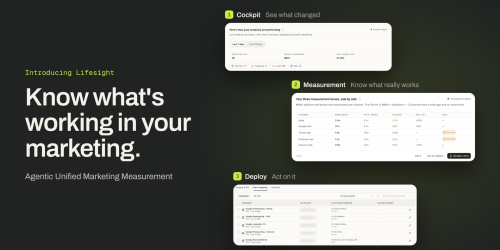
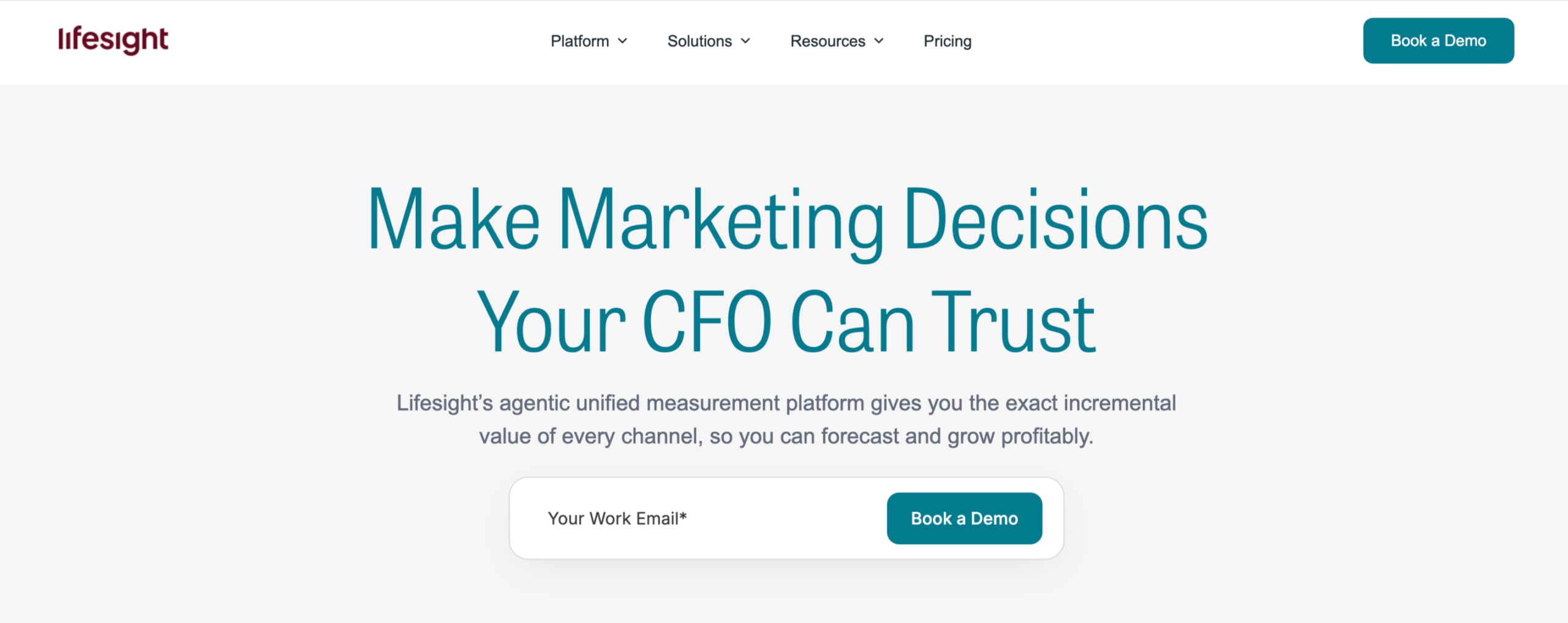
Lifesight is an agentic unified marketing measurement software platform designed to help brands understand the true impact of their marketing investments. Unlike traditional analytics tools that focus only on clicks, conversions, and last-touch attribution, Lifesight combines multiple measurement methodologies to provide a complete view of marketing performance.
The platform brings together Marketing Mix Modeling (MMM), incrementality testing, attribution, forecasting, and AI-powered recommendations into one unified marketing measurement solution.
Lifesight helps marketing teams understand which channels drive incremental revenue, optimize budget allocation, and make better investment decisions.
Key Features:
- Agentic Unified Marketing Measurement (UMM)
- Marketing Mix Modeling (MMM)
- Incrementality measurement
- Cross-channel performance analytics
- Budget optimization and forecasting
- AI-powered marketing insights
- Privacy-first measurement approach
- Causal Attribution
Pros:
- Provides a holistic view of marketing performance
- Goes beyond traditional attribution models
- Helps optimize marketing spend
- Designed for enterprise marketing teams
Cons:
- Best suited for organizations with sufficient marketing data
- More advanced capabilities may require analytics expertise
For companies searching for the best marketing measurement software to understand marketing ROI, Lifesight provides a comprehensive approach to measurement and optimization.
2. Google Analytics 4
Best Free Digital Marketing Analytics Tool
Best for: Businesses looking for free website and digital performance analytics
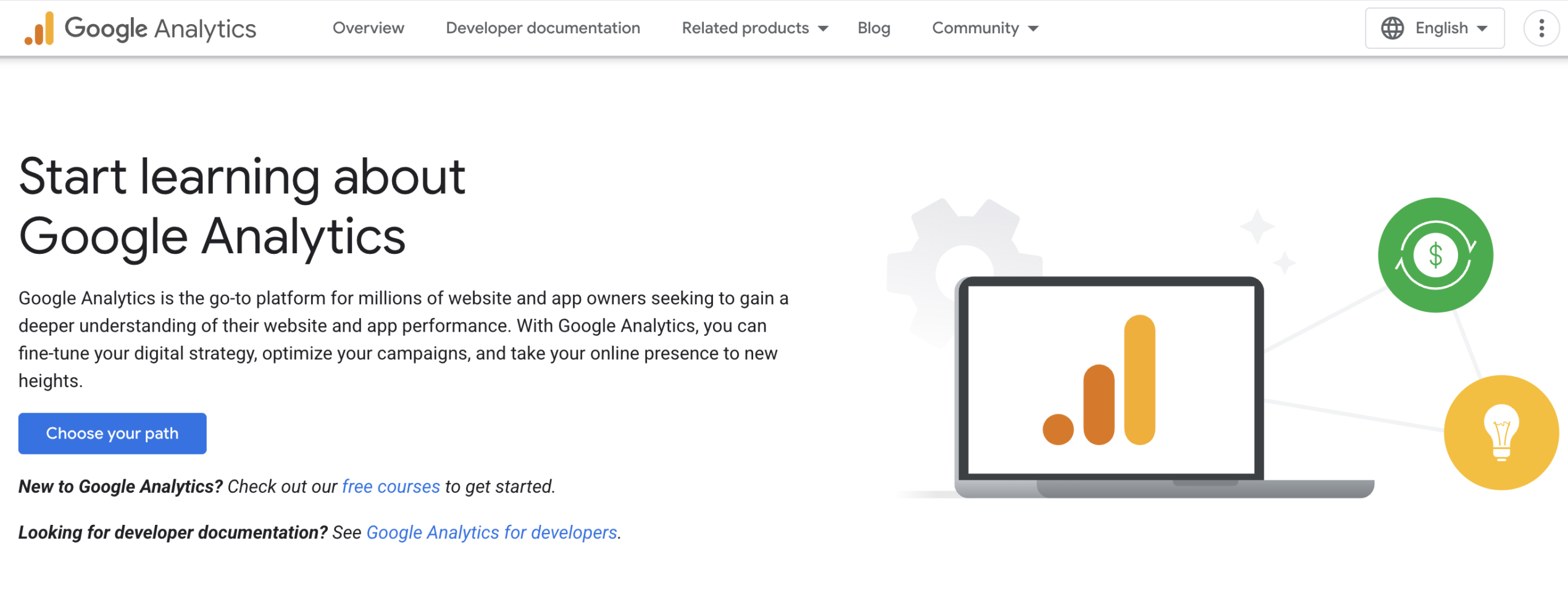
Google Analytics 4 (GA4) is one of the most widely used digital marketing analytics tools for tracking website and app performance. Built around an event-based measurement model, GA4 helps businesses understand user behavior, traffic sources, engagement patterns, and conversions across digital channels.
Unlike traditional analytics platforms that focus primarily on pageviews and sessions, GA4 provides a more complete view of customer interactions across websites and applications. It integrates closely with Google Ads, Search Console, and other Google products, making it a popular choice for businesses managing digital marketing campaigns.
However, GA4 primarily focuses on digital user behavior and does not provide advanced marketing measurement capabilities such as Marketing Mix Modeling (MMM), incrementality testing, or comprehensive offline revenue attribution.
Key Features:
- Event-based tracking for websites and apps
- User journey and engagement analysis
- Conversion tracking
- Audience segmentation
- Google Ads integration
- Custom reports and dashboards
- Predictive insights powered by machine learning
Pros:
- Free version available for most businesses
- Easy integration with Google marketing products
- Strong website and user behavior analytics
- Large ecosystem of integrations
Cons:
- Requires technical setup for advanced tracking
- Limited marketing ROI measurement capabilities
- Attribution insights can be challenging for complex customer journeys
- Can be biased to Google-owned platforms
For businesses searching for free marketing analytics tools, GA4 is an essential foundation for understanding online customer behavior. However, companies looking to measure complete marketing effectiveness need additional marketing measurement platforms.
3. Adobe Analytics
Best Enterprise Marketing Analytics Platform
Best for: Large enterprises requiring advanced customer journey analytics
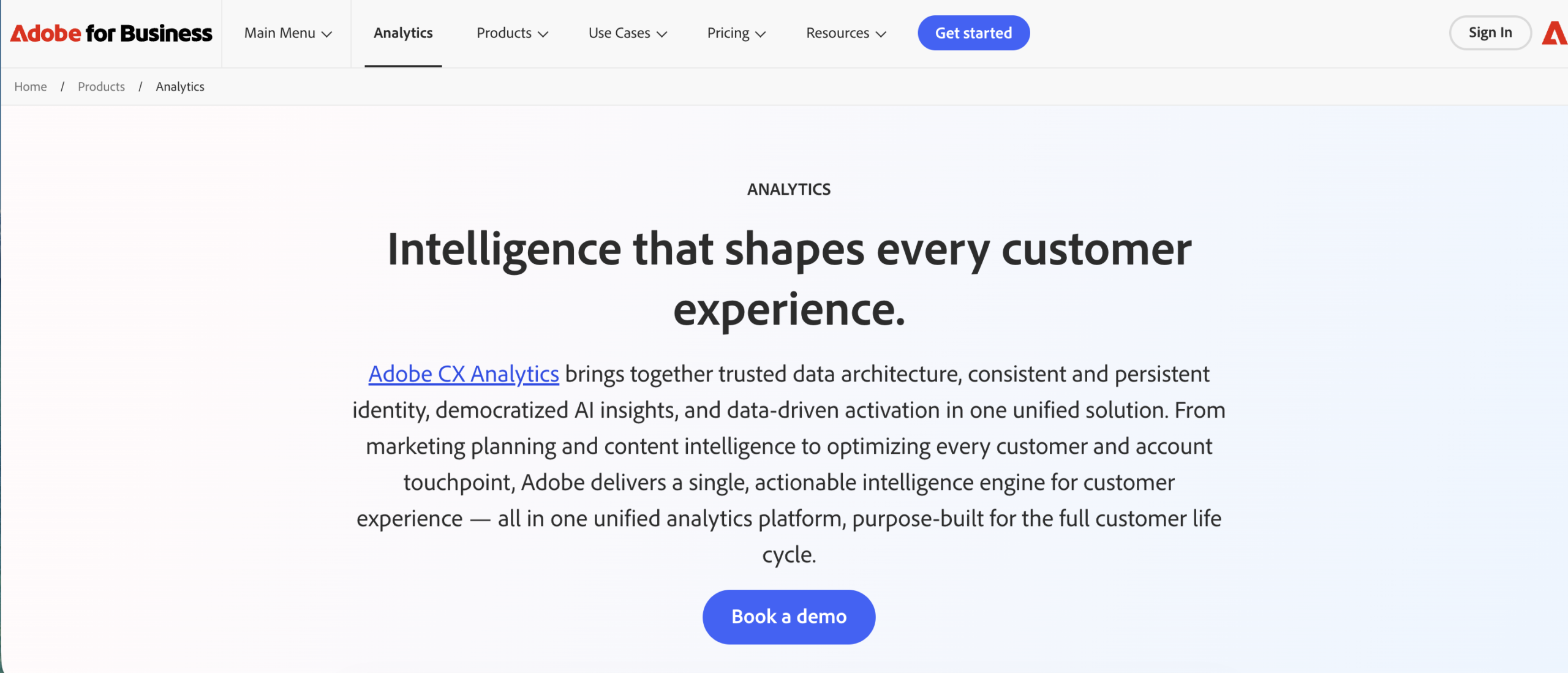
Adobe Analytics is an enterprise-level marketing analytics platform designed to help organizations analyze customer interactions across websites, mobile apps, and digital channels.
Part of Adobe Experience Cloud, Adobe Analytics provides advanced reporting, segmentation, and predictive analytics capabilities. It enables businesses to understand customer journeys, identify conversion opportunities, and optimize digital experiences.
Adobe Analytics is widely used by large organizations that require highly customizable analytics solutions and complex data analysis capabilities.
Key Features:
- Advanced customer journey analytics
- Real-time reporting
- Audience segmentation
- Cross-channel analytics
- Predictive analytics
- Custom dashboards
- Integration with Adobe Experience Cloud
Pros:
- Powerful enterprise analytics capabilities
- Highly customizable reporting
- Strong customer journey insights
- Supports large-scale data analysis
Cons:
- Expensive compared to other analytics solutions
- Requires technical expertise
- Longer implementation process
For enterprises searching for top marketing analytics software, Adobe Analytics provides advanced capabilities for understanding customer behavior and optimizing digital experiences.
4. Mixpanel
Best Product Analytics Platform
Best for: Product-led companies analyzing user behavior
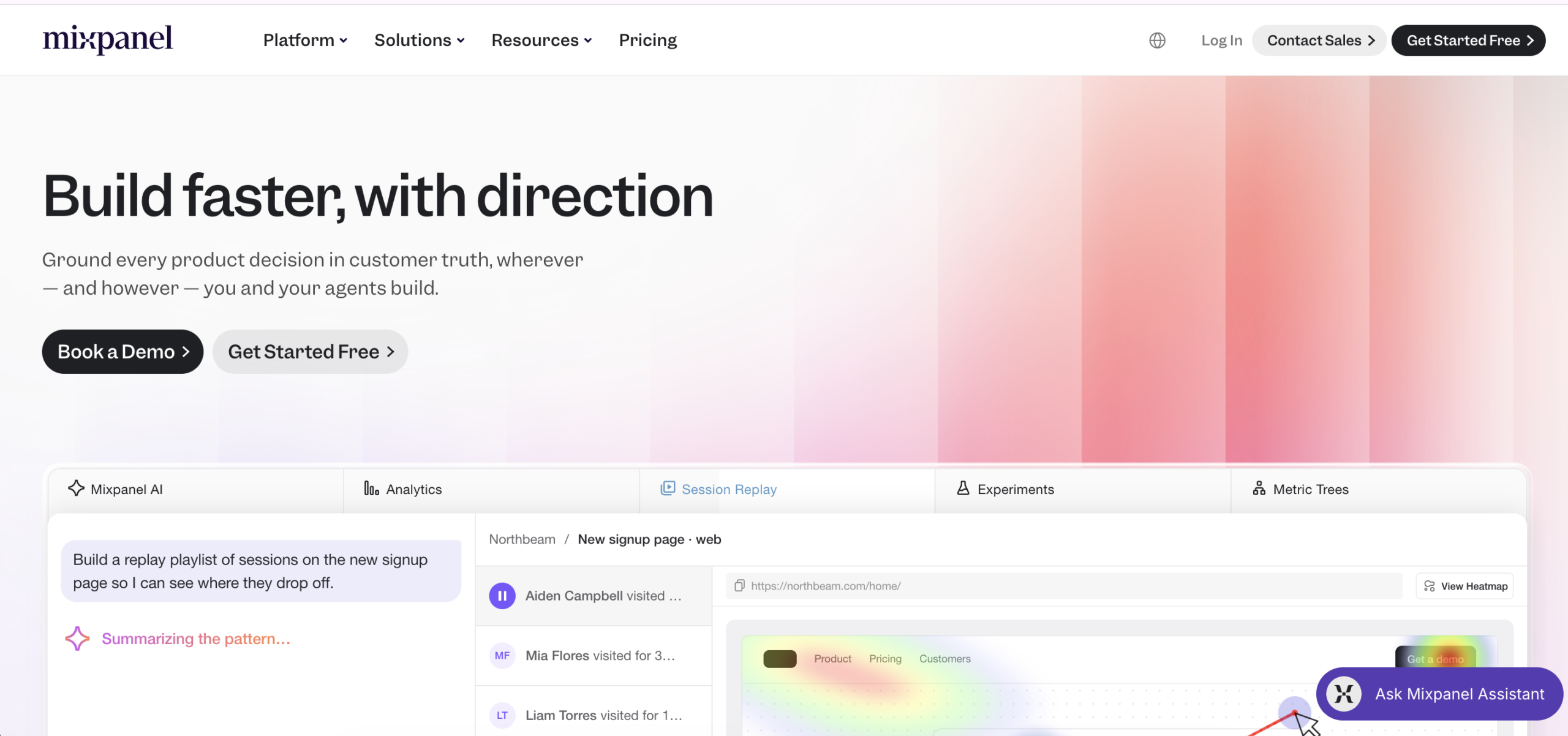
Mixpanel is a product analytics platform that helps businesses understand how users interact with their websites, applications, and digital products.
Unlike traditional marketing analytics software focused on campaign reporting, Mixpanel specializes in behavioral analytics. It enables teams to analyze user journeys, identify engagement patterns, improve retention, and optimize product experiences.
Mixpanel is commonly used by SaaS companies, mobile applications, and digital businesses that want deeper insights into customer behavior.
Key Features:
- User behavior tracking
- Funnel analysis
- Retention reports
- Cohort analysis
- Product engagement analytics
- User segmentation
- Experiment analysis
Pros:
- Excellent product-specific analytics capabilities
- Easy-to-use reporting interface
- Strong user behavior insights
- Useful for SaaS and digital products
Cons:
- Limited marketing attribution capabilities
- Not designed for advanced ROI measurement
- Requires additional tools for marketing performance analysis
Mixpanel is one of the best marketing analytics tools for understanding customer engagement within digital products, but businesses looking for full understanding of their marketing efforts may require additional solutions.
5. HubSpot Marketing Hub
Best CRM-Based Marketing Analytics Software
Best for: Businesses combining marketing automation and analytics
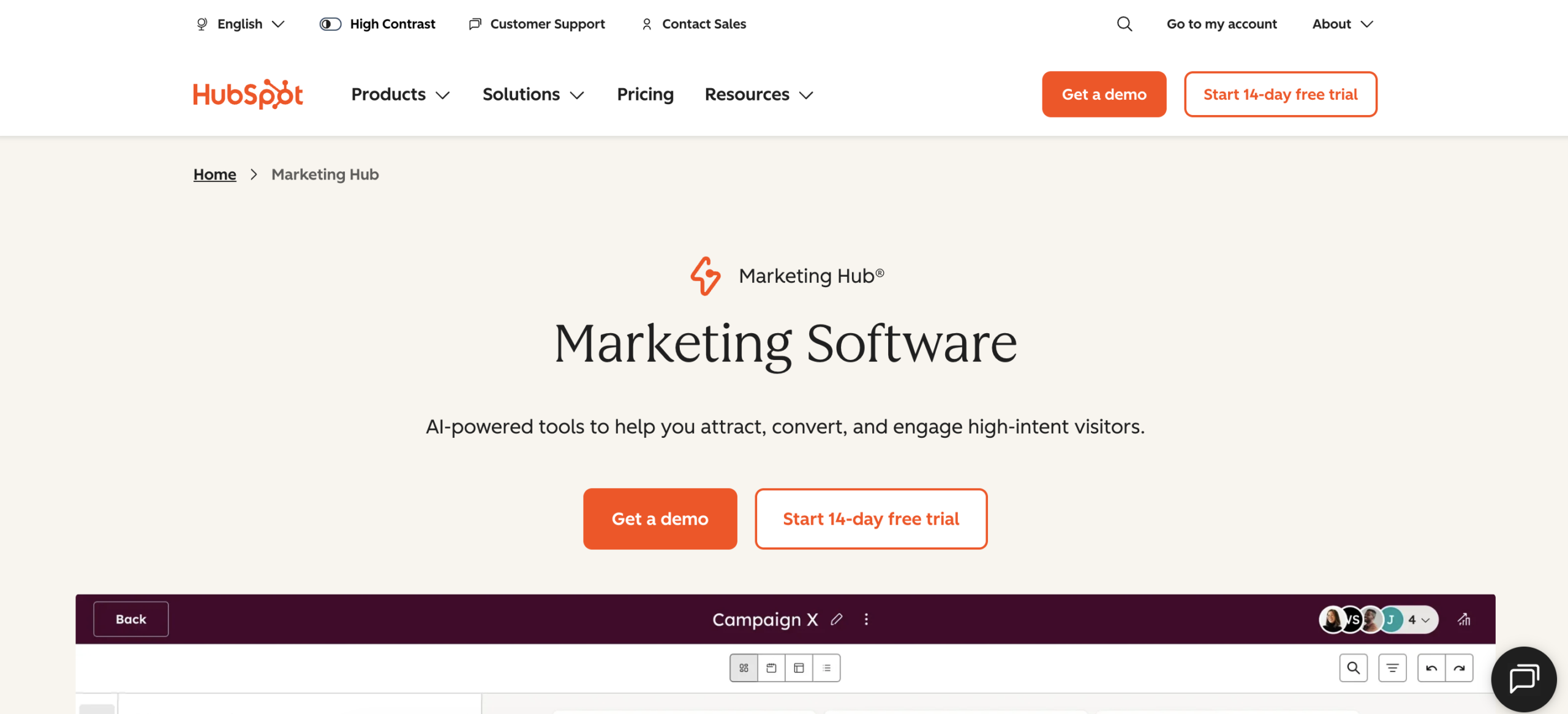
HubSpot Marketing Hub is an all-in-one marketing platform that combines CRM, automation, campaign management, and analytics capabilities.
The platform helps businesses track marketing campaigns, measure lead generation, analyze customer interactions, and understand how marketing activities influence revenue.
HubSpot is especially popular among B2B companies and growing businesses that want marketing analytics connected directly with their CRM data.
Key Features:
- Campaign performance reporting
- CRM analytics
- Email marketing analytics
- Lead attribution
- Marketing automation
- Customer lifecycle reporting
- Custom dashboards
Pros:
- Strong CRM integration
- Easy for marketing teams to use
- Combines marketing and sales data
- Good automation capabilities
Cons:
- Advanced analytics require premium plans
- Limited advanced measurement methodologies
- Less suitable for complex enterprise marketing measurement
HubSpot is a strong choice among marketing analytics platforms for businesses that need CRM-connected reporting and marketing automation. It is limited in showing how platforms interact with each other.
6. Improvado
Best Marketing Data Integration Platform
Best for: Marketing teams managing multiple data sources
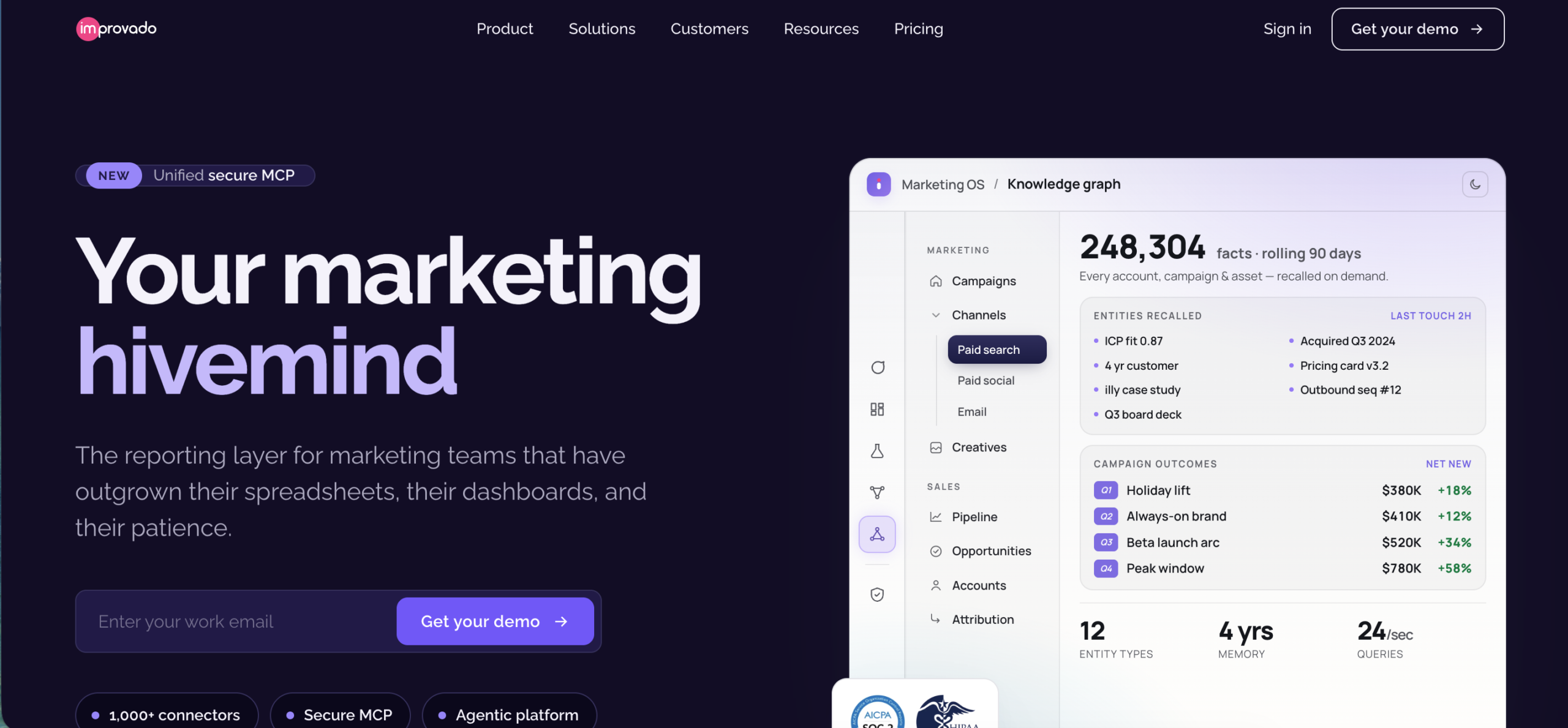
Improvado is a marketing data integration platform that helps organizations collect, transform, and analyze data from multiple marketing channels.
The platform simplifies marketing reporting by connecting advertising platforms, analytics tools, CRM systems, and business intelligence platforms into a centralized data environment.
Improvado is commonly used by enterprises and agencies that manage large volumes of marketing data.
Key Features:
- Automated marketing data collection
- Data pipeline management
- Cross-channel reporting
- Dashboard integrations
- Marketing performance analytics
- Data transformation capabilities
Pros:
- Reduces manual reporting efforts
- Supports many marketing platforms
- Helps centralize marketing data
- Enterprise-friendly integrations
Cons:
- Primarily focused on data management
- Requires visualization tools for deeper insights
- Does not provide advanced marketing measurement models
Improvado is one of the leading marketing analytics solutions for businesses that need centralized marketing data management and reporting automation. However, for marketers looking for more sophisticated tools for forecasting, measuring ad stock, or the halo effect of campaigns, you may find Improvado more limiting.
7. Supermetrics
Best Automated Marketing Dashboards & Data Aggregation Software
Best for: Automated marketing reporting and dashboards
Supermetrics is a marketing reporting platform that helps businesses collect marketing data from multiple channels and move it into reporting tools such as Google Sheets, Looker Studio, and BI platforms.
The platform is widely used by marketing teams and agencies that need automated reporting workflows.
Key Features:
- Marketing data connectors
- Automated reporting
- Dashboard creation
- Advertising data analysis
- Performance reporting
- BI integrations
Pros:
- Easy reporting automation
- Supports many marketing platforms
- Saves time on manual reporting
- Popular among agencies
Cons:
- Limited predictive analytics
- Requires external reporting tools
- Focuses more on reporting than measurement
Supermetrics is a strong option for companies looking for online marketing reporting software and automated marketing dashboards. For marketers looking for how channels interact with each other, Supermetrics reporting will be more limited.
8. Triple Whale
Best Ecommerce Marketing Analytics Platform

Best for: Ecommerce brands looking for customer and revenue insights
Triple Whale started as a real-time profit and ROAS tracker for Shopify brands, but has since evolved into a fuller ecommerce operating system. The platform now combines attribution, creative and product analytics, cohort and LTV analysis, and a managed data warehouse, with its Moby AI layer adding conversational analytics and autonomous agents that can monitor performance, flag anomalies, and suggest budget or campaign changes.
It integrates with major ecommerce platforms (Shopify, BigCommerce, WooCommerce), ad networks (Meta, Google, TikTok, Snapchat, Pinterest), and retention tools (Klaviyo, Recharge, Gorgias), and remains especially popular among Shopify and direct-to-consumer brands.
Key Features:
- Ecommerce analytics dashboards
- Advertising performance tracking
- Revenue and cohort/LTV analytics
- Moby AI conversational analytics and autonomous agents
- Attribution reporting
- Shopify, BigCommerce, and WooCommerce integrations
Pros:
- Built specifically for ecommerce, with deep Shopify integration
- AI agents extend the platform beyond passive reporting into recommended and automated actions
- Strong DTC/Shopify ecosystem
- Broadens coverage as brands scale past basic dashboards
Cons:
- Limited outside ecommerce use cases
- Less suitable for enterprise measurement needs
- Pricing scales up meaningfully as brands move into mid-market and enterprise tiers
Triple Whale is among the best marketing analytics companies for ecommerce brands that want a single platform spanning reporting and execution. Its strength is attribution and operational analytics rather than true causal measurement. For marketers who need to isolate the incremental impact of one channel or campaign on another, it remains more limited than a dedicated measurement platform.
See our detailed Lifesight vs Triple Whale comparison
9. Measured
Best Marketing Measurement Platform
Best for: Brands focused on advertising effectiveness and ROI measurement
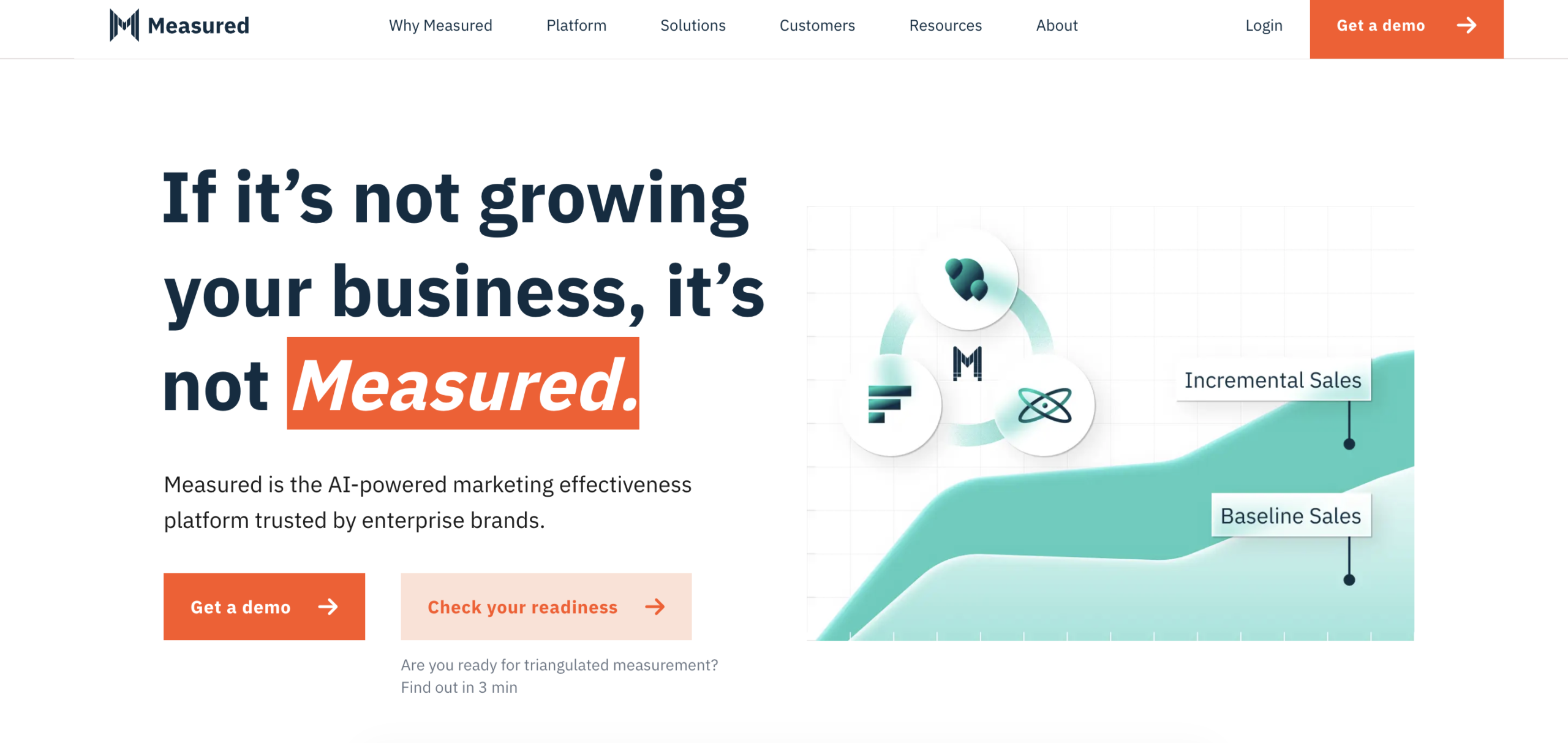
Measured is a marketing measurement platform that helps brands understand the impact of their advertising investments through advanced measurement methodologies.
The platform focuses on helping marketers evaluate campaign effectiveness, optimize media spending, and improve marketing performance.
Measured is primarily designed for enterprise brands that require deeper insights into advertising effectiveness.
Key Features:
- Marketing measurement
- Incrementality analysis
- Media performance insights
- Advertising optimization
- Campaign effectiveness reporting
- Cross-channel measurement
Pros:
- Strong focus on marketing measurement
- Helps evaluate advertising performance
- Enterprise-focused capabilities
- Supports data-driven decisions
Cons:
- Specialized mainly around measurement
- May require additional analytics tools
- Not designed for general website analytics
Measured is a strong option for organizations comparing marketing analytics software that focuses on understanding advertising impact and improving media investments.
Read our detailed Lifesight vs Measured comparison
10. Rockerbox
Best Marketing Attribution and Measurement Platform
Best for: DTC and eCommerce brands looking for multi-touch attribution and customer journey insights
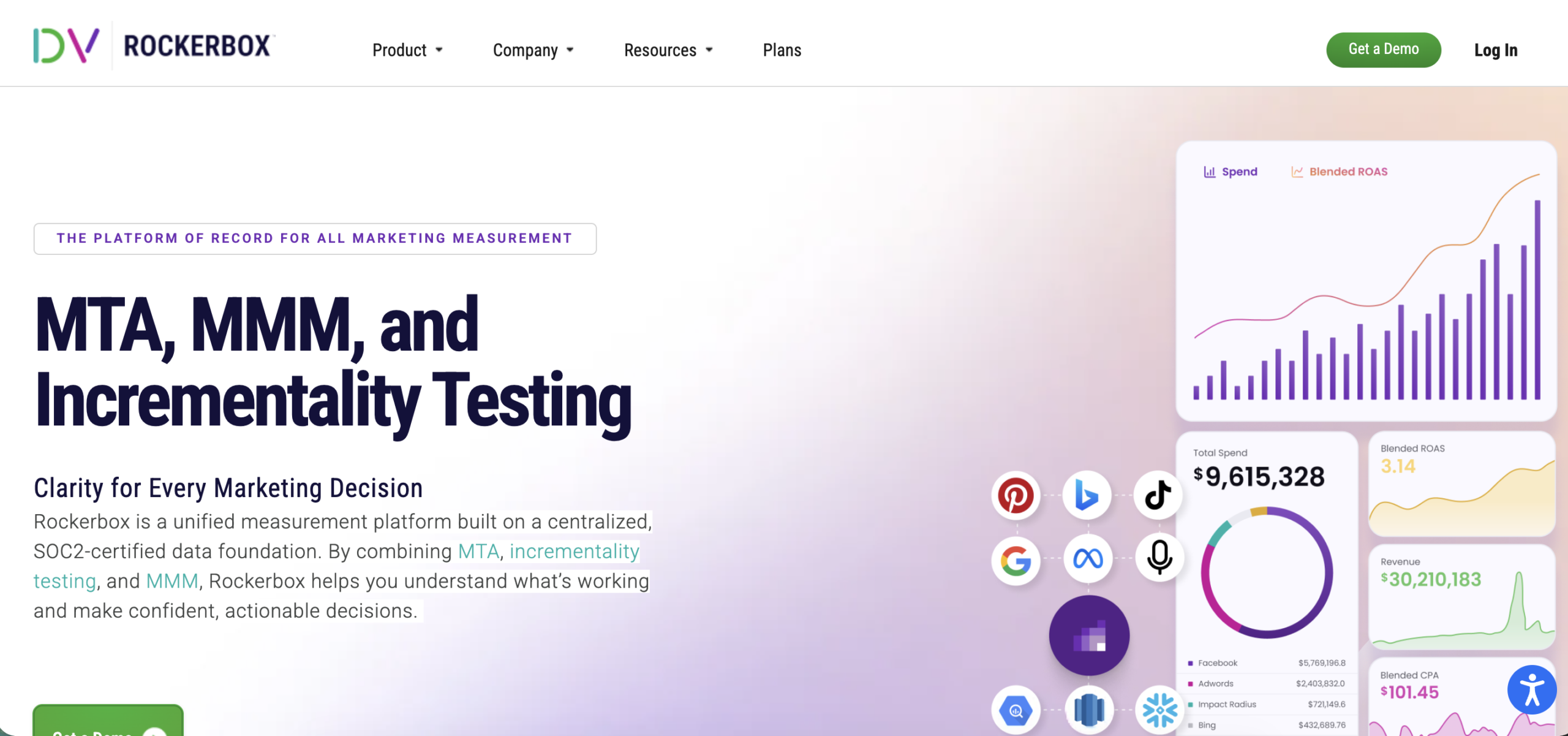
Rockerbox, owned by DoubleVerify, is a marketing analytics and attribution platform designed to help brands understand the impact of their marketing channels across the customer journey. The platform helps marketers move beyond last-click attribution by analyzing interactions across paid, owned, and offline channels.
Rockerbox provides multi-touch attribution, incrementality testing, and marketing performance insights to help brands understand which channels and campaigns contribute to revenue growth. It is commonly used by direct-to-consumer and eCommerce companies looking to improve marketing efficiency and optimize channel investments.
The platform helps marketing teams evaluate customer journeys, measure campaign effectiveness, and make data-driven decisions about media spend.
Key Features:
- Multi-touch attribution (MTA)
- Customer journey analytics
- Marketing channel performance measurement
- Incrementality testing
- Campaign and media optimization insights
- Data integrations with major marketing platforms
- Revenue attribution reporting
Pros:
- Strong focus on customer journey and attribution analysis
- Helps brands understand channel contribution beyond last-click metrics
- Designed for performance marketing teams
- Supports data-driven budget optimization
Cons:
- Primarily focused on attribution rather than full marketing measurement
- Best suited for brands with significant digital marketing activity
- May require additional solutions for advanced MMM and long-term forecasting
For companies searching for marketing analytics software to improve attribution accuracy and understand how different channels influence conversions, Rockerbox provides a focused solution for measuring and optimizing digital marketing performance.
How to Choose the Best Marketing Analytics Platform
When selecting a marketing analytics platform, consider:
1. Business Goals
Choose a solution based on whether you need reporting, customer insights, attribution, or ROI measurement.
2. Data Sources
Ensure the platform integrates with your advertising platforms, CRM, website analytics, and business systems.
3. Scalability
Enterprise businesses should prioritize platforms that support large datasets and complex measurement requirements.
4. AI Capabilities
Modern analytics solutions should provide predictive insights, automation, and recommendations.
5. Measurement Approach
Companies focused on growth should consider platforms that measure incremental impact instead of relying only on attribution.
Frequently Asked Questions
1. What is the best marketing analytics software in 2026?
The best marketing analytics software depends on business needs. Lifesight is ideal for companies looking for unified marketing measurement, ROI optimization, and advanced analytics capabilities.
2. What are the best marketing analytics tools?
The best marketing analytics tools include Lifesight, Google Analytics 4, Adobe Analytics, Mixpanel, HubSpot Marketing Hub, Improvado, Supermetrics, Triple Whale, Rockerbox, and Measured.
3. What is the difference between marketing analytics and web analytics?
Web analytics focuses on website visitors and user behavior, while marketing analytics evaluates campaign performance, customer journeys, and marketing ROI across multiple channels.
4. Why are marketing analytics platforms important?
Marketing analytics platforms help businesses understand performance, optimize spending, and make data-driven marketing decisions.
Final Thoughts
The demand for advanced marketing analytics software continues to grow as businesses look for better ways to measure performance and maximize marketing ROI.
While tools like Google Analytics 4 and Adobe Analytics provide valuable digital dashboards, modern marketers increasingly need platforms that connect marketing activities with business outcomes at scale.
For organizations looking for a complete marketing analytics solution, Lifesight provides a unified approach combining measurement, attribution, forecasting, and AI-powered insights to help teams make smarter marketing decisions.