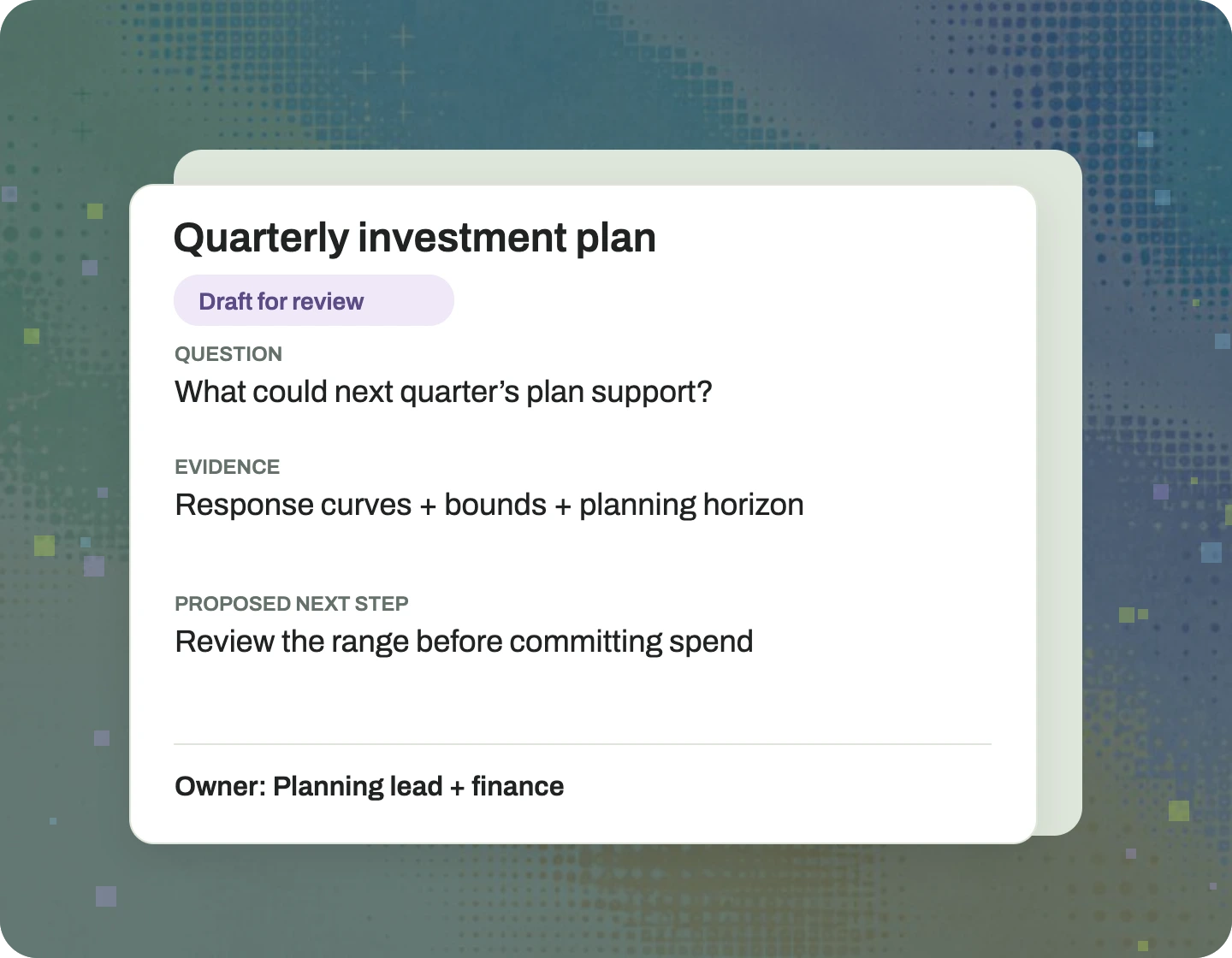
A forecast becomes useful when you can see which choices drive it. Set the objective and constraints, compare alternatives, and keep the expected range in the decision.
Planning inputs
Build around the budget you can actually use.
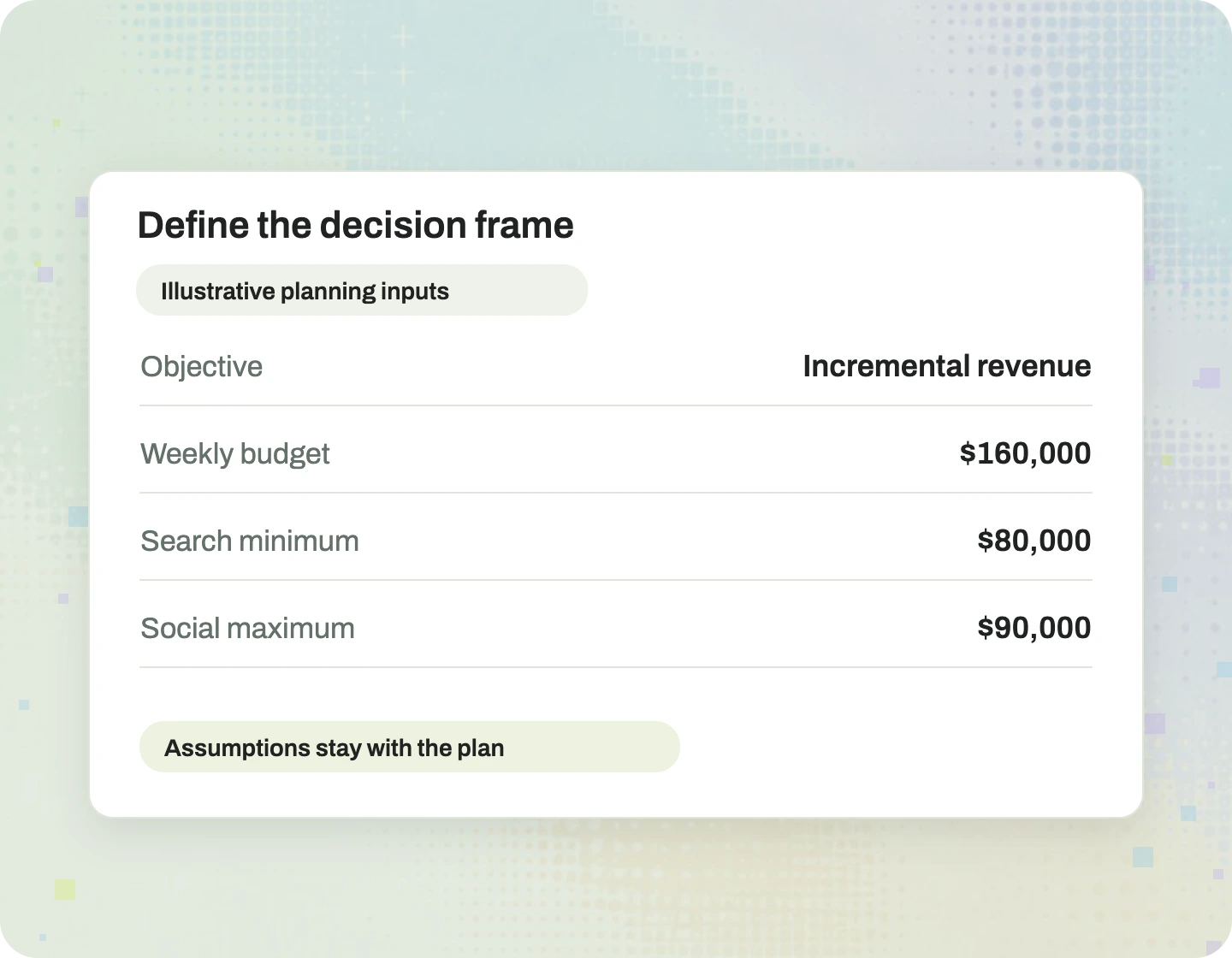
Set your goal, time frame and budget. Add channel limits and spend you have already committed, so every option is one you could actually run.
Use one outcome and a defined planning horizon.
Include budget bounds and channel commitments.
Scenario comparison
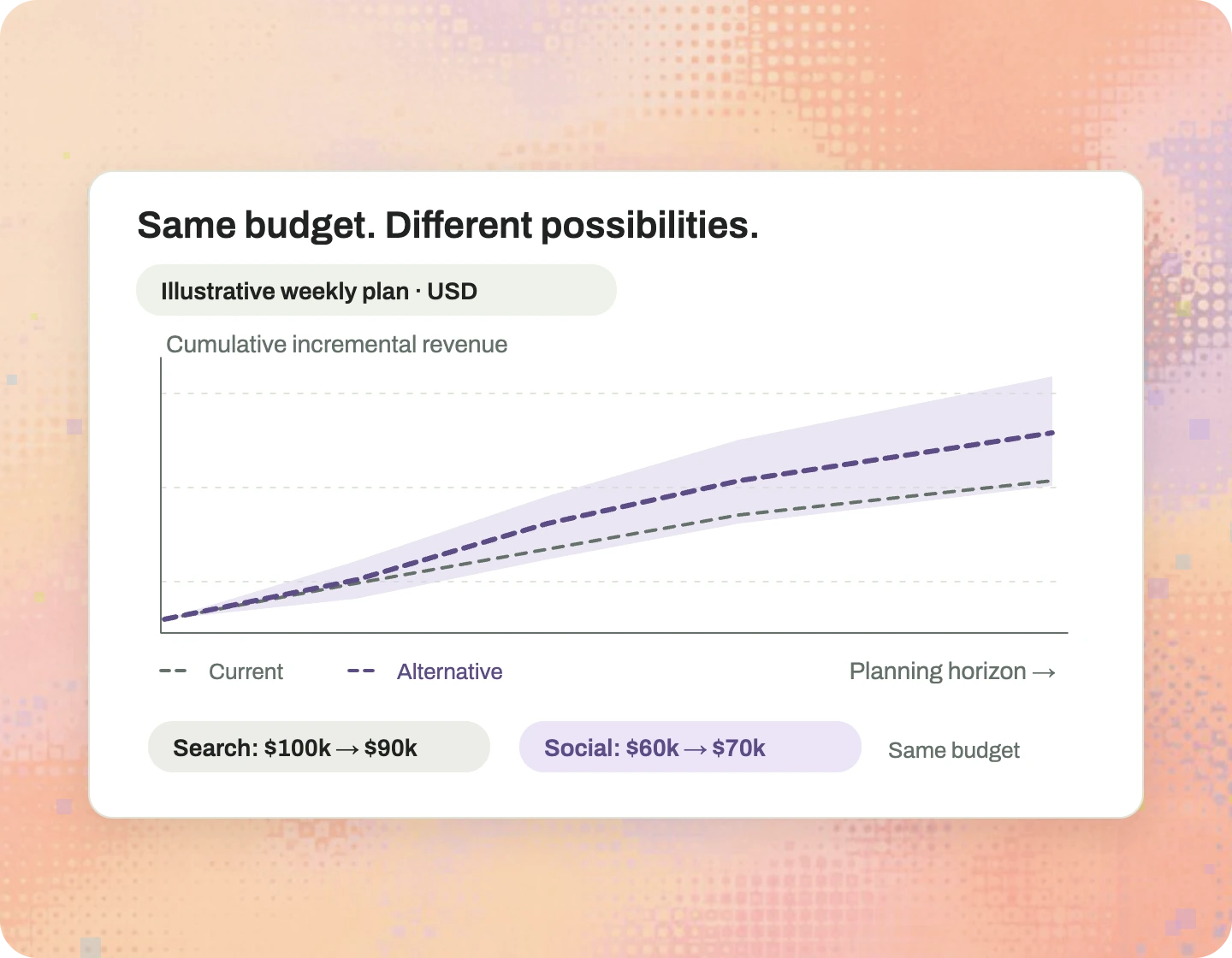
Change the allocation. See the estimated effect.
Move budget between channels and see the likely impact on sales. Compare your current plan with an alternative, side by side.
Forecast uncertainty
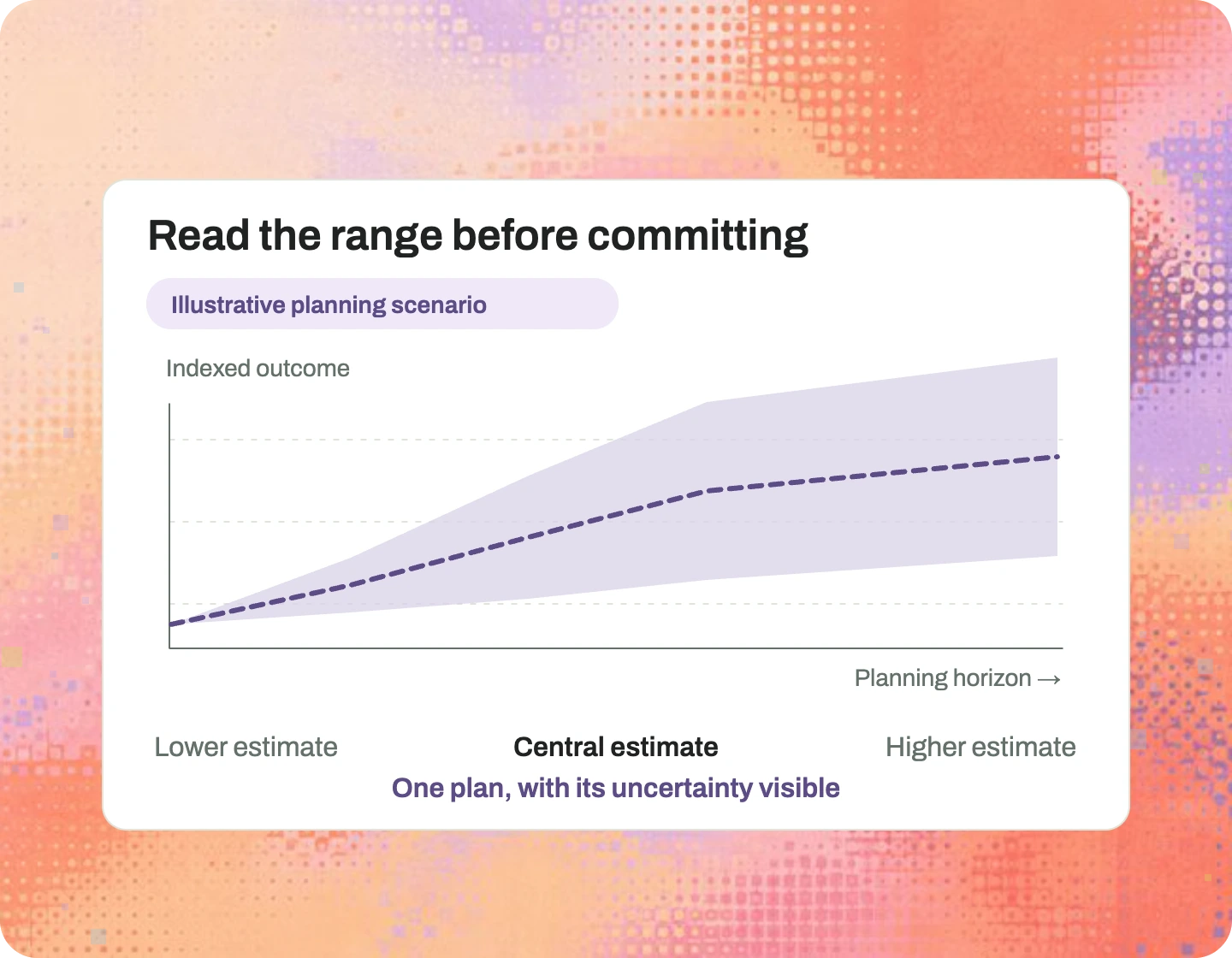
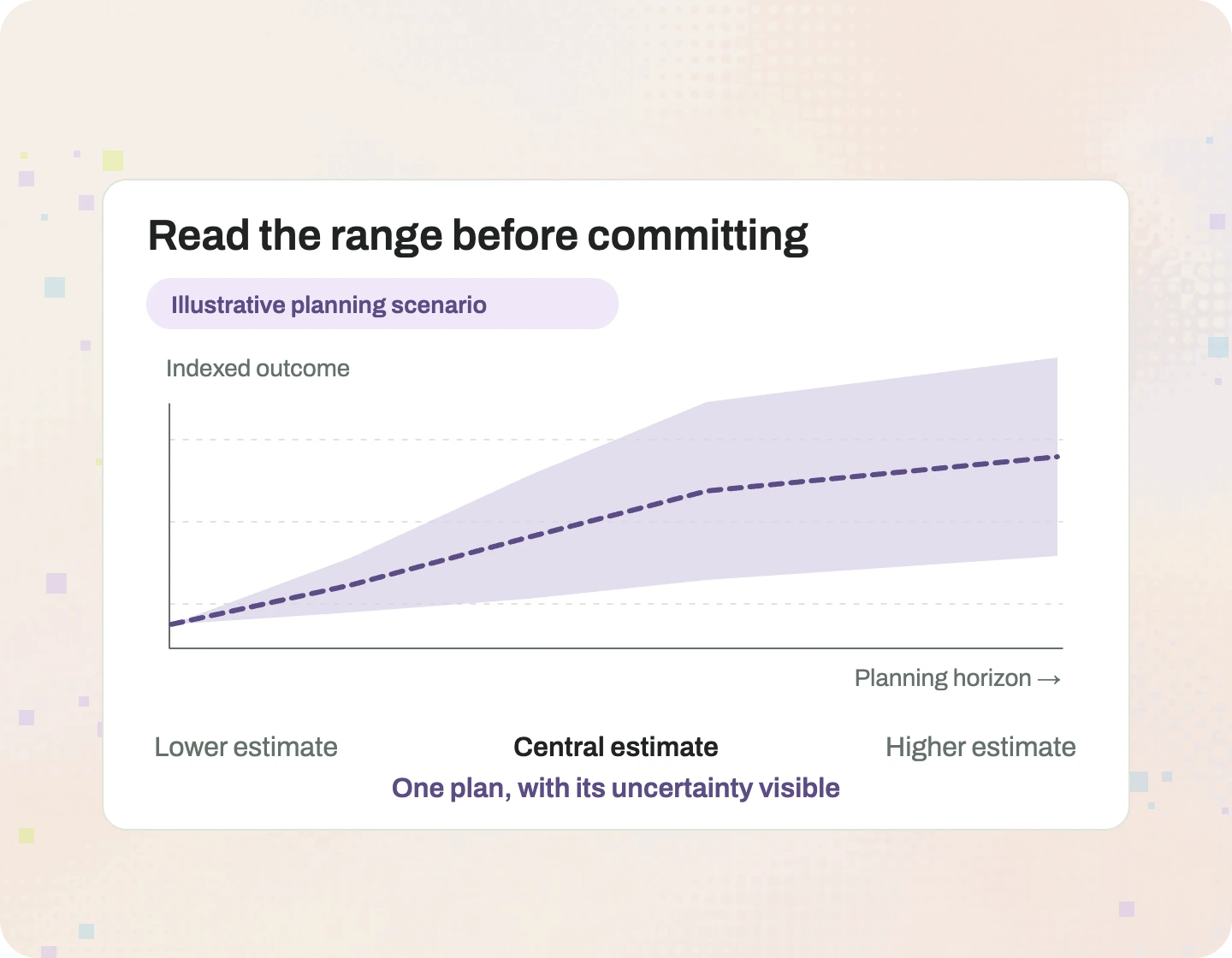
Put the range in the room.
Every forecast comes with a range, not just one number. See what could change the result before you commit the budget.
An owned plan
Leave with a plan and a reason to revisit it.
Save the plan you chose, why you chose it and who owns it. When new results come in or the business changes, you know when to revisit it.
Each step keeps the plan tied to the budget you can actually spend.
Set the objective
Choose the outcome and period the plan should support.
Add the real limits
Specify total spend, channel commitments and practical bounds.
Compare modeled scenarios
Compare plans side by side, with a range for each.
Choose a plan and checkpoint
Document the selected assumptions and what would trigger a revisit.
People + agents
Agents run the scenarios. Your team owns the plan.
Agents help explore scenarios and prepare the planning brief. Business and finance owners agree the assumptions, constraints and commitment.
Built around your business
Expertise that stays close to the work.
Work with Lifesight experts to establish your measurement program and put agents to work. Every engagement is scoped individually, with agreed responsibilities and ongoing support.
No. It is an estimate under stated assumptions. The range and sensitivity of outcomes matter as much as the central estimate.
Can the plan respect channel commitments?
Budget and channel constraints are part of scenario design. Agree the constraints your implementation should support during deployment.
Can we compare different total budgets?
Yes, a planning question can compare investment levels. Keep the objective, time horizon and assumptions clear so the comparison is meaningful.
How far ahead can we forecast?
Forecasting supports horizons up to roughly twelve months. The useful horizon depends on the decision, available evidence and how credible the business assumptions remain.
Can we work backwards from a target?
You can frame the planning question around the outcome to pursue and compare feasible allocations or investment levels. The model’s estimate and uncertainty should inform the target conversation, rather than be treated as a guarantee.
Keep exploring.
Platform
Causal MMM
Estimate marketing’s incremental contribution, understand diminishing returns and compare the next budget mix with a causal marketing mix model.
Platform
Budget optimization
Use incremental evidence and marginal returns to explore a better media mix, with the budget limits and review steps your business needs.
By team
Finance teams
Review incremental contribution, forecast assumptions and proposed allocations on a basis marketing and finance can share.