Plan for the booking, not just the click, with travel marketing measurement
Lifesight connects media investment to incremental bookings for hotels, airlines, cruise lines and OTAs. Account for seasonality, booking lead times and channel trade-offs before the next peak season.
Plan for when demand is created and when it converts.
Bring booking dates, travel dates and the planning horizon into a consistent frame. Compare the investment before the peak period arrives.
Outcome timing
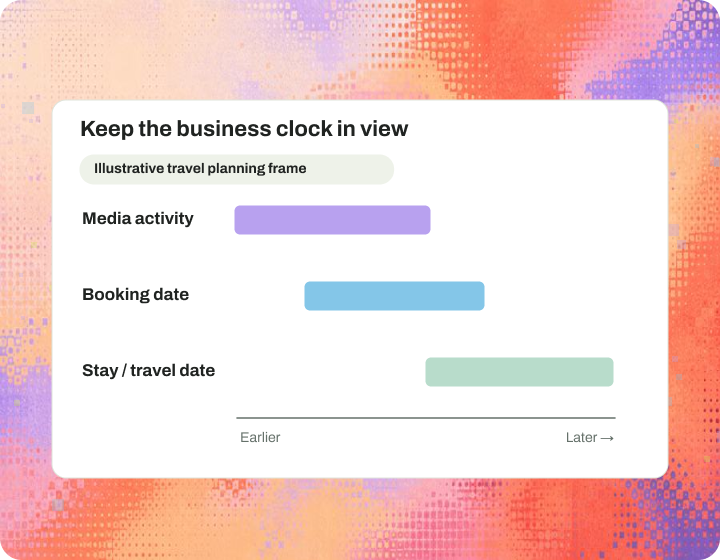
Measure bookings by booking date and by travel date
Booking-date and travel-date series answer different questions. Agree whether the model concerns bookings, revenue or another consistent outcome, then set the observation window and carryover assumptions to match your booking lead time.
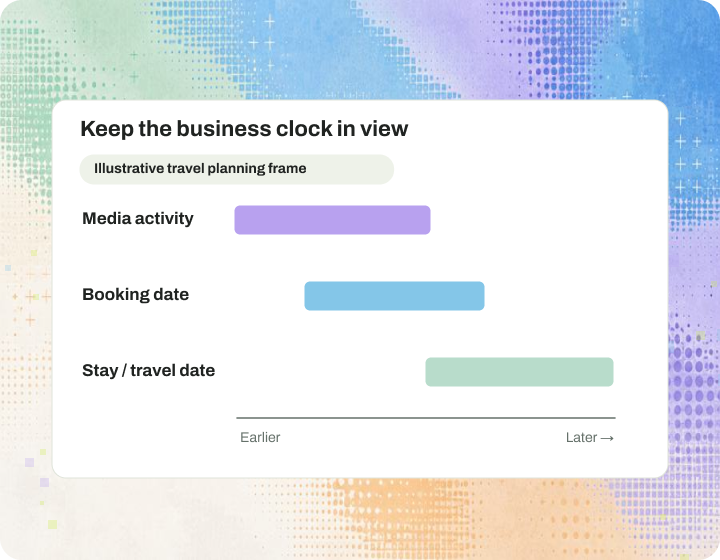
Keep the business clock in view.
Seasonal context
Separate seasonal demand from incremental bookings
Include relevant context and examine the method’s assumptions. A seasonal increase in bookings is not itself evidence that media caused it. Lifesight’s unified measurement accounts for seasonality, holidays and other demand conditions, so the estimate reflects what marketing added.
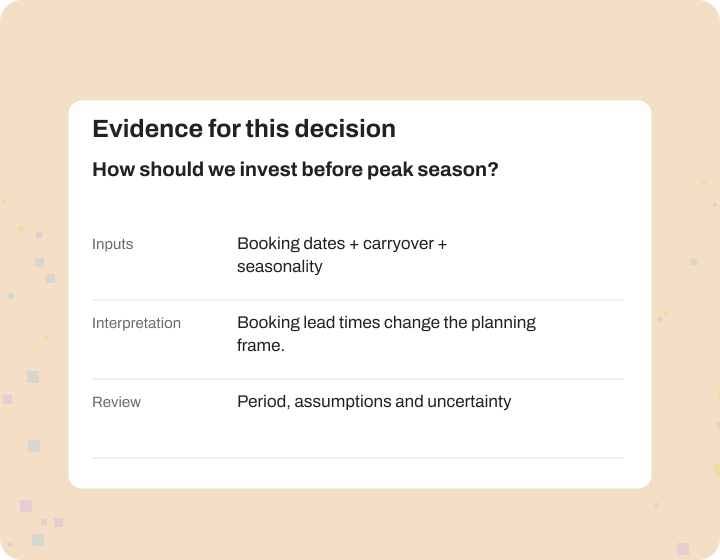
Read the estimate with the conditions it describes.
Forward planning
Plan the next booking-window investment
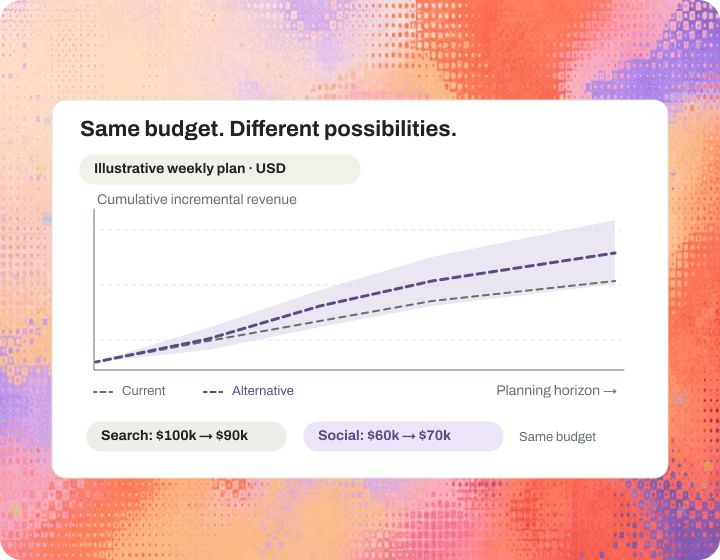
Explore your marketing mix with the same horizon and commitments. Discuss the forecast range and review triggers before the next booking window opens.
Keep the plan’s assumptions visible.
How it works
How travel marketing measurement works with Lifesight
Before peak season, the question is where to invest.
The method, context and review stay connected at each step.
Align dates and definitions
Separate booking dates from stay or departure dates.
Account for business context
Include seasonal demand, events and operating conditions that affect bookings. Travelers now discover destinations through AI assistants, social and OTAs, so include the channels that influence bookings before a click.
Explore media scenarios
Compare the next booking-window plan within channel commitments.
Review the assumptions
Choose the investment and agree when to revisit it.
Validate with incrementality testing
Geo-lift and holdout tests show which bookings your media caused and which would have happened anyway. Use incrementality testing to validate model estimates for the channels where a holdout is practical.
People and growth agents, with clear responsibility
AI agents help surface relevant changes, develop the investigation and prepare useful plans or briefs. Your team defines the goal, reviews the evidence and sets authority for supported actions.
Built around your business
Measurement expertise for travel marketing teams
Work with Lifesight experts to establish your measurement program and put growth agents to work. Every engagement is scoped individually, with agreed responsibilities and ongoing support.
How do you measure marketing effectiveness in the travel industry?
Combine causal marketing mix modeling for budget decisions, incrementality tests to validate what drives bookings, and incrementality-adjusted attribution for in-channel optimization. Measure all three against the same booking outcome and observation window.
What is incrementality in travel marketing?
Incrementality is the number of bookings that happened because of marketing, beyond the bookings that would have happened anyway. Measuring it separates demand your media created from existing demand, such as travelers already searching for your brand.
Why does last-click attribution fall short for travel?
Travel journeys span many sessions, devices and channels, including AI assistants, social and OTAs, and many of those touchpoints do not produce a measurable click. Last-click credits the final touch and misses earlier influence and offline effects.
Can we include offline and upper-funnel channels?
Yes. Causal MMM works from aggregate spend and outcome data, so it can include offline channels such as TV, radio and out-of-home alongside search, social and OTA placements. Incrementality tests then validate the estimates where a holdout is practical.
How do booking lead times affect measurement?
Travelers often see media weeks or months before they book. Measurement needs an observation window and carryover assumptions that match your booking lead time, and a clear choice between booking-date and travel-date reporting.
Can campaigns with different booking windows be compared?
Yes, when each campaign is measured against the same outcome and window definitions. Campaigns with longer booking windows need longer observation periods, so definitions are aligned before incremental results are compared.
Does a forecast capture every demand driver?
No. A forecast is a modelled range based on the drivers included and the assumptions stated. Planning in Lifesight shows forecast ranges and the assumptions behind them so your team can review them before committing budget.
Keep exploring.
Platform
Planning & forecasting
Compare media plans against the same objective, budget and constraints. Use modelled outcomes to make the next investment conversation more concrete.
Platform
Causal MMM
Estimate marketing’s incremental contribution, understand diminishing returns and compare the next budget mix with a causal marketing mix model.
By outcome
Plan growth with confidence
Explore the outcomes a media plan could support before committing the budget. Put scenarios, assumptions and trade-offs in front of the people making the decision.