Marketing budget optimization starts with knowing which spend is incremental. Lifesight’s causal engine models every budget shift, and growth agents prepare the move for your approval. Find the right budget mix without guessing.
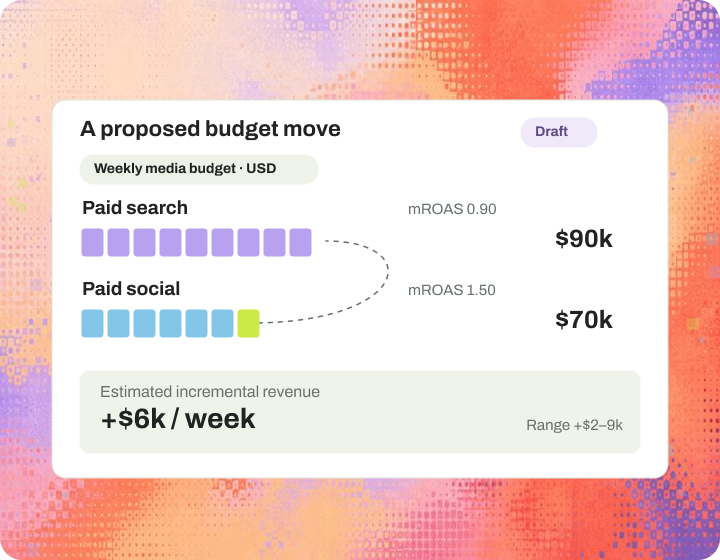
Marketing budget optimization is the practice of reallocating a fixed media budget across channels to maximize incremental revenue, not reported revenue. It relies on causal evidence, such as marginal ROAS from causal MMM and incrementality tests, rather than platform-reported ROAS, which often overcounts by 20–50%. Lifesight models each proposed shift within your commitments and constraints, then routes it to an owner for approval.
The approach
Set the boundaries
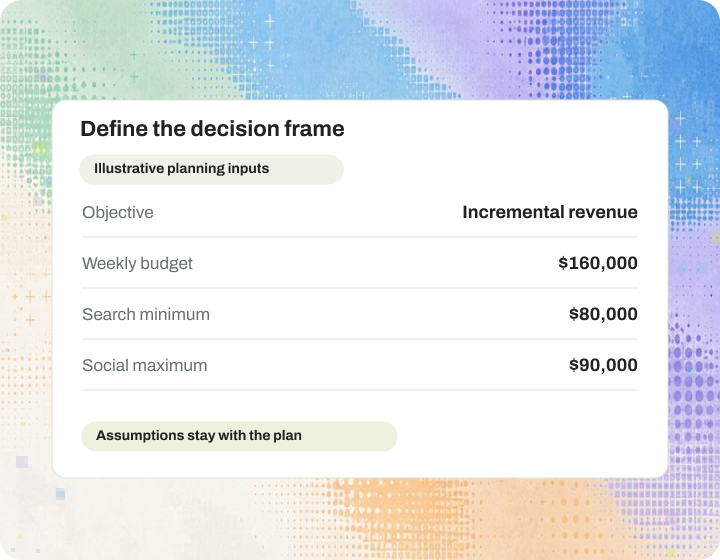
Include commitments before comparing plans. Agree the budget, horizon and channel limits, and include committed activity so every alternative can actually be run.
Compare the mix
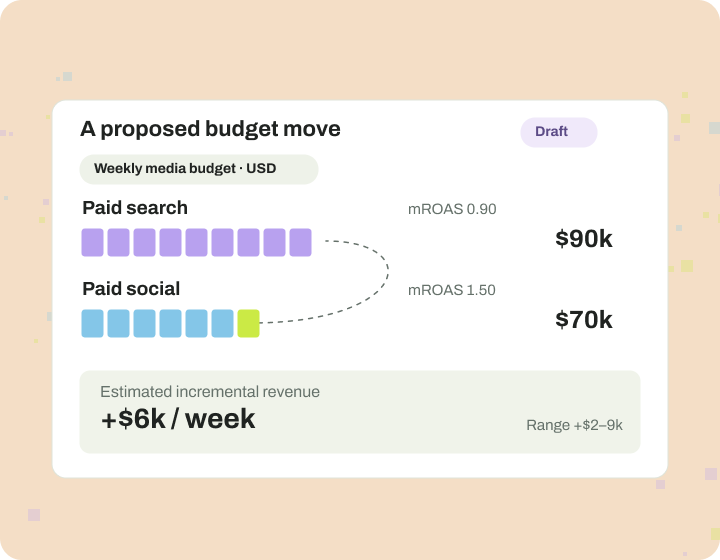
See the move and its estimated iRevenue together. Compare an alternative with your current plan: which channels gain or lose budget, the marginal ROAS evidence, and the range of modeled outcomes.
Approve the next move
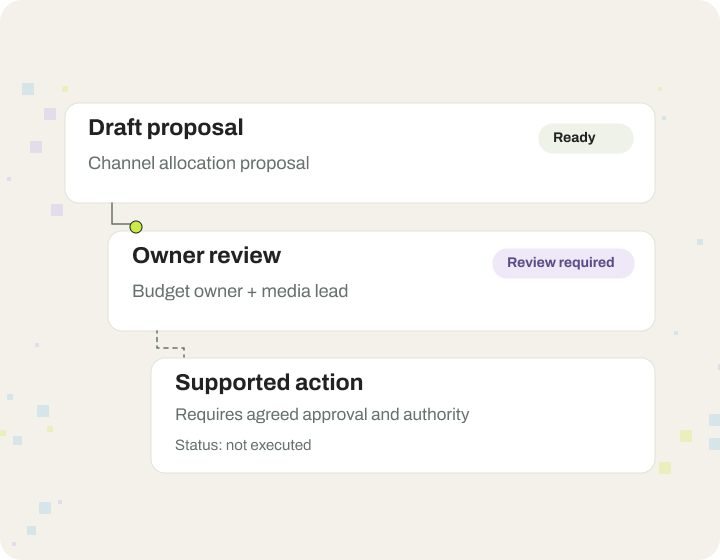
Growth agents draft the rationale and the changes. Your owner approves, and supported actions run only within the authority you set.
Why reported ROAS sends budget to the wrong places
Reported ROAS credits revenue that would have happened anyway, so budgets drift toward channels that look efficient but add little. Lifesight often finds roughly 40% of spend is non-incremental. Optimizing on iROAS and marginal response shows where the next dollar still drives revenue. Seidensticker reached 11.5% higher revenue at 11.7% lower spend.
How it Works
Build causal evidence for every budget decision
Set the budget envelope
Agree the total, objective, commitments and permitted changes.
Model the alternatives
Compare channel mixes within the same limits, using causal MMM and incrementality testing.
Inspect the proposal
Review what moves and the assumptions behind the estimated iRevenue.
Approve the next step
Confirm the owner and execution path, then measure the result.
People + agents
Agents that act, with clear responsibility
Growth agents surface changes, run the investigation and prepare plans and briefs. Your team sets the goal, reviews the causal evidence and defines what agents are authorized to do.
Built around your business
Expertise close to the work
Work with Lifesight experts to set up your measurement program and put growth agents to work. Every engagement is scoped individually, with agreed responsibilities and ongoing support.
Reallocating a fixed budget across channels to maximize incremental revenue, guided by causal evidence such as marginal ROAS rather than platform-reported results.
Why not allocate by historical ROAS?
Platform-reported ROAS often overcounts by 20–50% and says nothing about the next dollar. Incremental ROAS and marginal response show where additional spend still drives revenue.
Can we keep commitments fixed?
Yes. Committed spend, channel floors and caps are set before any mix is modeled.
How often should we revisit the mix?
[Your cadence, for example after each incrementality test or model refresh, and at each planning cycle.]
What should reviewers examine?
The objective and time window, which channels move, the marginal ROAS behind each move, and the range of modeled outcomes.
Keep Exploring
Platform
Marketing budget optimization platform
Use incremental evidence and marginal returns to explore a better media mix, with the budget limits and review steps your business needs.
By team
Finance teams
Review incremental contribution, forecast assumptions and proposed allocations on a basis marketing and finance can share.
Platform
Planning and forecasting
Compare media plans against the same objective, budget and constraints, and use modeled outcomes to make the next investment conversation more concrete.