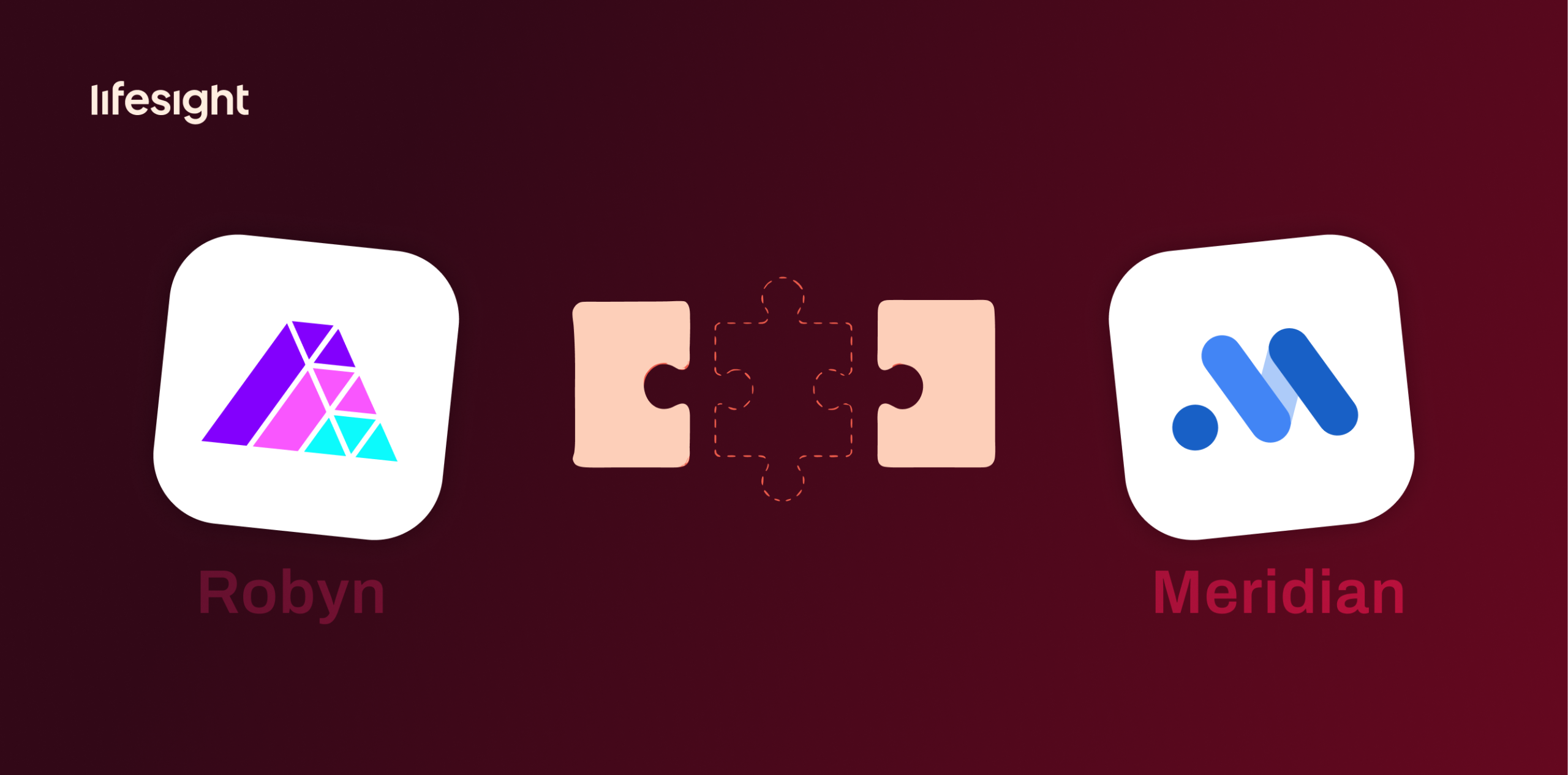
Google and Meta built free tools for marketing measurement. They’re called Meridian and Robyn. Both are open-source. Both promise to measure marketing without relying on tracking.
That sounds good. But there’s a catch.
Free doesn’t mean easy. Open-source doesn’t mean independent.
Meridian vs Robyn: Why “Free” Doesn’t Mean “Independent”
Google treats Meridian as a top priority. Its sales teams have goals tied to how many advertisers use it.
Meta built Robyn first, back in 2020. But reports say Meta has since cut back the team behind it.
The pitch sounds simple:
- Open-source code means you can see how the model works.
- If you can see it, you can trust it.
That’s a real step forward. Old tools, like last-click attribution, work like a black box. You can’t see inside them. Neither can newer tools like Google’s Performance Max.
But here’s the catch: “open” is not the same as “independent.”
Meridian and Robyn Are Built Around Their Own Platforms
Meridian is closely tied to Google’s other products. One expert said it maps Google’s entire media world in “loving, intricate detail.”
It draws real value from YouTube and Search data. No other channel gets that level of access.
This isn’t a conspiracy. It’s just how the tools were built.
- The company that owns the media also owns the model.
- That model measures its own performance.
- The result: a free tool that quietly favors its own platform.
Robyn and Meridian aren’t bad tools. They’re a good starting point. But many teams get stuck right there, at the start.
The Real Cost of Running Robyn and Meridian In-House
We hear the same story again and again. Brands try Robyn or Meridian. Then they call us.
This is exactly what happened with one global fitness brand.
They ran both tools first. Then they switched to Lifesight. Here’s what they told us.
1. You Need Specialist Skills
Robyn and Meridian aren’t plug-and-play. Getting real results takes data science skills.
- Most marketing teams don’t have these skills in-house.
- These skills are hard to hire for, too.
2. The Model Takes Constant Work
Setup is just step one. Keeping the model accurate takes ongoing effort. Someone has to:
- Refresh the data
- Retune the model
- Check that the outputs are still right
This isn’t a “set it and forget it” tool. It’s an ongoing job.
3. Insights Arrive Too Late
All that technical work takes time. By the time an insight is ready, the moment to use it may be gone.
Media moves fast. Slow insights have real monetary impact.
4. Only a Few People Can Use It
These tools need specialist knowledge to run. So only one or two technical people can use them well.
Everyone else has to wait and ask, including:
- Brand managers
- Regional leads
- Planners
5. Open Code Isn’t the Same as Real Clarity
Open-source code is easy to inspect. But that doesn’t mean it’s easy to understand.
The fitness brand wanted something different. They wanted the whole team to see how results were made, not just a data scientist reading raw code.
6. Long-Term Upkeep Sealed the Decision
They didn’t just think about setup. They thought ahead, months and years ahead.
The key question: how much work would it take to keep the model running well?
That question shaped their final decision.
What Teams Actually Need: Marketing Mix Modeling The Whole Team Can Use
All these problems point to one thing. The brand didn’t just want a model. They wanted a tool their whole team could understand and make timely decisions from.
They wanted:
- Planners to check insights without asking a data scientist
- Regional teams to explore results on their own
- Finance to understand outputs without a translator
That’s the real gap in Robyn and Meridian. They can build a solid model. But they can’t make it fast, clear, and easy for everyone.
That’s what Lifesight is built for:
- The same modeling rigor as MMM
- No need for an in-house data science team
- No weeks-long wait for answers
- Insights any planner can open, understand, and use
The Real Question Isn’t Open-Source vs. Closed-Source
It’s not that Google or Meta are acting in bad faith. It’s simpler than that: a tool built by a platform will always favor that platform. That’s just the incentive.
So the real question isn’t whether a model is open-source. It’s this:
Can my team run it, trust it, and act on it fast enough to matter?
For this brand, the answer was no. Not because the models were wrong. Because running them in-house took more effort than it was worth.
Free tools still cost something. You just pay in a different way:
- Specialist hours
- Slow insights
- Teams locked out of their own data
Ready to get more from your marketing mix model?
Learn how this global fitness brand replaced Robyn and Meridian with a causal measurement platform their whole team can actually use, no data science team required.