Marketing measurement has reached a turning point.
Traditional attribution models no longer provide a complete picture of marketing performance. Privacy regulations, browser restrictions, walled gardens, and AI-driven customer journeys have made it increasingly difficult to understand what truly drives revenue.
At the same time, marketing leaders are under more pressure than ever to justify every dollar spent.
This is where Unified Marketing Measurement (UMM) comes in.
Instead of relying on a single methodology, Unified Marketing Measurement combines Marketing Mix Modeling (MMM), Multi-Touch Attribution (MTA), Incrementality Testing, and AI-powered forecasting into one measurement framework. The result is a far more accurate view of marketing performance across both online and offline channels.
The newest generation of marketing analytics tools goes beyond reporting dashboards. They help marketers predict outcomes, optimize budgets, identify revenue drivers, and automate decision-making using AI.
Whether you’re an enterprise CMO, growth marketer, retail brand, healthcare organization, or marketing agency, this guide will help you choose the right marketing measurement platform for your needs.
What Is Unified Marketing Measurement (UMM)?
Unified Marketing Measurement (UMM) is an advanced marketing measurement approach that combines multiple methodologies into a single framework to evaluate marketing effectiveness.
Instead of relying solely on attribution or MMM, UMM integrates:
- Marketing Mix Modeling (MMM)
- Multi-Touch Attribution (MTA)
- Incrementality Testing
- Media Mix Optimization
- AI Forecasting
- Budget Simulation
- Predictive Analytics
This unified approach enables marketers to understand not only what happened but also why it happened and what to do next.
Unlike traditional marketing attribution platforms, UMM provides a more comprehensive understanding of the customer journey by combining historical data, statistical modeling, experimentation, and machine learning.
Why Traditional Marketing Measurement Is Failing
Many organizations still rely on last-click or rule-based attribution.
Unfortunately, these methods struggle with:
- Cookie deprecation
- Cross-device journeys
- Offline conversions
- Privacy restrictions
- Walled gardens
- Brand marketing measurement
As a result, marketing teams often overinvest in channels that appear successful while underestimating upper-funnel campaigns that influence conversions indirectly.
Modern marketing analytics software addresses these challenges by combining causal measurement techniques with AI-powered recommendations.
Why Businesses Are Switching to Unified Marketing Measurement in 2026
1. Privacy-First Measurement
As third-party cookies disappear and privacy regulations tighten, marketers need privacy-safe measurement methods that don’t rely solely on user-level tracking.
2. AI-Powered Budget Optimization
Leading platforms now recommend where marketers should shift budgets before campaigns begin, reducing wasted spend.
3. Cross-Channel Visibility
Leading platforms provide a unified view of marketing performance across multiple online and offline channels, helping organizations measure the impact of every campaign from a single dashboard.
4. Executive Reporting
Rather than presenting dozens of disconnected reports, UMM provides a single source of truth for marketing performance.
This helps marketing leaders communicate ROI more effectively to finance teams and executive stakeholders.
How We Evaluated the Best Unified Marketing Measurement Tools
To identify the best marketing analytics platforms, we evaluated each solution across several criteria.
| Evaluation Criteria | Why It Matters |
| Unified Measurement | Combines MMM, MTA, and Incrementality |
| AI Capabilities | Forecasting, recommendations, automation |
| Attribution Accuracy | Handles privacy and cross-channel data |
| Integrations | Ad platforms, CRM, CDPs, analytics |
| Reporting | Executive dashboards and insights |
| Enterprise Readiness | Scalability and governance |
| Ease of Implementation | Deployment speed and maintenance |
| Innovation | AI agents, automation, predictive modeling |
The 6 Best Unified Marketing Measurement (UMM) Tools in 2026
The best Unified Marketing Measurement (UMM) tools in 2026 combine Marketing Mix Modeling (MMM), attribution, incrementality testing, and AI-powered analytics to help marketers measure and optimize campaign performance. The top UMM platforms are Lifesight, Measured, Haus, LiftLab, Recast and Rockerbox.
Related Read: 10 Best Marketing Mix Modeling Software
1. Lifesight
Best Overall Agentic Unified Marketing Measurement Platform
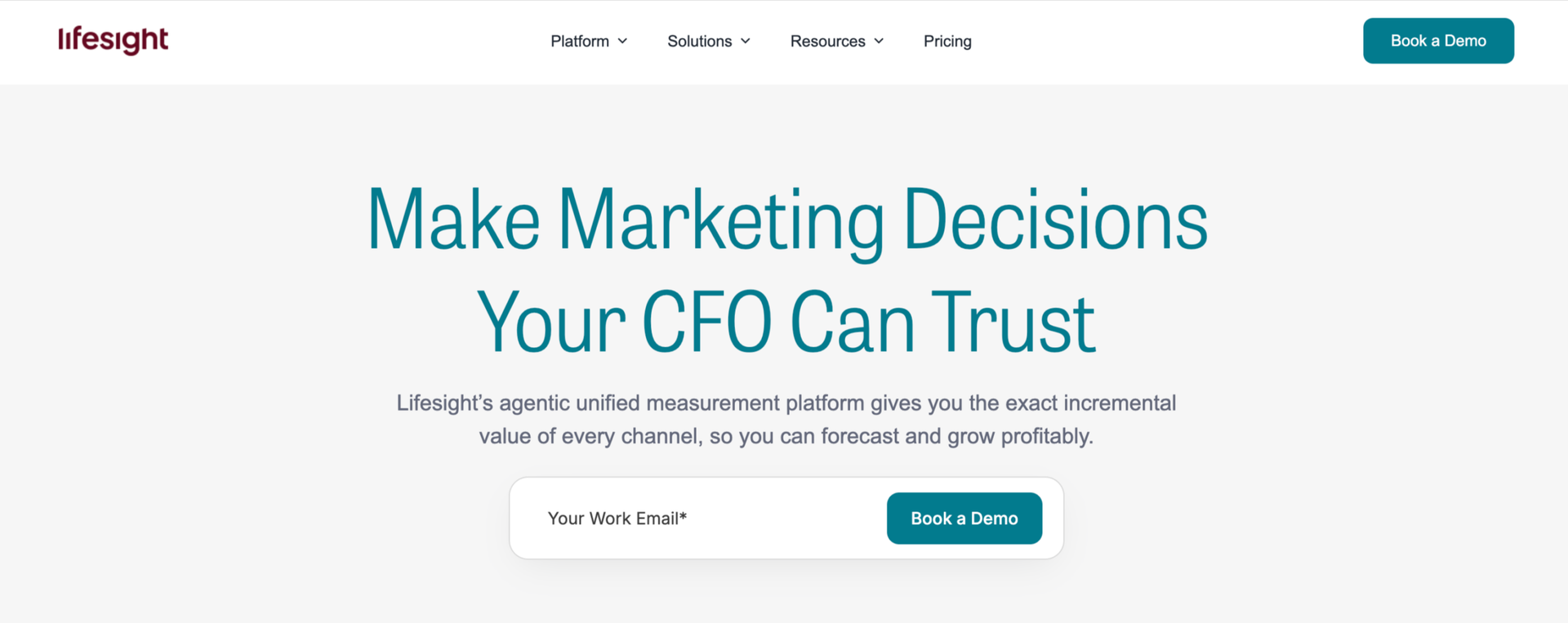
Lifesight is an Agentic Unified Marketing Measurement (UMM) platform that helps marketers measure, optimize, and forecast marketing performance using a single source of truth. Unlike traditional marketing analytics tools that rely on one methodology, Lifesight combines Marketing Mix Modeling (MMM), Multi-Touch Attribution (MTA), Incrementality Testing, AI-powered forecasting, and autonomous AI agents into one platform.
Its latest innovations—including MIA (Marketing Intelligence Agent), Planner, Optimizer, and MCP integration for ChatGPT and Claude—enable marketing teams to move beyond reporting and take action with AI-powered recommendations. This makes Lifesight one of the most comprehensive marketing measurement platforms available in 2026.
Key Features
- Agentic Unified Marketing Measurement (UMM)
- Marketing Mix Modeling (MMM)
- Incrementality Testing
- Causal Attribution
- AI Marketing Intelligence Agent (MIA)
- Budget Optimizer
- MCP for Claude & ChatGPT
- Creative Intelligence
Pros
- Truly unified marketing measurement methodology
- AI agents that recommend optimization opportunities
- Combines MMM, attribution, and incrementality in one platform
- Enterprise-grade scalability and security
- Privacy-first architecture
- Strong forecasting and scenario planning capabilities
Cons
- Better suited for medium and large enterprises
- Advanced capabilities may exceed the needs of smaller marketing teams
Best For: Enterprise brands, Retail, Healthcare, B2B SaaS, Multi-location businesses
2. Measured
Best Marketing Measurement Platform for Enterprise Media Effectiveness
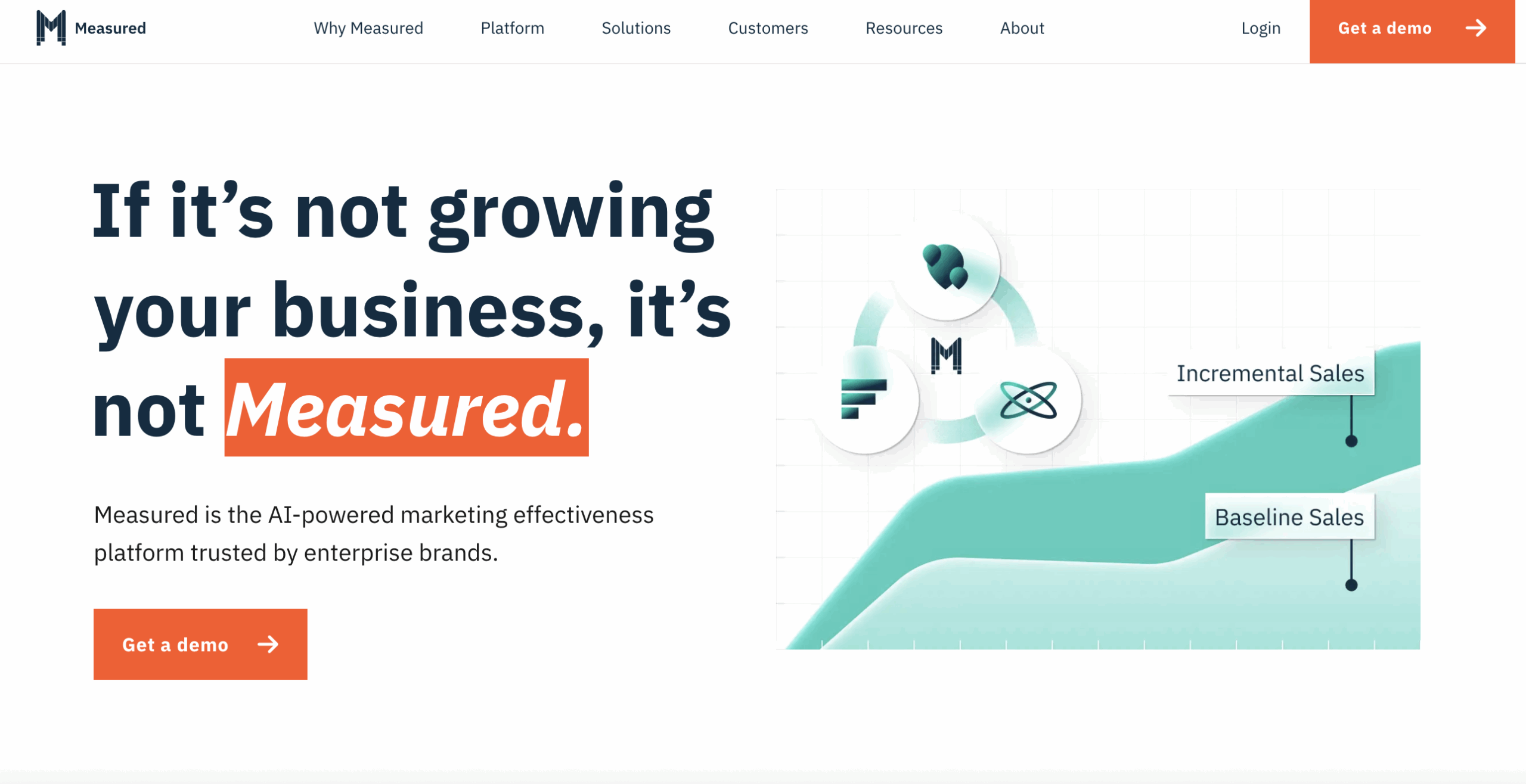
Measured is an AI-powered marketing measurement platform designed to help enterprise marketers understand the incremental impact of their advertising. The platform combines Marketing Mix Modeling (MMM), incrementality testing, media planning, and AI-driven optimization to improve marketing effectiveness across paid media channels.
Measured’s triangulated measurement methodology helps organizations validate media performance while optimizing future budget allocation. It is particularly well suited for enterprise brands seeking privacy-safe measurement and strategic media planning.
Key Features
- Marketing Mix Modeling (MMM)
- Always-on Incrementality Testing
- AI Media Plan Optimizer
- Cross-channel Reporting
- Budget Forecasting
- Scenario Planning
- Enterprise Dashboards
- Omnichannel Measurement
Pros
- Combines MMM and incrementality in one platform
- AI-powered media planning and forecasting
- Excellent cross-channel reporting
- Built specifically for enterprise marketing organizations
- Strong privacy-first measurement framework
- Trusted by global enterprise brands
Cons
- Enterprise-focused pricing and implementation
- Requires significant historical marketing data for optimal results
Best For: Large enterprises managing high-volume digital and offline media investments.
Want to see how it compares? Read Lifesight vs Measured.
3. Haus
Best Marketing Analytics Platform for Incrementality Testing
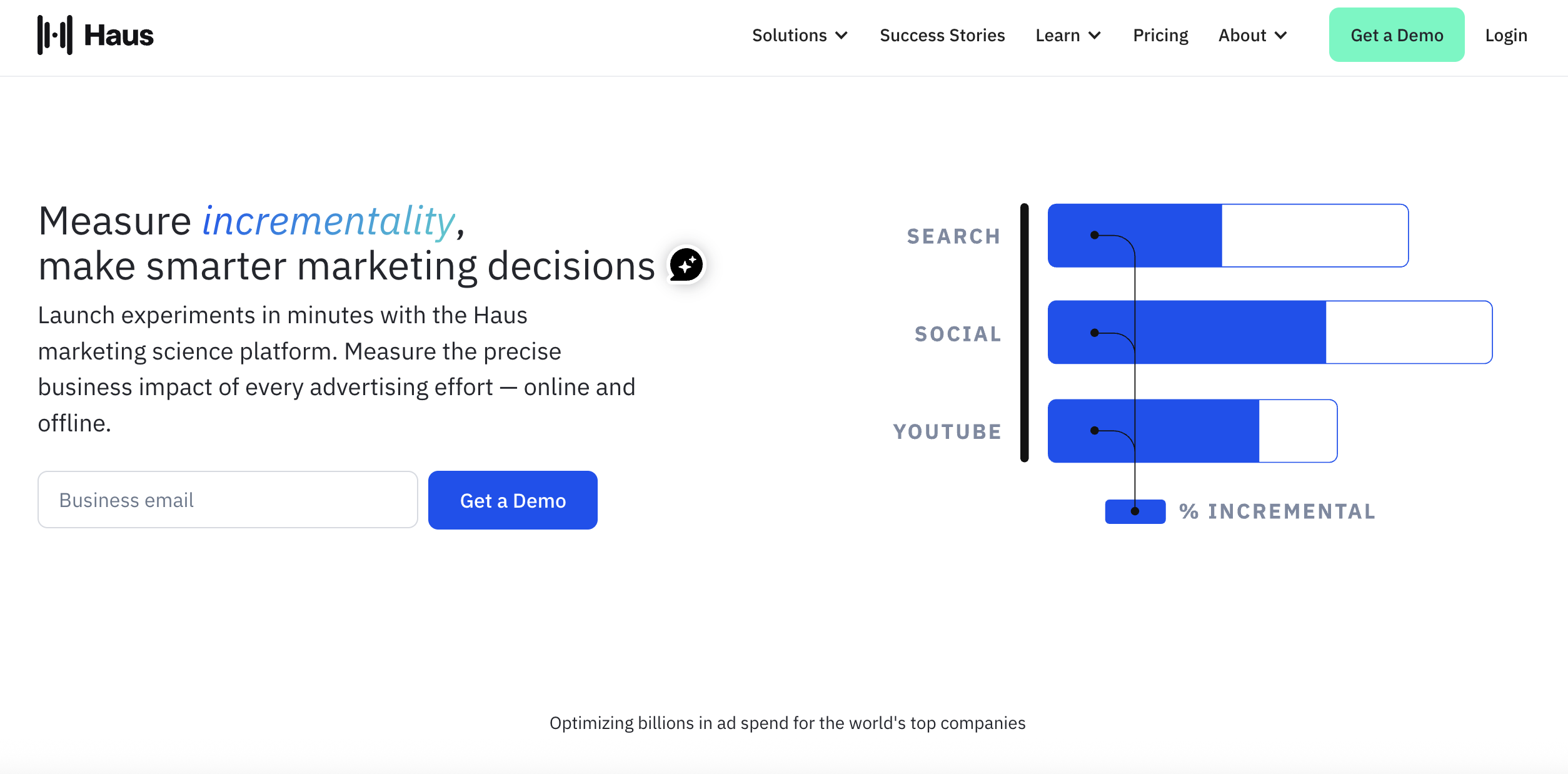
Haus specializes in incrementality testing, helping marketers measure the true business impact of advertising campaigns using scientifically designed experiments. Rather than relying solely on attribution, Haus uses causal measurement techniques such as geo-lift and holdout testing to determine whether marketing activities genuinely drive incremental revenue.
For organizations prioritizing experimentation, Haus is one of the most trusted marketing analytics platforms available today.
Key Features
- Incrementality Testing
- Geo Lift Experiments
- Holdout Testing
- Marketing Mix Modeling
- Campaign Lift Analysis
- Budget Validation
- Media Performance Analytics
- Cross-channel Experimentation
Pros
- Industry-leading incrementality testing
- Reliable causal measurement methodology
- Excellent for validating advertising performance
- Privacy-friendly measurement approach
- Actionable experiment reporting
- Helps reduce inefficient media spend
Cons
- Limited attribution capabilities
- Requires experiment planning before analysis
Best for: Ecommerce, retail, and consumer brands measuring advertising effectiveness.
See our detailed Lifesight vs Haus comparison
4. Recast
Best MMM Software for Budget Forecasting and Scenario Planning
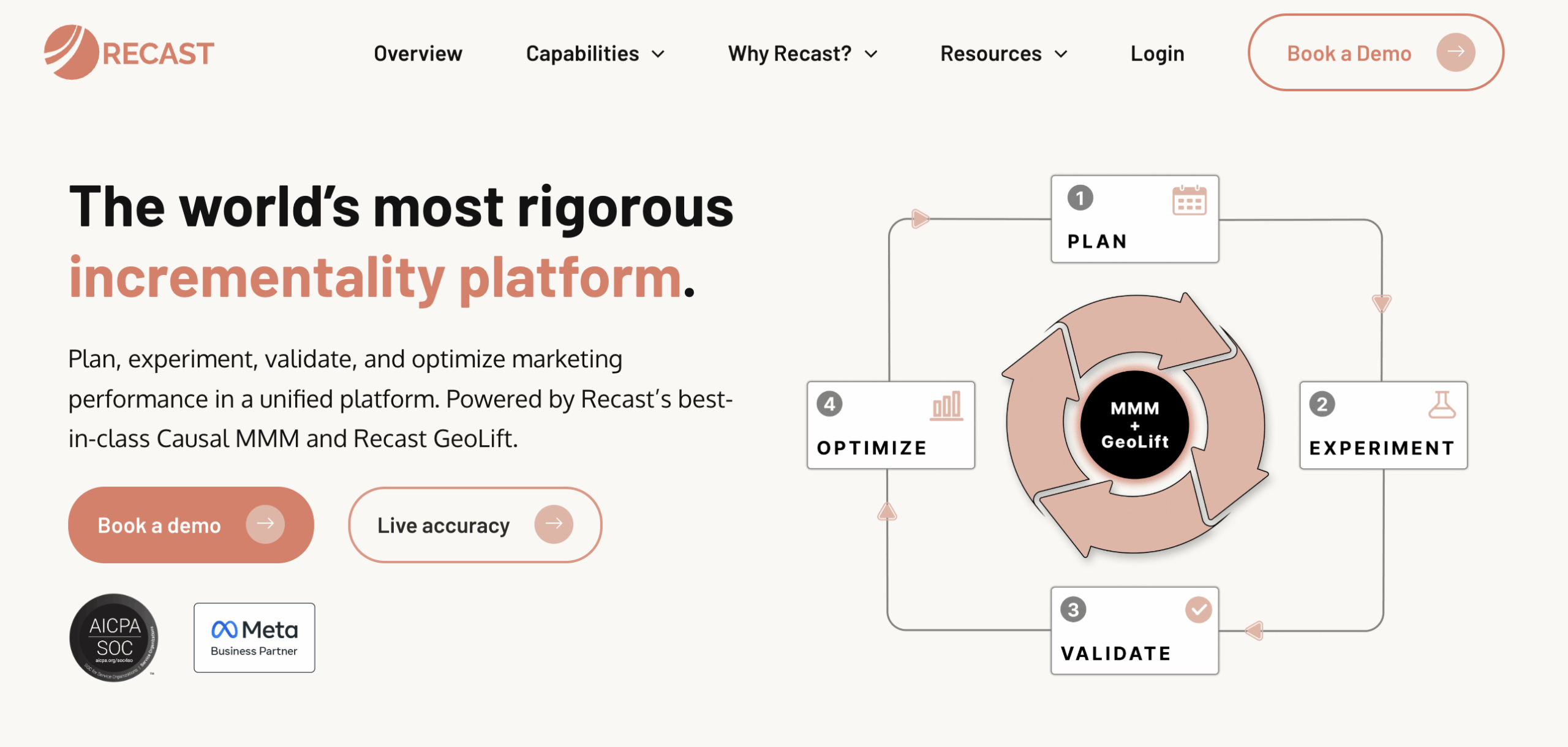
Recast is a Bayesian MMM software platform that helps marketers optimize media investments using statistical modeling and forecasting. Instead of relying on user-level attribution, Recast analyzes historical marketing and business data to estimate the contribution of each channel and recommend the most effective budget allocation.
Its focus on transparency, forecasting, and econometric modeling makes it a strong choice for organizations looking to improve strategic marketing planning.
Key Features
- Bayesian Marketing Mix Modeling
- Budget Forecasting
- Scenario Planning
- Revenue Simulations
- Marketing Analytics
- Investment Optimization
- Predictive Modeling
- Campaign Forecasting
- Econometric Modeling
Pros
- Advanced Bayesian MMM methodology
- Strong forecasting and budget optimization
- Transparent statistical modeling
- Excellent for long-term planning
- Privacy-safe measurement framework
- Helps improve media investment efficiency
Cons
- No native multi-touch attribution
- Requires statistical expertise for advanced modeling
- Less suited for real-time campaign optimization
Best for: Data-driven marketing teams focused on long-term budget optimization.
Curious how Recast stacks up against Lifesight? Read Lifesight vs Recast.
5. LiftLab
Best Marketing Analytics Software for Growing Businesses
LiftLab provides an accessible approach to marketing analytics software, combining marketing mix modeling, campaign measurement, and performance reporting into a streamlined platform. It enables growing businesses to understand which marketing investments deliver the highest return without the complexity of enterprise solutions.
Its intuitive interface and simplified reporting make it an excellent choice for organizations adopting marketing measurement for the first time.
Key Features
- Marketing Mix Modeling
- Marketing Analytics Dashboard
- Campaign Measurement
- Budget Recommendations
- Performance Reporting
- AI-generated Insights
- Marketing Forecasting
- Cross-channel Analytics
Pros
- Quick and straightforward implementation
- User-friendly interface
- Startup-friendly pricing
- Easy-to-understand marketing insights
- Lower learning curve than enterprise platforms
- Supports growing marketing teams
Cons
- Smaller integration ecosystem
- Limited advanced AI and enterprise capabilities
- Requires sufficient historical marketing data to generate accurate models
- May require marketing analytics expertise
Best for: Startups, scale-ups, and mid-sized marketing teams.
6. Rockerbox
Best Marketing Attribution Platform for Customer Journey Analytics
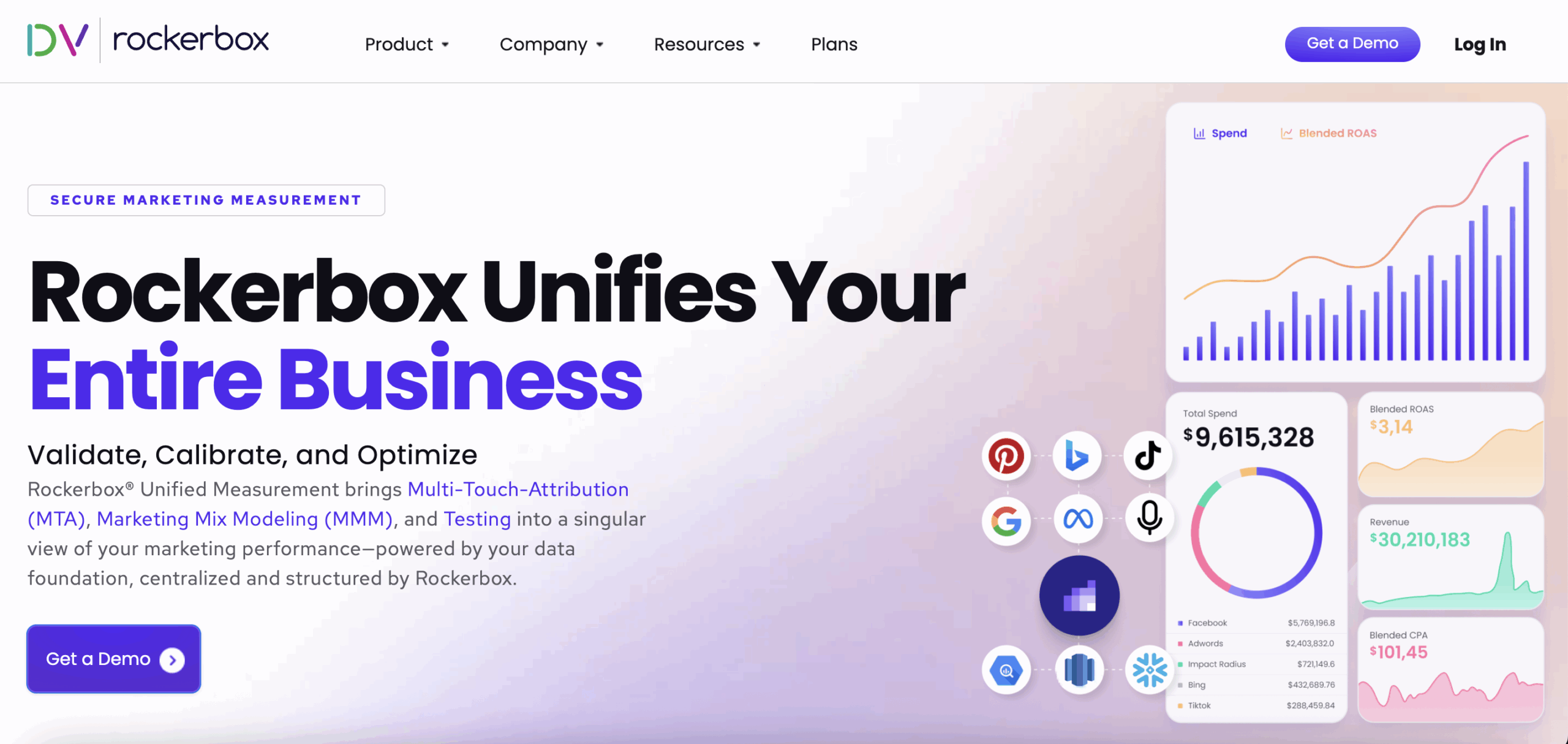
Rockerbox is one of the leading marketing attribution platforms, helping brands understand how every marketing touchpoint contributes to conversions. The platform unifies customer journey data across paid, owned, and earned media, giving marketers a clearer picture of campaign performance.
In addition to attribution, Rockerbox supports marketing mix modeling and cross-channel reporting, making it a strong option for organizations transitioning toward unified marketing measurement.
Key Features
- Multi-Touch Attribution
- Customer Journey Analytics
- Marketing Mix Modeling
- Cross-channel Reporting
- Campaign Performance Measurement
- Privacy-safe Attribution
- Custom Dashboards
- API Integrations
Pros
- Excellent customer journey visibility
- Flexible attribution models
- Easy integration with major advertising platforms
- Strong cross-channel analytics
- User-friendly reporting dashboards
- Faster deployment than many enterprise solutions
Cons
- Attribution-first approach rather than full UMM
- Limited AI planning and optimization capabilities
Best for: Mid-market businesses looking for advanced attribution and marketing analytics
Conclusion
As marketing becomes increasingly complex, relying on a single measurement methodology is no longer enough. Organizations need a unified approach that combines attribution, Marketing Mix Modeling, incrementality testing, and AI-driven optimization to accurately measure marketing performance and maximize return on investment.
Each platform in this guide offers unique strengths. Measured excels in enterprise media optimization, Rockerbox specializes in attribution, Haus leads in incrementality testing, LiftLab simplifies analytics for growing businesses, and Recast provides robust Bayesian Marketing Mix Modeling.
However, for organizations seeking a comprehensive Unified Marketing Measurement platform, Lifesight stands out by bringing together MMM, attribution, incrementality testing, AI-powered planning, autonomous optimization, and privacy-first analytics within a single platform. Its Agentic UMM approach enables marketing teams to move beyond measurement and make faster, smarter decisions with confidence.
👉 Book a personalized demo with Lifesight today and experience the future of marketing measurement.