Acquire customers with the longer relationship in view
Subscription and service businesses earn revenue over months or years, so a signup is only the start. Lifesight helps you measure acquisition against the outcomes that matter to your business, from new trials to paying customers to the value they bring over time. When the evidence changes, you can see it and adjust your plan.
Know which outcome each channel is really delivering.
Spend where new customers are actually added.
Plan with finance on a shared source of truth.
Change your acquisition plan as soon as the evidence supports it.
The approach
Define the customer outcome before the next acquisition.
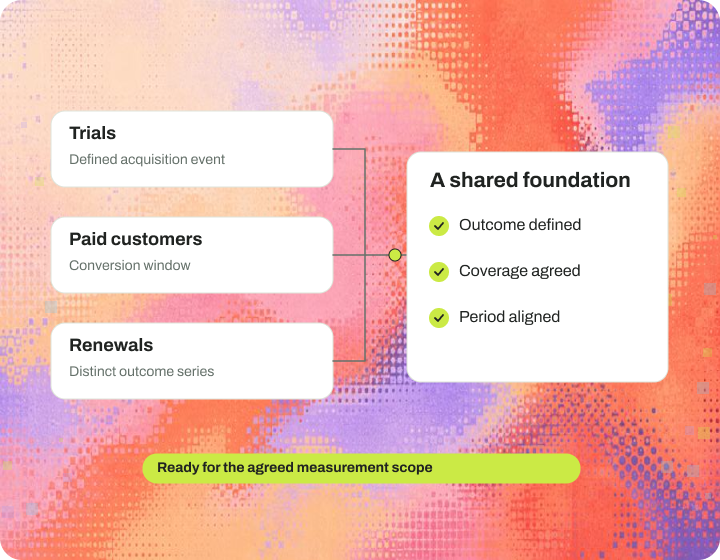
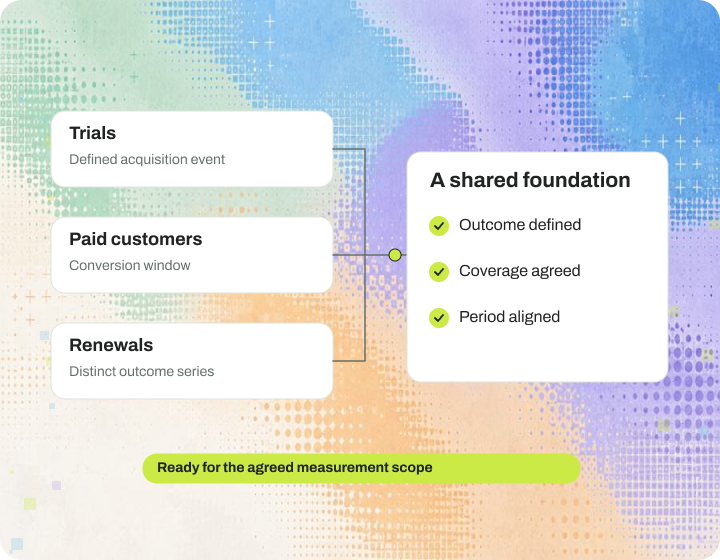
A trial, a paying customer and a renewal are different outcomes, and each one answers a different question. Choose the outcome your next decision depends on, then agree the time window and economics with finance.
Keep every stage of the customer relationship distinct
Track trials, paid conversions and revenue as separate series, each with a clear period. You can compare stages without mixing them up, and your results read the same way in marketing and finance reviews.
Treat your conversion definition as part of the model
How you define a conversion changes every result that follows. Is it a paying customer? Free trial? 6-month plan? Setting it up front gives you numbers your team can trust and act on.
Incrementality
Find out which channels add customers
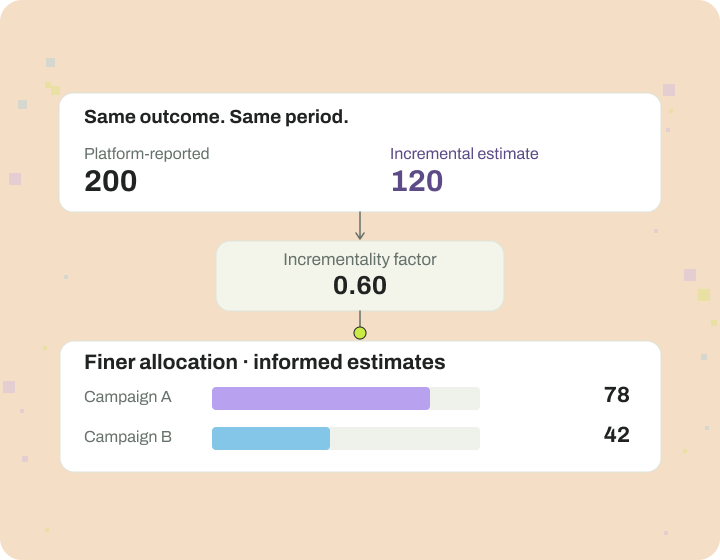
Platform reporting credits every signup it can claim, and not all of those signups are additional. Lifesight combines geo-testing and mixed media models with incrementality-adjusted attribution, so you can separate the customers your marketing added from the ones who would have signed up anyway.
Bring evidence into acquisition decisions
Compare platform-reported results with an incremental estimate for the same outcome over the same period. The ratio between them, the incrementality factor, shows how much of a channel’s reported performance is incremental and will help you know how much to invest in each channel moving forward.
Act on results
Adjust your plan as results come in
Measurement only pays off when it changes what you do. Lifesight keeps results, plans and assumptions in one place, so you can move from a finding to a decision without rebuilding the analysis.
When a channel adds fewer customers than platform reporting suggests, move budget toward the channels that add more.
Compare plans before you commit.
Test media plans against the same objective, budget and constraints, so the next investment conversation is concrete.
Spot changes sooner.
AI agents surface relevant changes in your results and help your team develop the investigation.
Keep review simple.
Revisit the plan on a regular rhythm with the latest evidence, using the same definitions each time.
Customer value
Make customer value and payback assumptions explicit
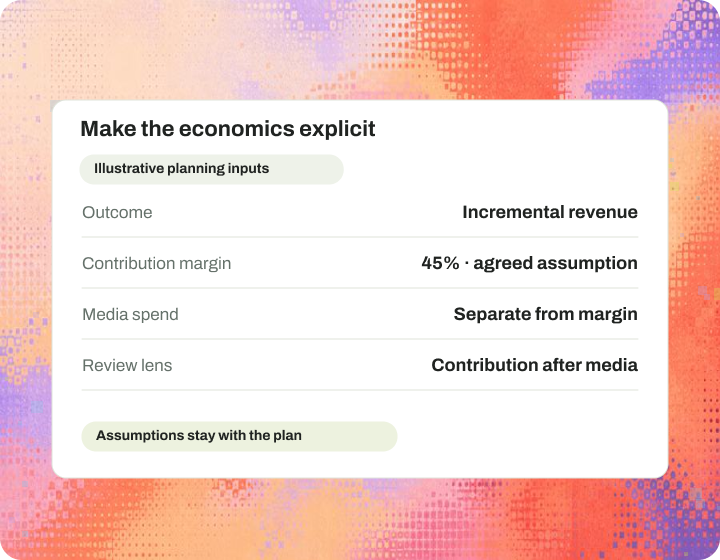
Know how much each customer is worth before you spend. Use margin, payback and customer-value assumptions finance has agreed, and keep realized revenue separate from projected value.
When marketing and finance work from the same definitions, growth plans are easier to approve and easier to revisit.
How Lifesight works for subscription and service businesses
Which acquisition outcome should guide your plan?
The method, the context and the review stay connected at every step.
1. Define the outcome series
Be explicit about trials, paid conversions, renewals and timing, so every result means the same thing to everyone reading it.
2. Investigate incremental acquisition
Use incrementality tests to separate the conversions your marketing added from your baseline.
3. Connect results to payback
Pair incremental conversions with agreed margin and customer-value assumptions to see which channels earn back their cost.
4. Review and adjust the acquisition plan
Keep projected customer value separate from realized revenue, then change the plan when the evidence supports it.
People + agents
AI agents and your team, with clear responsibility
Agents help surface relevant changes, develop the investigation and prepare plans and briefs. Your team defines the goal, reviews the evidence and sets the authority for any supported action. You get faster analysis without giving up control of the decision.
Work with Lifesight experts to establish your subscription measurement program and put agents to work. Every engagement is scoped individually, with agreed responsibilities and ongoing support.
Subscription products, memberships and service businesses that win customers through a trial, signup or booking and earn revenue over time. If your marketing decisions depend on what a customer does after the first conversion, this approach fits.
Can we use lifetime value in planning?
Yes. Use customer-value assumptions that you have agreed with finance, and keep projected value separate from realized revenue. That way plans stay grounded in what has actually been earned.
Does this automatically reduce churn?
No. Lifesight focuses on acquisition. It helps you invest in channels that add customers, and it connects acquisition to the longer relationship, but retention work is a separate effort that needs its own workflow.
Can trials and paid subscriptions count as one conversion?
It is better to keep them separate. A trial, a paid conversion and a renewal answer different questions, so choose the outcome each decision needs and keep the period clear.
Can you know every new customer’s exact lifetime value?
No. Customer value is an estimate built on assumptions, which is why Lifesight makes those assumptions explicit and agrees them with finance. Use the estimate to guide investment, and check it against realized revenue as it comes in.
How is incrementality different from attribution?
Attribution assigns credit to the touchpoints around a conversion. Incrementality asks whether the conversion would have happened without the marketing. Lifesight uses both: experiments and models establish what is incremental, and adjusted attribution applies that evidence to your day-to-day reporting.
How quickly can we change our plan based on results?
It depends on the outcome you measure, your sales cycle and the test design. In your demo, we can discuss your target outcome and measurement period, so you know when to expect evidence you can act on.
Keep exploring
By outcome
Improve profitability
Use incremental evidence, marginal returns and agreed business assumptions to decide where marketing investment can work harder.
By team
Finance teams
Review incremental contribution, forecast assumptions and proposed allocations on a basis marketing and finance can share.
Platform
Planning & forecasting
Compare media plans against the same objective, budget and constraints, and use modelled outcomes to make the next investment conversation more concrete.