
Home / By business
Omnichannel Retail & CPG
Connect the evidence across stores, ecommerce, marketplaces and retail media. Lifesight shows which marketing creates incremental sales, so retail and CPG teams can invest around the growth their marketing adds to the whole business.










Omnichannel Retail
The approach
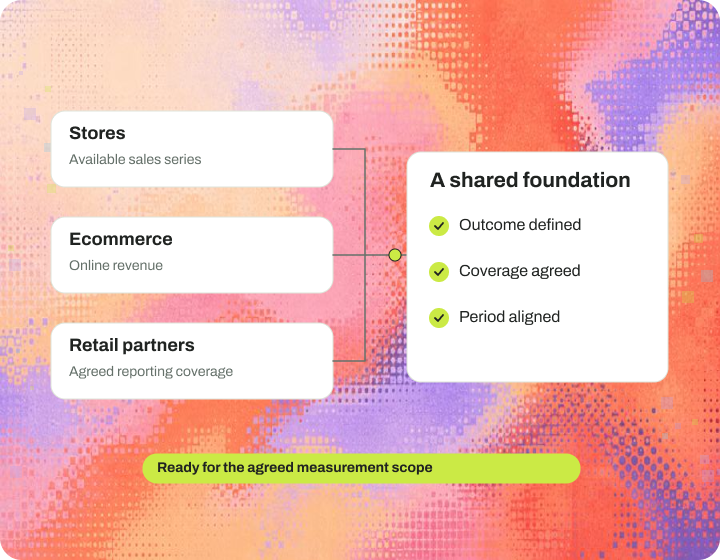
The sale can happen somewhere the ad never sees. Lifesight connects media investment to the store, ecommerce and partner outcomes you can observe, and agrees the coverage with you before deciding what the model can say about your retail business.
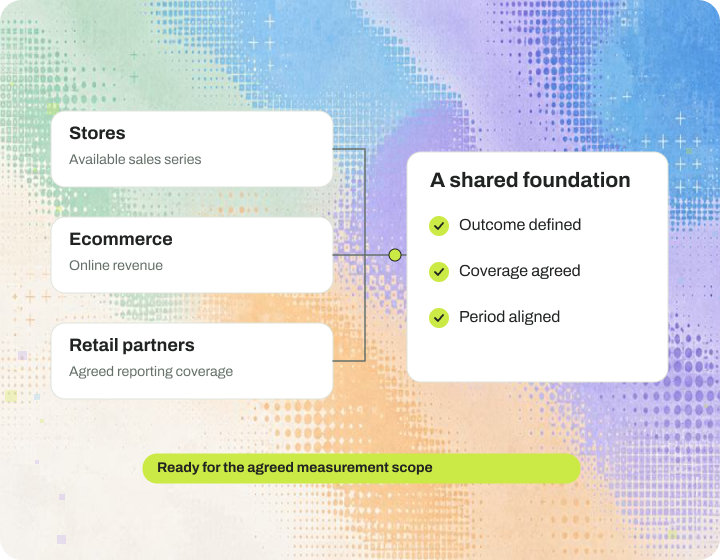
Reconcile store, ecommerce, marketplace and available retail partner data into one consistent outcome frame. Define the included channels, dates and coverage before comparing marketing contribution. A complete-looking report needs an honest coverage definition.
Read media evidence next to agreed trading conditions, including promotions, price changes, distribution and seasonal peaks. Use causal MMM and geo experiments for the investment questions each can support, so not every sales movement gets credited to media.
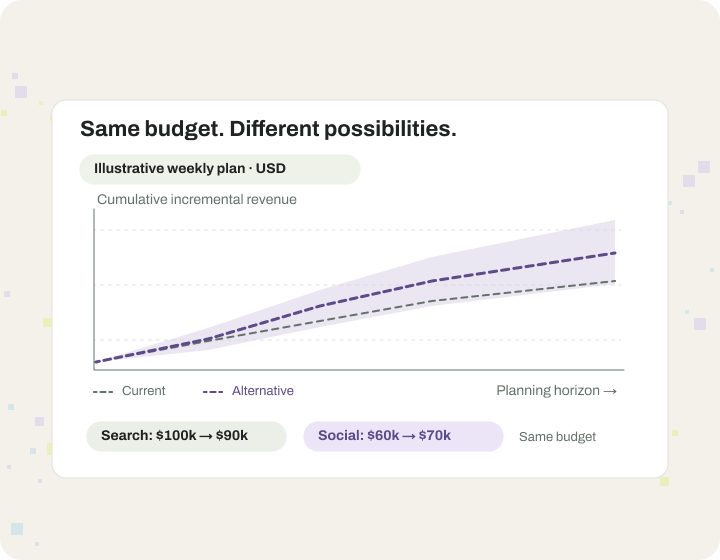
Compare media alternatives using the reconciled outcome and agreed commitments. Carry incremental ROAS (iROAS), the forecast range and the coverage limits into the investment review, so retail, brand and finance decide on the same picture, beyond the last click.
Retail media and marketplaces
Connect Amazon Ads, Walmart Connect, Target Roundel, Instacart and Kroger Precision to causal outcomes. Tie retail media to retailer baskets, read the halo effect across marketplaces and your own .com, and avoid double counting sales that platform dashboards each claim for themselves.
Platform capabilities
Estimate cross-channel contribution from TV and CTV, paid social, retail media, search and out-of-home, with price, promotion, seasonality, distribution and competitor pressure in the model. Calibrate with experiments so the estimates hold up in a finance review.
Design geo experiments around your next investment decision. Estimate the store and online sales a marketing change creates, run power analysis so the test can detect the lift you care about, and use the result to calibrate your model.
Get day-to-day channel and campaign signals that reflect experiment and model evidence, and avoid last-click bias that over-credits retargeting and branded search.
How it works
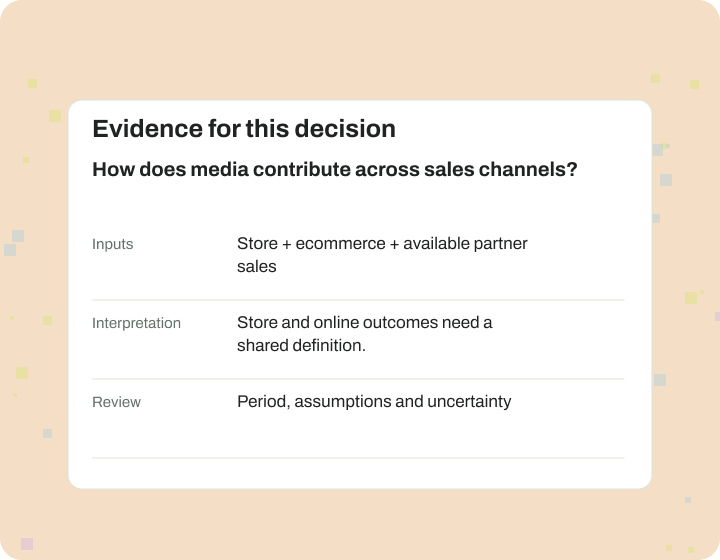
How does media contribute across sales channels?
The method, context and review stay connected at each step.
Agree sales coverage
Scope the available store, ecommerce, marketplace and retail partner outcome series, including point-of-sale, loyalty and CRM data where you have it.
Build the business context
Include relevant media, promotions, price, distribution, competitor and seasonal factors.
Model and test
Estimate broad contribution with causal MMM, then test priority interventions with geo experiments.
Plan across teams
Simulate scenarios, then bring the evidence into retail, brand, media and finance decisions.
People + agents
Growth agents help surface relevant changes, develop the investigation and prepare plans or briefs. Your team defines the goal, reviews the evidence and sets the authority for supported actions.
Customer proof
Seidensticker
11.5% higher revenue at 11.7% lower spend
Obvi
“For the first time, we could see the real impact of CTV on retail sales…”
Ashvin Melwani, CMO and Co-founder, Obvi

Built around your business
Work with Lifesight experts to establish your measurement program and put growth agents to work. Every engagement is scoped individually, with agreed responsibilities and ongoing support.
A few useful answers
Yes. The same approach covers CPG and consumer goods brands that sell through retailers, marketplaces and their own ecommerce. The scope depends on which sales and distribution data you can bring in, and we agree it up front.
Platform dashboards report on their own channel and often claim the same sale. Lifesight measures incremental sales across channels with causal MMM, geo tests and incrementality-adjusted attribution, so you see what marketing added, not what each platform credits itself.
No. Causal MMM and geo experiments work with aggregated sales and media data, which keeps measurement privacy-first. Customer-level data can add detail where you have it, but it is not a requirement.
Yes. Store sales, point-of-sale data, promotions and price are built into the model as part of the outcome and context, and geo tests estimate the store sales a marketing change creates.
Yes, and that is why Lifesight reads every channel against one outcome frame. TV, CTV and out-of-home can lift ecommerce and marketplace sales as well as store sales, and the model estimates that contribution.
It depends on the granularity of your data. Lifesight models at the level the data supports and states the coverage limits, so you know what each result can and cannot say.
Start with the sales you can observe and agree the coverage definition. Add retail partner series as they become available, and use a geo test to answer the most important question first.
No. Many teams begin with one priority investment question, such as a geo test on a retail media or CTV change, then build toward a full model and planning workflow.
By anchoring decisions in incrementality. Experiments provide causal ground truth, MMM covers the cross-channel view, and incrementality-adjusted attribution gives faster reads that are calibrated to both.
Connect causal marketing mix modeling, incrementality testing and incrementality-adjusted attribution. Understand the impact of your investment, test what matters and bring stronger evidence into your next move.
Design geo experiments around your next investment decision. Estimate the sales or orders a marketing change creates, then use the evidence to plan what comes next.