Compare budget mixes you could actually run. See which channels gain or lose, and what the move could add.
Define the objective
Make commitments part of the problem.
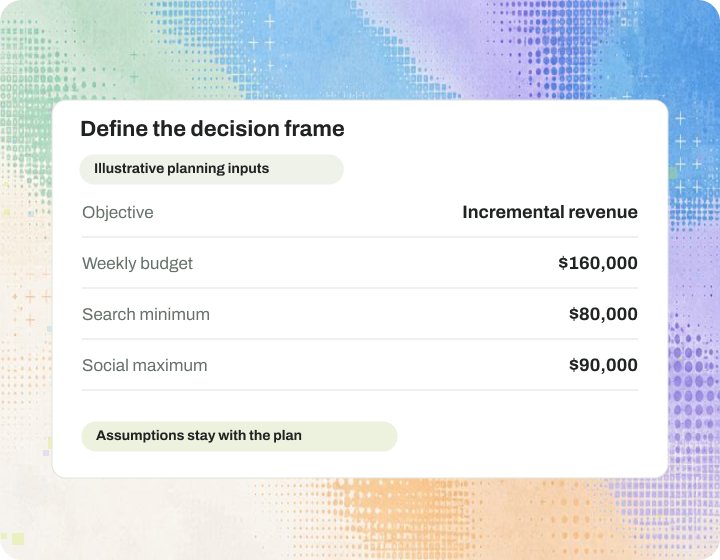
Set the outcome and time window, total budget, and lower or upper channel bounds. Lock in spend you have already promised, so no proposal breaks a commitment.
Set limits for each channel up front.
Keep contracted spend fixed in every option.
Marginal response
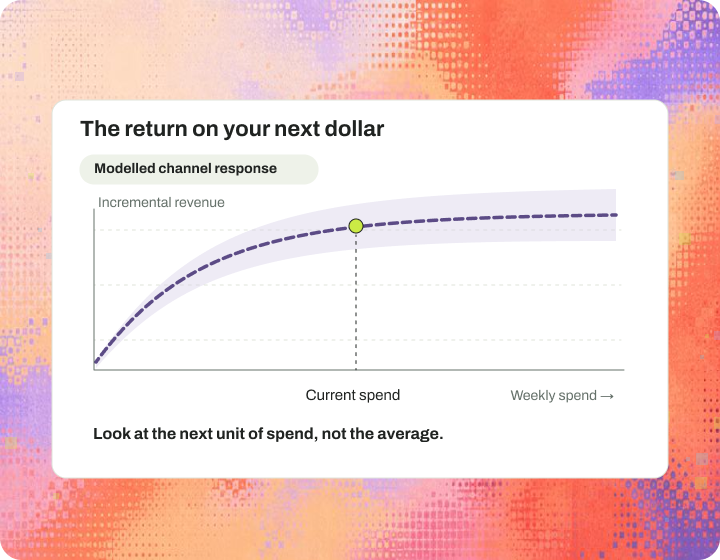
Know when a channel has had enough.
Each extra dollar in a channel usually returns less than the last. See where that drop starts, so you stop scaling before returns fall off.
Spot channels where more spend adds little.
Find the channels with room to grow.
Compare the move
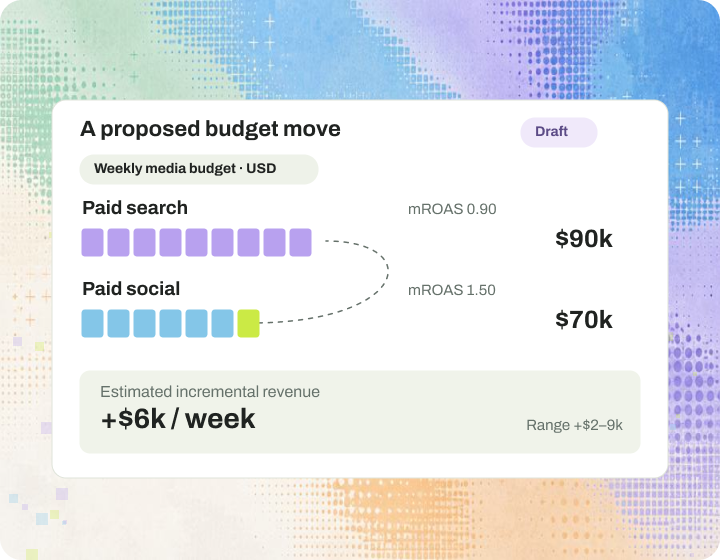
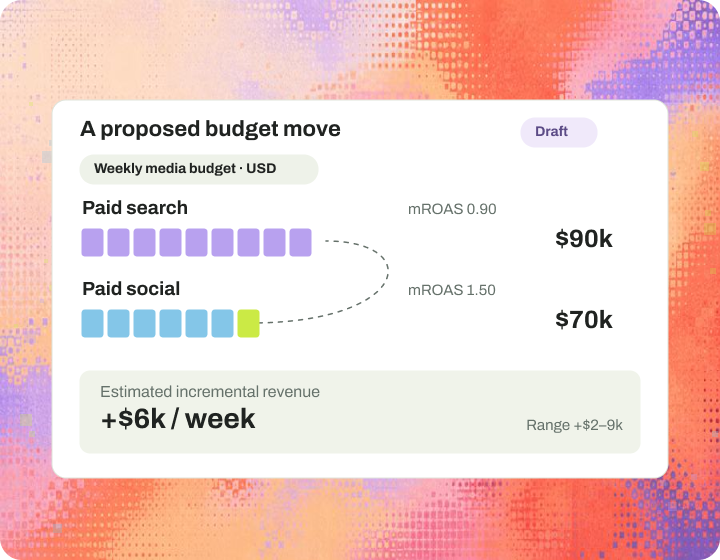
See what changes, and why.
See where budget would move and what it could add. Check the likely range before you pick a plan.
Authority & review
Nothing moves without your approval.
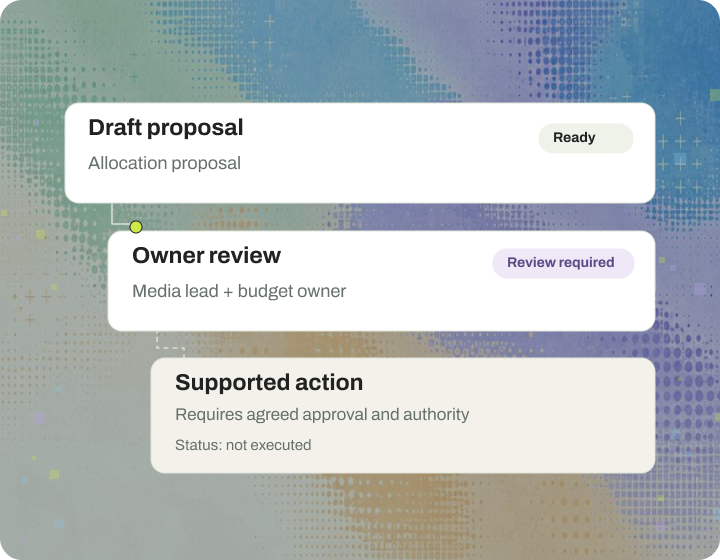
Every change goes to the budget owner first. Nothing changes in a live budget until they approve it.
How it works
From the business question to useful work.
Where should the next budget move go?
Each step keeps budget moves inside the limits you set.
Define the problem
Set the objective, budget, horizon and allowed channel changes.
Evaluate marginal returns
See which channel gets the most from its next dollar.
Prepare the proposed mix
Show what changes and the estimated effect with its uncertainty.
Approve, execute and review
Approve the change, apply it and check the results.
People + agents
Agents prepare the move. Your budget owner approves it.
Agents help compare allocations and prepare a proposed move. The budget owner reviews it; supported execution follows the authority defined for the workflow.
Built around your business
Expertise that stays close to the work.
Work with Lifesight experts to establish your measurement program and put agents to work. Every engagement is scoped individually, with agreed responsibilities and ongoing support.
No. Recommendations depend on marginal returns, objectives and constraints, not channel size alone.
Can agents execute a recommendation?
Execution depends on supported platform connections, workflow scope and authorization. Recommendations and approved actions are distinct stages.
Why use incremental returns?
They focus the decision on outcomes marketing adds, rather than all outcomes an ad platform reports receiving credit for.
What if the suggested move breaks a commitment?
Make that commitment a planning constraint before comparing allocations. Review the proposed changes against the agreed bounds and actual operating requirements.
Does optimization guarantee a better result?
No. A proposal is based on a model and stated assumptions. Evaluate the expected range, use appropriate review or testing, and revisit the plan as new evidence arrives.
Keep exploring.
Platform
Planning & forecasting
Compare media plans against the same objective, budget and constraints. Use modeled outcomes to make the next investment conversation more concrete.
By outcome
Find the right budget mix
Compare where the same media budget could work harder, with incremental evidence and the constraints your team needs to respect.
Platform
Proactive AI agents
Agents stay close to your goals, data and plans. When something deserves attention, they bring you a cue with the context to decide what happens next.