Turn Incremental Revenue Into Profit-Based Marketing Decisions
If your team is ready to go beyond revenue and talk about profit, you need numbers that marketing and finance both accept. Incremental revenue is useful, but it is not profit. When the two teams use different numbers, budget conversations stall and the next investment gets decided by whoever makes the best case.
Lifesight puts the cost of growth into every budget decision. Agree on the economics once, then compare every budget move on the same basis, so you can show which spend adds profit and defend it in the budget meeting.
Make budget decisions finance will approve
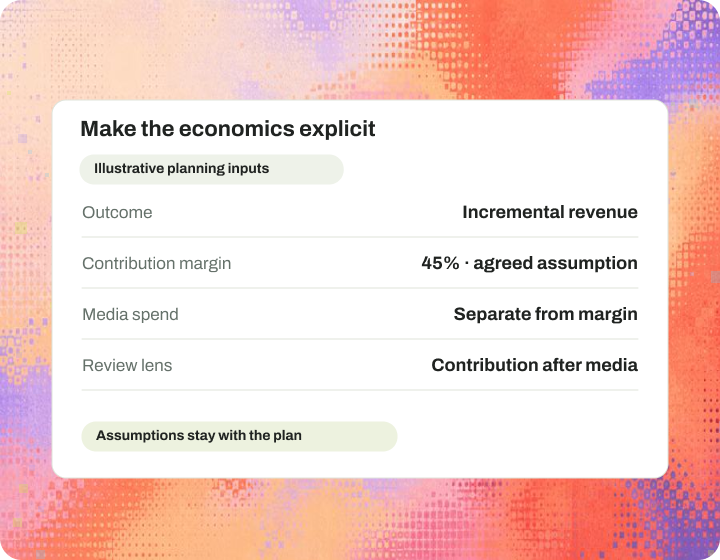
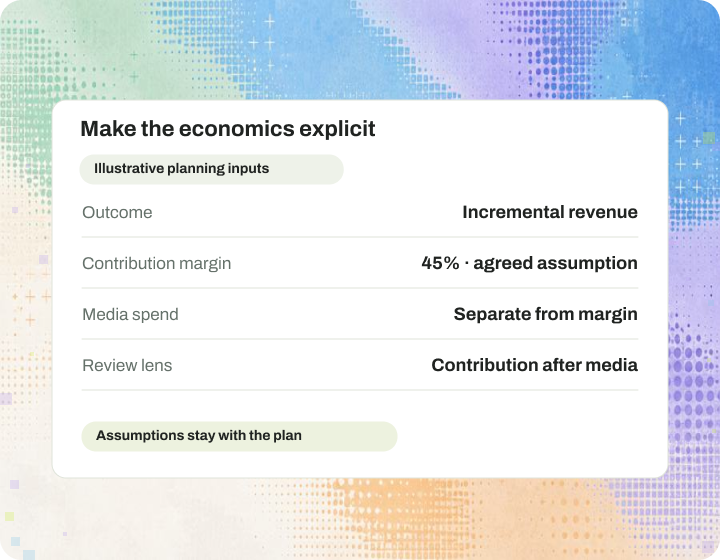
Build every budget recommendation on your finance team’s own margin and cost numbers, so finance can check the math instead of questioning it.
Stop paying for growth that would have happened anyway
Base decisions on incremental results rather than platform-reported returns, so spend goes where it adds sales.
Find a better home for your next dollar
See where diminishing returns are setting in and where added spend leads to added profit.
Walk into the budget meeting with a clear case
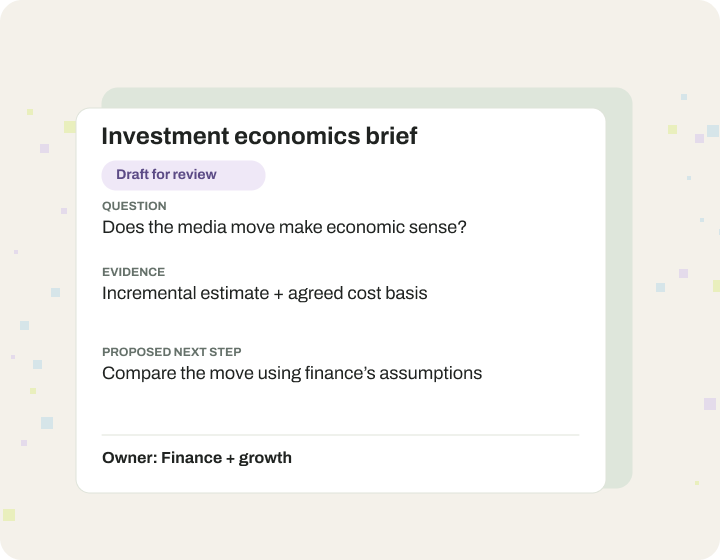
Bring the proposal, the assumptions and the expected range, with a checkpoint to review what happened.
Ready to make budget decisions finance will approve? See Lifesight in action
Start with your goal and the margins and costs your finance team uses. Keep ad spend, revenue and the profit left after costs separate, so every option is judged the same way. Getting these definitions right matters as much as the forecast itself.
What you get: One set of numbers that marketing and finance both sign off on.
Compare what your next dollar would earn
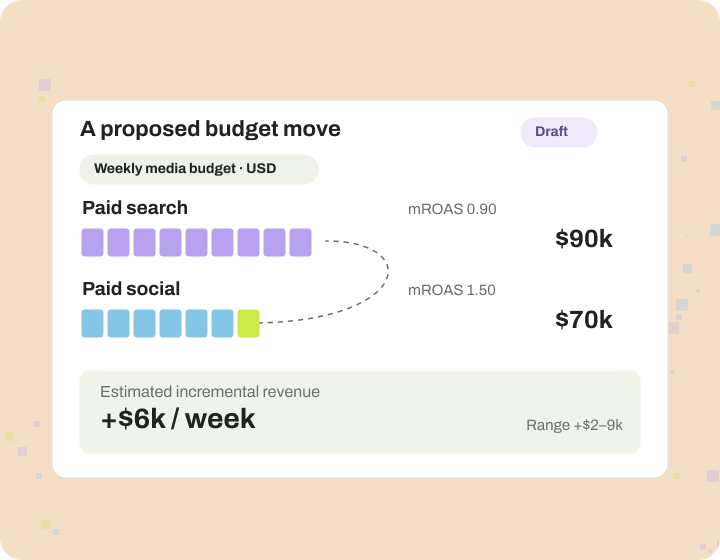
See what each budget move is expected to add, including where returns start to shrink and what limits you have on each channel. Then see the result in profit, using the numbers you agreed on. A higher reported return doesn’t always mean more profit.
What you get: A look at the trade-offs before you move the budget, not after.
Review the results and learn from them
Keep track of proposal, costs, assumptions and expected range. Set a date to look back at what happened, and keep the forecast separate from actual profit. Each review shows whether your assumptions held up.
What you get: A record finance can review and your team can learn from.
How Lifesight Helps You Make Profitable Budget Decisions
Will this budget move make money?
Each step builds on the last, so nothing gets lost between the numbers, the decision and the review.
Align with finance
Agree on your margins, your costs and what counts as a return.
Set up your options
Put every budget option side by side, with your real spending limits built in.
Compare the profit
See what each option is expected to earn, using the numbers you agreed on.
Review the choice
Record what you decided, who owns it and when you’ll review the results.
People + agents
Marketing Teams and AI Agents Working Together, With Clear Responsibility
Lifesight’s AI agents flag changes in your results, look into what caused them and draft the plan or summary, so your team spends less time pulling numbers together. You stay in control: your team sets the goal, reviews the evidence and decides what the agents are allowed to do.
No. Incremental ROAS shows the additional revenue a channel drives for each dollar spent. Profit also depends on margin, media cost and other costs. Lifesight pairs incremental results with the assumptions your finance team uses, so you can compare options on a contribution basis rather than on revenue alone.
Do you guarantee a profit increase?
No. Lifesight gives you modeled estimates with expected ranges, and results depend on your market, budget and execution. What you get is a clearer basis for each decision and a checkpoint to compare the forecast with what actually happened.
Can we work with our finance definitions?
Yes. The first step is agreeing the outcome, margin and cost definitions with your finance team. Those definitions are then used for every comparison.
Where do margin assumptions come from?
Your finance team sets them. Typical inputs include product margin and the costs that sit between revenue and contribution. They are recorded with each proposal, so anyone reviewing a decision can see what it assumed.
Can we allocate budget using average returns?
Average returns can mislead, because the next dollar in a channel usually earns less than the dollars before it. Marginal returns show what an additional dollar is expected to deliver, which is what you need to decide where to add or cut budget.
Keep Exploring
Platform
Budget optimization
Use incremental evidence and marginal returns to explore a better media mix, with the budget limits and review steps your business needs.
By team
Finance teams
Review incremental contribution, forecast assumptions and proposed allocations on a basis marketing and finance can share.
Platform
Planning and forecasting
Compare media plans against the same objective, budget and constraints, and use modeled outcomes to make the next investment conversation more concrete.