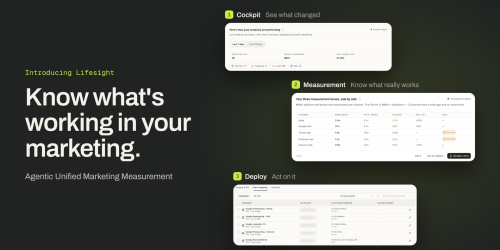

An incrementality-driven budget operating system is marketing software that measures the true causal lift of each channel (not just last-click or platform-reported conversions), uses that data to forecast future budget performance, and lets teams reallocate spend across channels in real time often with a single click instead of through manual, multi-week budget cycles.
- Measures causal lift (geo-holdouts, lift tests) instead of last-click attribution
- Forecasts forward using response-curve modeling, not backward-looking reports
- Moves budget in one click, directly to ad platforms, with guardrails
- Feeds every move back into the model, so forecasts improve over time
Why Traditional Budget Planning Fails
Traditional marketing budget planning breaks down for three core reasons:
1. It’s backward-looking
Budget reviews are usually performance post-mortems. By the time underperformance is identified, the money is already spent.
2. It’s disconnected from causality
Last-click and platform-reported attribution show correlation, not causation, often over-crediting channels that capture demand other channels created.
3. It’s slow to execute
Even a clear insight requires new insertion orders and days or weeks of approvals before spend actually moves.
An incrementality-driven system solves all three: it measures causal lift instead of correlated conversions, it forecasts forward instead of reporting backward, and it lets teams act on findings immediately.
How Budget Forecasting Works in an Incrementality-Driven System
Budget forecasting in this model is built on incrementality data, not platform-reported conversions. Instead of asking “what got attributed to this spend,” the system asks:
What would happen to outcomes if we spent differently?
This enables:
- Channel-level response curve modeling — showing exactly where diminishing returns begin, before overspend occurs.
- Budget scenario simulation — e.g., “shift 15% from paid social to search” with a projected incremental outcome, not just a reshuffled total.
- Automatic headroom detection — flagging under-invested channels with strong marginal returns and plateaued channels ready for reallocation.
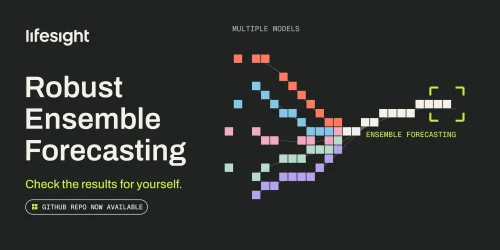
- Continuous forecast updates — every new incrementality read refines the forward-looking plan, rather than locking budget to a static quarterly number.
In short: the forecast is a live model of marketing causal economics, not a static spreadsheet projection.
One-Click Budget Reallocation: From Insight to Action
Forecasting alone doesn’t move money. Most platforms stop at the insight, a chart, a recommendation, leaving the actual reallocation to a manual, cross-platform process.
An incrementality-driven budget operating system closes that gap with one-click budget moves:
- Approve a recommended reallocation and push it directly to ad platforms, no manual re-entry.
- Adjust move size via a slider before committing, keeping pacing and risk in the team’s control.
- Set guardrails (min/max spend per channel, daily caps) so automated moves never break internal constraints.
- Auto-feed outcomes back into the model, so every move improves the accuracy of the next forecast.
This creates a continuous loop:
Measure incrementality → forecast optimal allocation → move budget → remeasure.
Budget Operating System vs. Marketing Dashboard
| Attribute | Marketing Dashboard | Budget Operating System |
| Primary function | Displays data | Executes decisions |
| Time orientation | Backward-looking (reporting) | Forward-looking (forecasting) |
| Measurement basis | Platform-reported / last-click | Incrementality / causal lift |
| Action on insight | Manual, cross-platform | One-click, in-platform |
| Improves over time | No | Yes — moves feed the model |
Frequently Asked Questions
1. What does “incrementality-driven” mean in marketing budgeting?
It means budget decisions are based on the causal, incremental impact of spend, measured through methods like geo-lift or holdout testing, rather than platform-reported conversions or last-click attribution, which often over-credit channels that capture demand created elsewhere.
2. How is this different from marketing mix modeling (MMM)?
MMM typically produces periodic, backward-looking reports on channel effectiveness. An incrementality-driven budget operating system uses similar causal principles but operates continuously, feeding forecasts directly into an executable reallocation workflow rather than a static report.
3. Can budget moves really be made in one click?
Yes. Once the system generates a recommended reallocation, a user can approve it and have the change pushed directly to connected ad platforms, subject to guardrails like spend caps, without manual re-entry into each platform.
4. Is incrementality testing accurate enough to base a whole budget on?
Incrementality methods like geo-holdouts and lift tests are considered a more accurate measure of causal impact than last-click attribution, which is why they’re increasingly used as the foundation for budget decisions rather than just a periodic audit tool.
5. Who should use an incrementality-driven budget operating system?
Marketing teams and CMOs managing budget across multiple channels, especially those spending enough on paid media that inefficient allocation has a measurable revenue impact, benefit most from continuous, causally-grounded forecasting and reallocation.
The Bottom Line
Budgets shouldn’t be a monthly guessing game locked to a plan set weeks ago. An incrementality-driven budget operating system replaces backward-looking reporting with a continuously updated, causally accurate forecast, and the ability to act on it in one click, the moment it matters.
Stop reporting on last month’s spend. Start operating next month’s budget.