Lifesight vs Haus
Move Beyond Lift Tests to Unified Growth Measurement
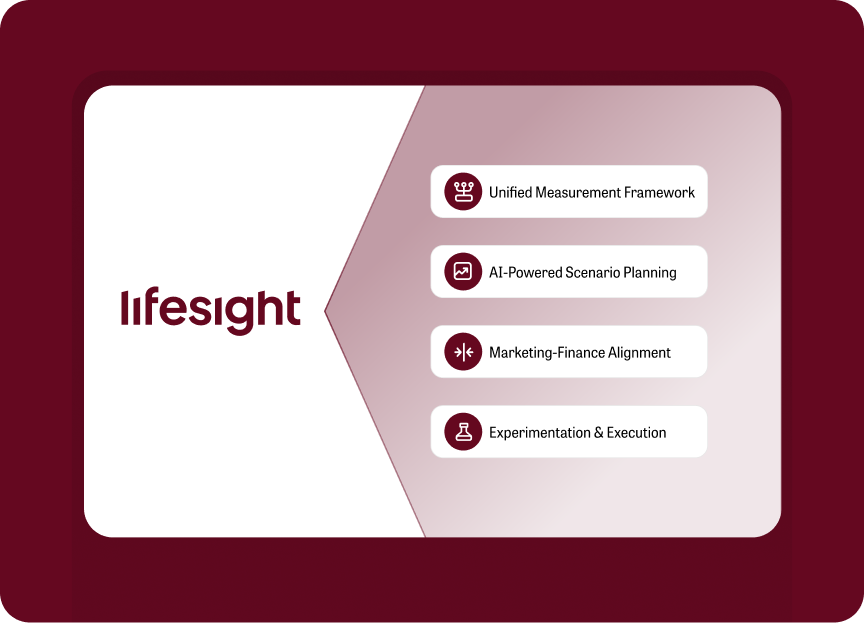
Modern marketing teams are shifting from fragmented lift tests to continuous, AI-driven decisioning. Lifesight unifies MMM, attribution, incrementality, and optimization into one system.




















































What Changes When You Run Measurement Continuously
Haus Causal Attribution gives daily answers for already-tested channels without re-running a test. True for new experiments, not every answer.
When Haus Is the Right Choice
Haus is purpose-built for geo-lift experimentation and does it exceptionally well. If your primary goal is running rigorous, channel-by-channel incrementality tests, and your team has the runway to wait 6–10 weeks per answer, Haus is a strong tool for that job.
When Teams Move to Lifesight
The question isn’t whether geo-lift testing is valuable. It is. The question is whether experiments alone are enough to run your marketing.
Teams typically make the move when:
- Experiments can’t keep pace with decisions. At 6–8 weeks per test plus post-treatment window, you can validate a handful of channels per quarter. When you’re managing 8–12 active channels, that math breaks down fast.
- Untested channels stay unaccountable. Haus’s causal attribution calibrates using incrementality multipliers, but only for channels where you’ve run experiments. Every channel without a completed test is still flying on platform-reported numbers.
- You need measurement to act, not just inform. Lifesight’s AI Agents take you from causal insight to one-click budget reallocation, directly to your ad platforms. The loop closes without leaving the platform.