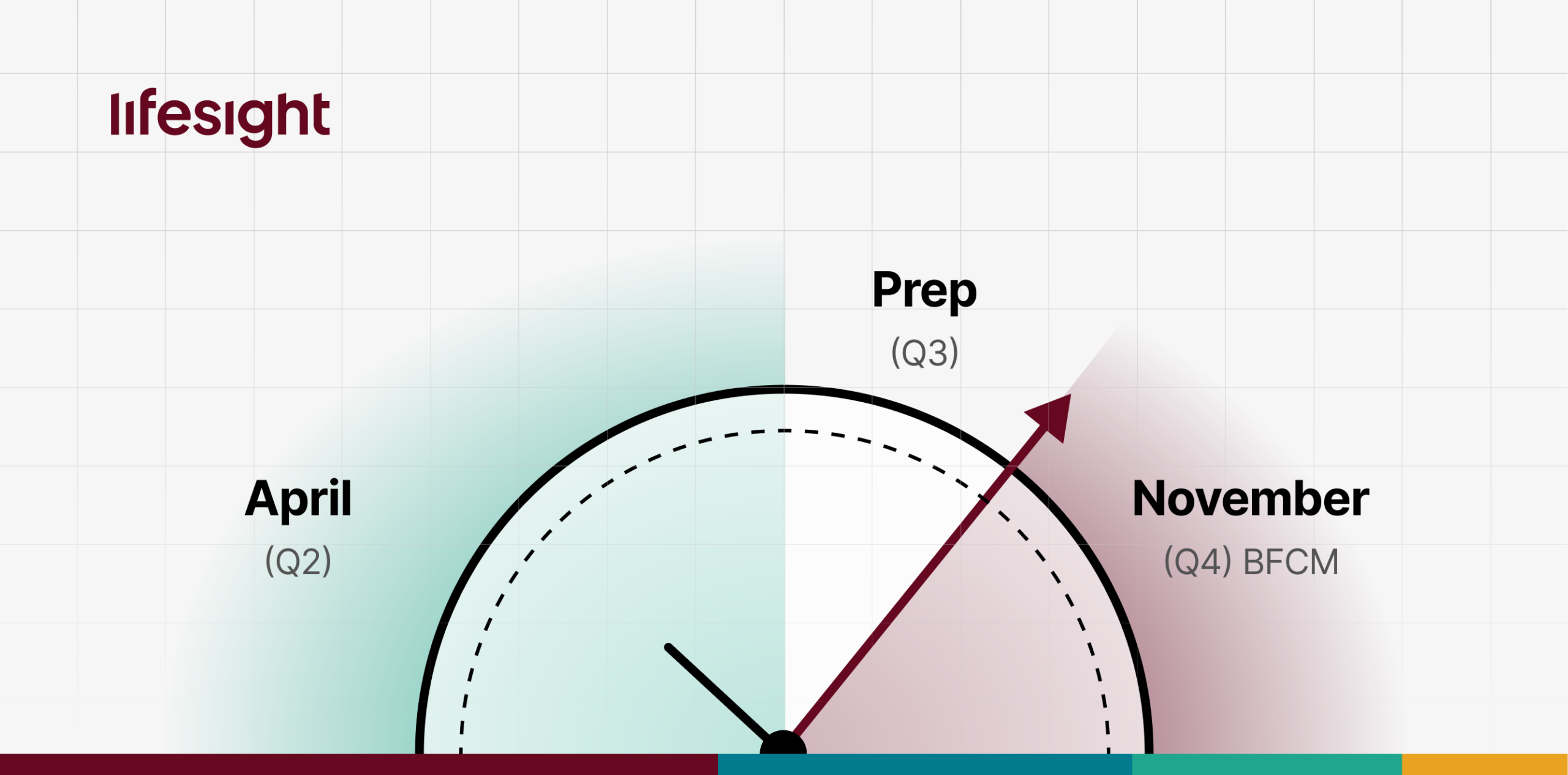
It’s May 2026. For most marketing teams, the holiday season feels like a lifetime away. You’re likely focused on Q2 graduation sales or summer break campaigns.While most teams focus on the short game, the brands that will dominate November are already placing their bets.
If you’re unsure whether your channel mix was truly optimized last year, or if you’ve been eyeing a move into new channels such as TikTok, YouTube Shorts, or CTV but haven’t pulled the trigger—your window to test is closing.
Early Q2 Testing is the only way to win Q4.
The 60-Day Data Runway: Why Speed Kills (Your Strategy)
A valid test for a new channel or a significant shift in media spend isn’t a weekend experiment. To get statistically significant insights, especially in an era of complex customer journeys, you often need a 30 to 60-day window.
- Phase 1: The Learning Phase (Days 1–21): Algorithms need time to find your audience. Whether it’s TikTok’s interest graph or CTV’s household targeting, the first three weeks are a learning period where the platform identifies who is actually engaging.
- Phase 2: The Optimization Phase (Days 22–45): This is where you swap creative, refine targeting, and see the platform CPA or ROAS start to stabilize.
- Phase 3: The Scaling Insight (Days 46–60): You finally have enough data to answer the million-dollar scaling questions:
- Is this channel driving incremental revenue?
- If I $10x this budget in November, what happens?
By launching in May, you hit June with a definitive answer for every channel in your arsenal, including those that are hard to measure like CTV, YouTube, TikTok and more.
The Halo Effect: Why Top-of-Funnel is Your Secret Weapon
Many brands kill their Top-of-Funnel (ToF) spend because the last-click ROAS looks lower than their retargeting ads. This mistake pushes brands to overinvest in bottom-of-funnel and stall real growth.. To win in 2026, you have to understand and define the Halo Effect.
What is the Halo Effect?
The Halo Effect is the measurable lift that awareness-based channels like YouTube Shorts or CTV provide to your direct-response channels like Branded Search or Meta ASC. It’s the phenomenon where a customer sees a video ad on their TV, doesn’t click, but later searches for your brand and converts.
Why You Must Define Incrementality Now
If you don’t measure the Halo, you’re flying blind. You think Search is doing the work, in reality, it’s just catching the demand created by your CTV, YouTube, or TikTok spend.
To define this, you must run Incrementality Tests. This involves:
- Splitting your audience: Creating a Test group that sees your top of funnel campaigns ads and a Control group that doesn’t.
- Measuring the Delta: Calculating the total revenue difference between the two groups.
- Determining the Multiplier: For every $1 spent on your top of funnel campaign, how many organic or search dollars were generated?
Why run this in Q2?
Because in Q3, you will already be asked for your budget for Q4. If you don’t test in Q2, you won’t have that answer. Testing a new campaign in Q4, between heavy discounting and massive competitor spend, you will be paying a premium for a channel that may not work. You need the clean data of May to understand your baseline lift so you can spend with confidence in November.
Beat the Q4 Tax on Innovation
Innovation is expensive in November. If you wait until Q4 to find out if a new channel works, you’re going to pay a massive premium for the privilege of guessing.
| Feature | Testing in Q2 (May) | Testing in Q4 (Nov/Dec) |
|---|---|---|
| CPM Rates | Baseline / Off-season pricing | 3X – 5X Inflation over baseline depending on platform |
| Ad Inventory | High availability; better placements | Top placements reserved months in advance |
| Tolerance for Failure | High. You can pivot without losing the year. | Zero. A bad test equals a missed revenue target. |
Testing now allows you to fail or scale at off-peak prices.
If a channel doesn’t perform now, you’ve saved your Q4 budget from a catastrophic mistake. If it does work, you can lock in your Q4 media buys with the confidence of someone who has already seen the future.
Q4: The Make or Break Season
For most e-commerce and retail brands, Q4 represents the lion’s share of annual revenue. It is the least forgiving time of year for guessing.
The Reality Check: Your company’s profit depends on a successful peak season. Why leave your channel mix to chance?
If you want to know exactly how to spend your last dollar on Cyber Monday, you need to spend your first test dollar today. Don’t get stuck spending your biggest budgets at peak prices on unproven theories.
Audit your mix. Launch your tests. Prove what works before Q4 forces your hand.

Stephanie Balaconis 
You may also like
Essential resources for your success