
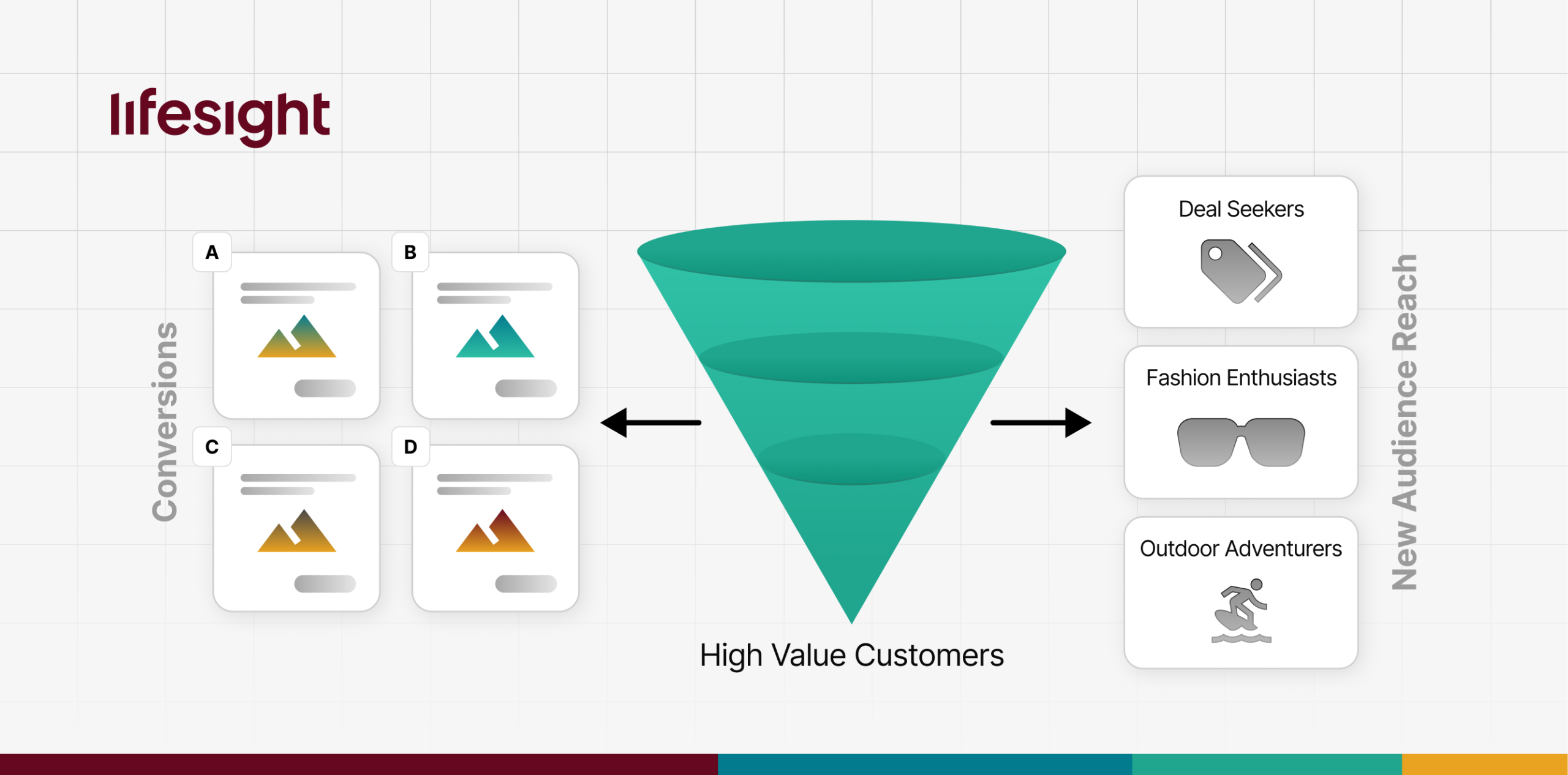
For years, marketers said creative is the new targeting. Today that statement is operationally true.
AI-driven delivery systems now perform real-time micro-segmentation inside the platform. Brands can run broad targeting and see different creative assets distributed to distinct audience clusters. The algorithm predicts who will respond to which message and allocates delivery accordingly.
Creative no longer just communicates. It influences audience allocation.
That shift changes measurement.
Most teams still evaluate creative using CTR, CPA, and engagement metrics. These measure efficiency. They do not measure contribution.
If creative shapes who enters the funnel, it shapes incremental revenue potential. Yet many organizations treat creative as an output rather than a growth input.
Attribution does not solve this.
Deterministic models assume visible targeting and stable identity. In reality, privacy restrictions limit signals and platform learning systems operate as black boxes. You see outcomes, not allocation logic.
When creative drives audience segmentation inside the algorithm, last-touch reporting misses a structural driver of performance.
Creative must be treated as a causal variable.
Leaders should ask:
- Which creative themes generate incremental revenue?
- How does creative shift contribution inside MMM?
- When does fatigue reduce marginal ROI?
- Does expanding creative diversity increase incremental reach?
These questions require modeling and experimentation, not dashboard optimization.
Competitive Advantage
As targeting automates, competitive advantage concentrates in creative architecture, content velocity, and measurement infrastructure. The brands that win will not simply produce more content. They will measure its incremental impact with precision and optimize accordingly.
Where Unified Measurement Matters
When creative influences algorithmic allocation, measurement cannot operate in silos. Platform reporting shows surface metrics. Attribution shows directional interaction. Neither quantifies causal contribution.
Brands need marketing mix modeling, incrementality testing, and a unified framework that connects experimentation with modeled impact.
Without integration, teams optimize creative for efficiency while missing shifts in revenue contribution.
Creative is not the new targeting.
Creative is the new growth variable.