
[fusion_builder_container type=”flex” hundred_percent=”no” equal_height_columns=”no” hide_on_mobile=”small-visibility,medium-visibility,large-visibility” background_position=”center center” background_repeat=”no-repeat” fade=”no” background_parallax=”none” parallax_speed=”0.3″ video_aspect_ratio=”16:9″ video_loop=”yes” video_mute=”yes” border_style=”solid” padding_right=”0″ padding_left=”0″][fusion_builder_row][fusion_builder_column type=”1_1″ type=”1_1″ layout=”1_1″ background_position=”left top” border_style=”solid” border_position=”all” spacing=”yes” background_repeat=”no-repeat” margin_top=”0px” margin_bottom=”0px” animation_speed=”0.3″ animation_direction=”left” hide_on_mobile=”small-visibility,medium-visibility,large-visibility” center_content=”no” last=”true” hover_type=”none” background_blend_mode=”overlay” first=”true” min_height=”” link=””][fusion_text]
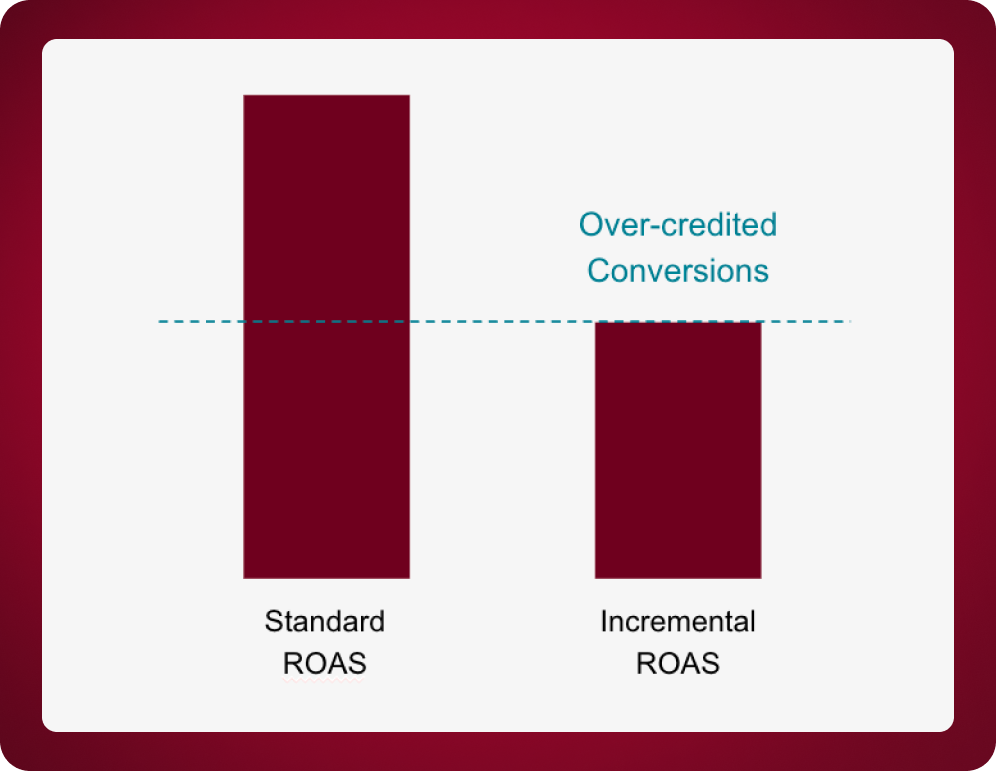
Incremental ROAS (iROAS) is a marketing metric that measures the additional revenue generated specifically by ad spend, excluding sales that would have happened organically. Instead of just showing how much revenue your ads generate, it tells you how much additional revenue was created because of those ads.
In simple terms, iROAS helps you answer: “Would those conversions have happened even if I stopped running ads?”
Say you invested $2,000 in ads and drove $20,000 in conversions. At first glance, that looks impressive. But if $16,000 of that revenue would’ve happened anyway (from brand loyalty, organic search, or repeat customers), then the real incremental lift is only $4,000. This is the actual value ads brought in — and what iROAS measures.
How Does iROAS Differ From ROAS?
| Feature | Standard ROAS | Incremental ROAS (iROAS) |
|---|---|---|
| Calculation | Total Revenue / Ad Spend | Incremental Revenue / Ad Spend |
| Focus | Correlation (Attribution) | Causality (Incrementality) |
| Goal | Platform Efficiency | Business Growth / Profitability |
Why is Incremental ROAS Important?
Advertising budgets are tight, and every dollar counts. While traditional ROAS gives you a surface-level picture, it can often be misleading. Incremental ROAS matters because:
- It shows the true effectiveness of your campaigns.
- It helps cut down spending on ads that simply cannibalize organic sales.
- It provides a clear roadmap for where you should scale ad budgets.
- It improves decision-making by balancing short-term performance with long-term brand growth.
Without tracking incrementality, businesses risk doubling down on channels that “look good on paper” but don’t actually deliver real growth.
What are the Formulas to Calculate Incremental ROAS?
The formula for incremental ROAS is pretty straightforward:
iROAS =
Ad Spend
× 100
- Incremental Revenue = Total Revenue from Ads – Revenue that would’ve happened organically.
- Multiply by 100 to express it as a percentage.
Incremental ROAS Benchmarks
1) iROAS > 100
When iROAS is greater than 100, campaigns are driving more revenue than the amount spent.
For example, a brand spends $50,000 on a new product launch campaign. The reported revenue from the campaign is $150,000, but after analysis, the true incremental revenue – the extra sales generated only because of ads is $70,000.This is a healthy sign that ads are fueling growth and deserve more budget.
iROAS =
70000
50000
× 100 = 140
An iROAS of 140 means that for every $1 spent, there is $1.40 in additional revenue. That explains a profitable and effective campaign worth scaling.
2) iROAS = 100
At iROAS of 100, ads are breaking even. The incremental revenue exactly matches the ad spend.
While this doesn’t generate profit, it can still be acceptable for top-of-funnel brand awareness campaigns where long-term value matters more than immediate returns.
3) iROAS < 100
If iROAS is below 100, it signals that ad spend is not bringing enough incremental revenue.
For instance, spending $500 to bring in only $400 in incremental gains leads to iROAS of 80. This means the campaign is inefficient and budget should be reallocated.
How to Calculate Incremental ROAS?
There are multiple methods to measure iROAS accurately:
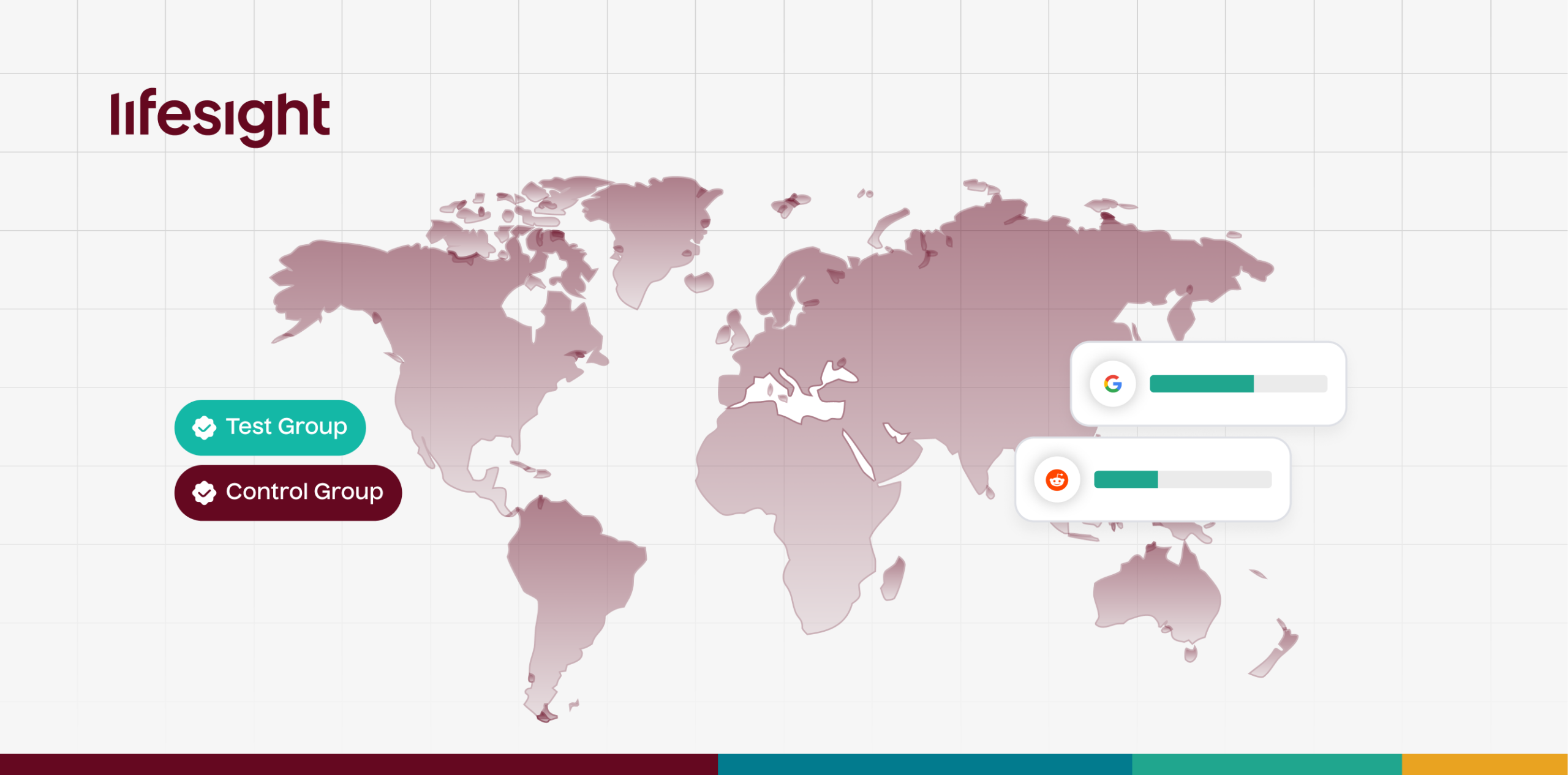
- A/B Testing: Compare audiences exposed to ads against control groups that don’t see ads.
- Geo Experiments: Run ads in one region while keeping another ad-free, then compare incremental lift.
- Holdout Testing: Exclude random groups from campaigns to measure natural performance.
- Marketing Mix Modeling (MMM): Use statistical analysis to isolate the advertising effect across multiple channels.
The key is to separate sales driven by ads from sales that would’ve happened anyway.
How Lifesight Helps with Measuring iROAS?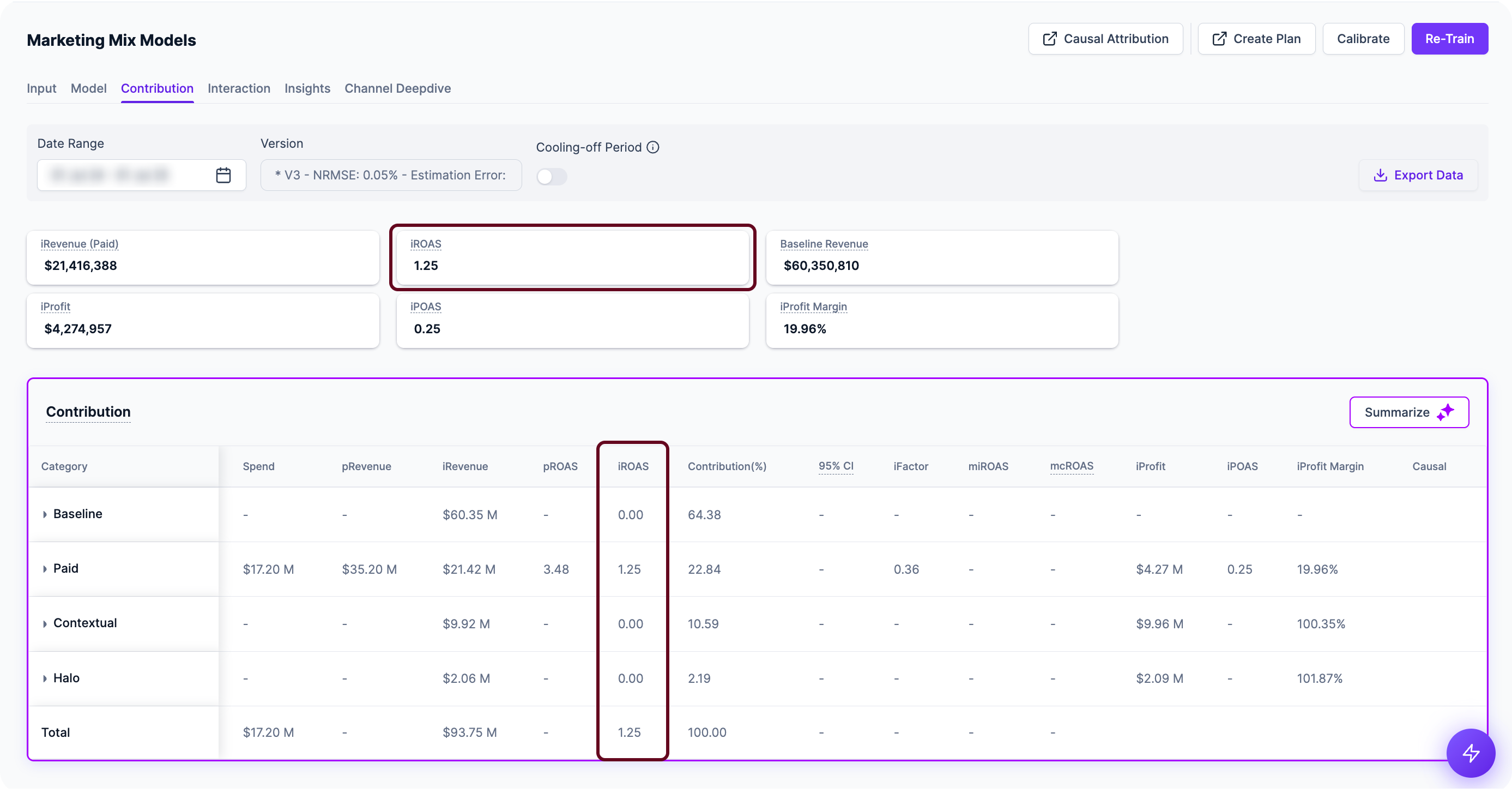
Manually conducting tests or building MMM models can be expensive and complex. This is where Lifesight steps in. Lifesight uses advanced data analytics, identity resolution, and incrementality testing to help businesses measure iROAS more accurately.
With Lifesight, you can:
- Run clean experiments without disrupting business as usual.
- Get a clear breakdown of how much incremental lift each channel is driving.
- Ensure your ad budget is always allocated toward meaningful, revenue-driving campaigns.
Why should Lifesight be Chosen for Incremental ROAS Measurement?
- Precision: Lifesight provides accurate incrementality measurement, cutting out noise from vanity metrics.
- Scalability: It works seamlessly across multiple channels, whether you’re running ads on Meta, Google, or programmatic.
- Actionable insights: Beyond measurement, Lifesight offers recommendations on where to cut, tweak, or scale your campaigns using incrementality-adjusted attribution.
- Efficiency: Saves brands from wasted spend, ensuring every dollar is invested in true growth.
Choosing Lifesight gives you a data-driven edge, helping you maximize profitability while staying ahead of competitors still relying on superficial ROAS metrics.
Summary
Incremental ROAS is the most reliable way to measure the real impact of your advertising spend. While traditional ROAS looks at revenue generated, iROAS answers the critical question: “What revenue only happened because of ads?”
- iROAS > 100: Your ads are fueling profitable growth.
- iROAS = 100: You’re breaking even — still useful for branding.
- iROAS < 100: Your ads aren’t worth the spend and need rethinking.
With tools like Lifesight, you gain clarity, confidence, and control over ad budgets, ensuring your investments drive genuine incremental growth.
[/fusion_text][/fusion_builder_column][/fusion_builder_row][/fusion_builder_container][fusion_builder_container type=”flex” hundred_percent=”no” hundred_percent_height=”no” hundred_percent_height_scroll=”no” align_content=”stretch” flex_align_items=”flex-start” flex_justify_content=”center” flex_wrap=”wrap” hundred_percent_height_center_content=”yes” equal_height_columns=”no” container_tag=”div” hide_on_mobile=”small-visibility,medium-visibility,large-visibility” status=”published” border_style=”solid” box_shadow=”no” box_shadow_blur=”0″ box_shadow_spread=”0″ gradient_start_position=”0″ gradient_end_position=”100″ gradient_type=”linear” radial_direction=”center center” linear_angle=”180″ background_position=”center center” background_repeat=”no-repeat” fade=”no” background_parallax=”none” enable_mobile=”no” parallax_speed=”0.3″ background_blend_mode=”none” background_slider_skip_lazy_loading=”no” background_slider_loop=”yes” background_slider_pause_on_hover=”no” background_slider_slideshow_speed=”5000″ background_slider_animation=”fade” background_slider_direction=”up” background_slider_animation_speed=”800″ video_aspect_ratio=”16:9″ video_loop=”yes” video_mute=”yes” pattern_bg=”none” pattern_bg_style=”default” pattern_bg_opacity=”100″ pattern_bg_blend_mode=”normal” mask_bg=”none” mask_bg_style=”default” mask_bg_opacity=”100″ mask_bg_transform=”left” mask_bg_blend_mode=”normal” absolute=”off” absolute_devices=”small,medium,large” sticky=”off” sticky_devices=”small-visibility,medium-visibility,large-visibility” sticky_transition_offset=”0″ scroll_offset=”0″ animation_direction=”left” animation_speed=”0.3″ animation_delay=”0″ filter_hue=”0″ filter_saturation=”100″ filter_brightness=”100″ filter_contrast=”100″ filter_invert=”0″ filter_sepia=”0″ filter_opacity=”100″ filter_blur=”0″ filter_hue_hover=”0″ filter_saturation_hover=”100″ filter_brightness_hover=”100″ filter_contrast_hover=”100″ filter_invert_hover=”0″ filter_sepia_hover=”0″ filter_opacity_hover=”100″ filter_blur_hover=”0″ margin_bottom=”0px” padding_top=”20px” padding_bottom=”0px” background_color=”var(–awb-color1)” border_radius_top_left=”20px” border_radius_bottom_right=”20px” padding_left=”0px” padding_right=”0px”][fusion_builder_row][fusion_builder_column type=”1_1″ type=”1_1″ layout=”5_6″ align_self=”auto” content_layout=”column” align_content=”flex-start” valign_content=”flex-start” content_wrap=”wrap” center_content=”no” column_tag=”div” target=”_self” hide_on_mobile=”small-visibility,medium-visibility,large-visibility” sticky_display=”normal,sticky” order_medium=”0″ order_small=”0″ hover_type=”none” border_style=”solid” box_shadow=”no” box_shadow_blur=”0″ box_shadow_spread=”0″ background_type=”single” gradient_start_position=”0″ gradient_end_position=”100″ gradient_type=”linear” radial_direction=”center center” linear_angle=”180″ lazy_load=”none” background_position=”left top” background_repeat=”no-repeat” background_blend_mode=”none” background_slider_skip_lazy_loading=”no” background_slider_loop=”yes” background_slider_pause_on_hover=”no” background_slider_slideshow_speed=”5000″ background_slider_animation=”fade” background_slider_direction=”up” background_slider_animation_speed=”800″ sticky=”off” sticky_devices=”small-visibility,medium-visibility,large-visibility” absolute=”off” filter_type=”regular” filter_hover_element=”self” filter_hue=”0″ filter_saturation=”100″ filter_brightness=”100″ filter_contrast=”100″ filter_invert=”0″ filter_sepia=”0″ filter_opacity=”100″ filter_blur=”0″ filter_hue_hover=”0″ filter_saturation_hover=”100″ filter_brightness_hover=”100″ filter_contrast_hover=”100″ filter_invert_hover=”0″ filter_sepia_hover=”0″ filter_opacity_hover=”100″ filter_blur_hover=”0″ transform_type=”regular” transform_hover_element=”self” transform_scale_x=”1″ transform_scale_y=”1″ transform_translate_x=”0″ transform_translate_y=”0″ transform_rotate=”0″ transform_skew_x=”0″ transform_skew_y=”0″ transform_scale_x_hover=”1″ transform_scale_y_hover=”1″ transform_translate_x_hover=”0″ transform_translate_y_hover=”0″ transform_rotate_hover=”0″ transform_skew_x_hover=”0″ transform_skew_y_hover=”0″ transition_duration=”300″ transition_easing=”ease” scroll_motion_devices=”small-visibility,medium-visibility,large-visibility” animation_direction=”left” animation_speed=”0.3″ animation_delay=”0″ last=”true” border_position=”all” first=”true” margin_bottom=”0px” min_height=”” link=””][fusion_title title_type=”text” loop_animation=”once” marquee_direction=”left” marquee_speed=”15000″ rotation_effect=”bounceIn” display_time=”1200″ highlight_effect=”circle” highlight_width=”9″ highlight_top_margin=”0″ title_link=”off” link_target=”_self” content_align=”left” size=”2″ text_shadow=”no” text_shadow_blur=”0″ text_stroke=”no” text_stroke_size=”1″ text_overflow=”none” gradient_font=”no” gradient_start_position=”0″ gradient_end_position=”100″ gradient_type=”linear” radial_direction=”center center” linear_angle=”180″ style_type=”default” animation_direction=”left” animation_speed=”0.3″ animation_delay=”0″ hide_on_mobile=”small-visibility,medium-visibility,large-visibility” sticky_display=”normal,sticky” fusion_font_variant_title_font=”400″ fusion_font_family_title_font=”Tablet Gothic Narrow Light” font_size=”var(–awb-typography3-font-size)” line_height=”var(–awb-typography3-line-height)” letter_spacing=”var(–awb-typography3-letter-spacing)” text_transform=”var(–awb-typography3-text-transform)” margin_bottom=”20px” margin_top=”0″]
Frequently Asked Questions about iROAS
[/fusion_title][/fusion_builder_column][fusion_builder_column type=”1_1″ type=”1_1″ layout=”5_6″ align_self=”auto” content_layout=”column” align_content=”flex-start” valign_content=”flex-start” content_wrap=”wrap” center_content=”no” column_tag=”div” target=”_self” hide_on_mobile=”small-visibility,medium-visibility,large-visibility” sticky_display=”normal,sticky” order_medium=”0″ order_small=”0″ hover_type=”none” border_style=”solid” box_shadow=”no” box_shadow_blur=”0″ box_shadow_spread=”0″ background_type=”single” gradient_start_position=”0″ gradient_end_position=”100″ gradient_type=”linear” radial_direction=”center center” linear_angle=”180″ lazy_load=”none” background_position=”left top” background_repeat=”no-repeat” background_blend_mode=”none” background_slider_skip_lazy_loading=”no” background_slider_loop=”yes” background_slider_pause_on_hover=”no” background_slider_slideshow_speed=”5000″ background_slider_animation=”fade” background_slider_direction=”up” background_slider_animation_speed=”800″ sticky=”off” sticky_devices=”small-visibility,medium-visibility,large-visibility” absolute=”off” filter_type=”regular” filter_hover_element=”self” filter_hue=”0″ filter_saturation=”100″ filter_brightness=”100″ filter_contrast=”100″ filter_invert=”0″ filter_sepia=”0″ filter_opacity=”100″ filter_blur=”0″ filter_hue_hover=”0″ filter_saturation_hover=”100″ filter_brightness_hover=”100″ filter_contrast_hover=”100″ filter_invert_hover=”0″ filter_sepia_hover=”0″ filter_opacity_hover=”100″ filter_blur_hover=”0″ transform_type=”regular” transform_hover_element=”self” transform_scale_x=”1″ transform_scale_y=”1″ transform_translate_x=”0″ transform_translate_y=”0″ transform_rotate=”0″ transform_skew_x=”0″ transform_skew_y=”0″ transform_scale_x_hover=”1″ transform_scale_y_hover=”1″ transform_translate_x_hover=”0″ transform_translate_y_hover=”0″ transform_rotate_hover=”0″ transform_skew_x_hover=”0″ transform_skew_y_hover=”0″ transition_duration=”300″ transition_easing=”ease” scroll_motion_devices=”small-visibility,medium-visibility,large-visibility” animation_direction=”left” animation_speed=”0.3″ animation_delay=”0″ last=”true” border_position=”all” first=”true” margin_bottom=”0px” min_height=”” link=””][fusion_accordion border_size=”1″ title_tag=”h5″ hide_on_mobile=”small-visibility,medium-visibility,large-visibility” boxed_mode=”no” divider_color=”var(–awb-custom_color_6)” fusion_font_variant_title_font=”var(–awb-custom_typography_1)” fusion_font_family_title_font=”var(–awb-custom_typography_1-font-family)” title_font_size=”18px” title_line_height=”var(–awb-custom_typography_1-line-height)” title_letter_spacing=”var(–awb-custom_typography_1-letter-spacing)” title_text_transform=”var(–awb-custom_typography_1-text-transform)” icon_boxed_mode=”no” icon_color=”var(–awb-color4)” icon_alignment=”right” fusion_font_variant_content_font=”var(–awb-custom_typography_6)” fusion_font_family_content_font=”var(–awb-custom_typography_6-font-family)” content_font_size=”var(–awb-custom_typography_6-font-size)” content_line_height=”var(–awb-custom_typography_6-line-height)” content_letter_spacing=”var(–awb-custom_typography_6-letter-spacing)” content_text_transform=”var(–awb-custom_typography_6-text-transform)” inactive_icon=”fusion-prefix-lscon-plus-circle” title_color=”var(–awb-color8)” padding_bottom=”10px” padding_top=”10px” content_color=”#424551″][fusion_toggle title=”What is the difference between ROAS and iROAS?” open=”no”]
Standard ROAS (Return on Ad Spend) measures the total revenue attributed to a specific channel divided by the cost of that channel. It often includes organic sales that would have happened anyway. iROAS (Incremental ROAS) isolates only the new or additional revenue generated specifically because of the ad, providing a truer measure of marketing’s causal impact.
[/fusion_toggle][fusion_toggle title=”How do you calculate Incremental ROAS?” open=”no”]
The formula for iROAS is:

To find the Baseline Revenue, use incrementality testing, such as A/B tests or geo-holdouts, where a control group is not exposed to the ads.
[/fusion_toggle][fusion_toggle title=”Why is iROAS considered a better metric than standard ROAS?” open=”no”]
iROAS is superior because it accounts for cannibalization. In many cases, a high ROAS on a platform like Branded Search is misleading because those customers likely would have clicked an organic link regardless. iROAS reveals the true lift and helps teams shift budget from high-volume/low-impact channels to areas that actually drive growth.
[/fusion_toggle][fusion_toggle title=”What is a good iROAS benchmark?” open=”no”]
A good iROAS varies by industry and profit margins, but generally, any iROAS above 1.0 means the ads are generating more revenue than they cost. However, most brands aim for an iROAS that covers both the ad spend and the Cost of Goods Sold (COGS) to ensure the incremental sales are profitable, not just revenue-generating.
[/fusion_toggle][fusion_toggle title=”How often should I measure incrementality?” open=”no”]
Because consumer behavior and platform algorithms change, it is best practice to run incrementality tests quarterly or whenever there is a significant shift in your media mix. Using an automated platform like Lifesight allows for near-continuous measurement through Marketing Mix Modeling (MMM).
[/fusion_toggle][/fusion_accordion][/fusion_builder_column][/fusion_builder_row][/fusion_builder_container]