TL;DR
Marketing has run on broken measurement for twenty years. Humans patched the breakage in real time. AI agents will not. An agent reasoning over correlational attribution, modeled platform conversions, and unverified MMM will misallocate budget at machine speed. The fix is not a better dashboard. It is a single causal measurement layer – independent, calibrated, unified, and agent-ready – that every model and every agent reads from. We call it Agentic Unified Marketing Measurement.
The Uncomfortable Truth
Marketing is a trillion-dollar industry running on a measurement system that cannot answer its most basic question: what is actually working?
Not what was clicked. Not what was viewed. Not what a model estimated after the fact. What actually caused a customer to act differently than they would have if you had done nothing at all.
This has been true for twenty years. For most of that time, it was tolerable. Humans were in every loop. A good marketer could squint at three conflicting dashboards, triangulate, apply judgment, and move budget in roughly the right direction. The measurement was broken, but the operator in the chair was patching over the breakage.
That era is ending.
In the next eighteen months, the bulk of marketing’s tactical decisions – where to move budget this week, which creative to promote, which audience to expand, when to pull spend from a fatiguing channel – will be made by AI agents operating on behalf of marketing teams. Not as an experiment. As the default.
And here is the sentence the industry has not yet absorbed:
An AI agent reasoning over broken measurement will waste money faster than any human ever could.
Agents compound whatever you feed them.
Feed them correlational attribution, and they will confidently reallocate a million dollars a week toward channels that are not actually driving incremental growth. Feed them a quarterly MMM with wide confidence intervals, and they will optimize toward a point estimate that may or may not be real. Feed them platform-reported numbers from the very vendors selling the media, and they will recommend more spend on exactly the platforms those vendors want you to spend on.
The measurement system is about to become the operating system for every agent that touches marketing budget. It can no longer be a patchwork of dashboards reconciled by a human in a conference room. It has to be one system. It has to be causal. And it has to be something an agent can reason over without getting the answer wrong.
That is what this manifesto is about.
The Three Fragments
Multi-touch attribution
Tracks the customer journey and assigns fractional credit to touchpoints. It answers the question who touched the customer before they converted? It does not – cannot – answer whether any of those touches caused the conversion.
Touching is not causing. A streetlight is present at every car accident. That does not make it the cause.
Marketing mix modeling
Uses regression analysis on aggregate spend and outcome data to estimate channel-level contribution. It answers the question how should we allocate next quarter’s budget?
But its confidence intervals are routinely so wide that a reported 3.2x return could realistically sit anywhere from 0.8x to 5.6x.
That is not a measurement. It is a range dressed as a point estimate.
Incrementality testing
Uses controlled experiments – holdout groups, geo-based tests, randomized trials – to measure the true causal impact of a marketing action. It answers the only question that ultimately matters: what would have happened if we had done nothing?
It is the closest marketing has to scientific proof. And it is the least adopted methodology of the three.
Every enterprise marketing team uses at least one of these. Most use two. Almost none connect them into a single, reconciled answer.
The CMO sits in a quarterly review with three dashboards that disagree, picks the one that best supports the budget she needs, and presents it to a CFO who quietly suspects none of them are true.
That was manageable when humans were doing the picking. It is not manageable when agents are.
The Structural Conflict
The fragmentation is not accidental. It is structural.
Most measurement tooling is funded – directly or indirectly – by the media it measures. When your measurement vendor’s business model depends on you spending more on the channels it tracks, the measurement is not independent. The referee is also a player.
Every “fix” the industry has offered in the last five years – server-side conversions, modeled conversions, probabilistic matching – patches the data pipeline without addressing this conflict of interest.
Meta’s modeled conversions now account for roughly 20 – 35% of reported results: conversions the platform estimated happened, using its own models, grading its own homework.
Google reversed its commitment to deprecate third-party cookies because its ad business depends on the same infrastructure. Safari and Firefox already block cookies entirely, meaning a large share of the web operates in a state these measurement systems were never designed for.
The result is a measurement ecosystem composed, increasingly, of numbers that the people selling you media are telling you are true.
No other industry would accept this. Financial auditing requires independence. Clinical trials require blinding. Marketing measurement requires neither – and the consequences, for now, have been measured in billions of dollars of misallocated budget.
In the agent era, those consequences will be measured in hours.
What The Agent Era Changes
There are two shifts happening simultaneously, and the industry is treating them as separate stories. They are not.
Shift one: measurement is moving from reporting to deciding
CFOs are pushing back on marketing’s numbers. Boards are demanding causal proof. The CMO tenure – already the shortest in the C-suite – is getting shorter, and the common thread across CMOs who get replaced is that their measurement did not survive scrutiny.
Shift two: decisions are moving from humans to agents
Budget optimizers. Anomaly detectors. Experiment designers. Scenario planners. CFO-facing translation layers. These are shipping into production at every serious marketing org, and they will replace most of the weekly and daily budget decisions marketers currently make by hand.
Treat those two shifts as one problem and the answer becomes obvious.
The same stack – causal, unified, independent – is what satisfies the CFO’s scrutiny and what an agent needs to operate safely. You cannot build the first without the second.
This is what the word agentic is doing in front of Unified Marketing Measurement.
It is not a buzzword. It is a specification. An agentic measurement system is one in which:
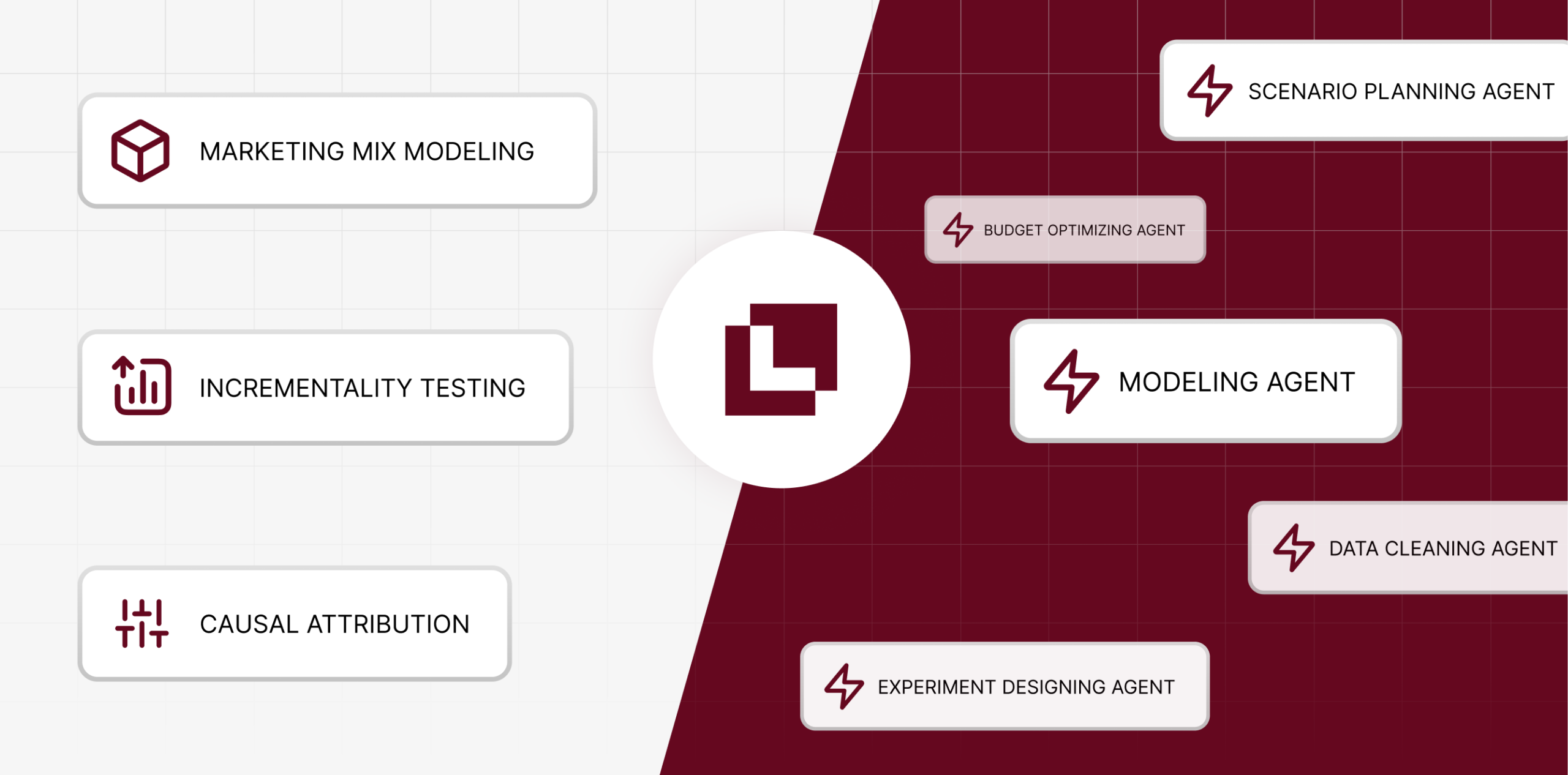
- The three methodologies (MMM, incrementality, attribution) are fused into a single causal model, not three dashboards.
- That model is queryable by agents, in real time, with signed confidence.
- Agents act inside guardrails defined against the causal truth, not against platform-reported ROAS.
- Every agent decision is auditable back to the experimental evidence that justified it.
Every vendor in this space gave their agents a dashboard to read. An agentic measurement platform gives agents a causal engine to think with. That is a different product.
The Case For Agentic UMM
The solution is not to abandon any of the three methodologies. Each has value. The solution is to connect them into a single system where they calibrate, validate, and constrain each other – and then expose that system to the agents that are about to make the real-time decisions.
We call this Agentic Unified Marketing Measurement.
The principle is straightforward:
- Use marketing mix modeling for strategic planning: where to allocate budget at the portfolio level.
- Use incrementality testing as the calibration anchor: the experimental ground truth that prevents models from drifting into fiction.
- Retire multi-touch attribution as a decision-making tool, and replace it with a causal inference layer that reconciles model-based estimates with experimental evidence down to the campaign and ad level.
- Expose the reconciled state to the agents running the day-to-day loop.
In a unified system, the CMO and the CFO look at the same number and it means the same thing. The Budget Optimizer agent and the Experiment Designer agent read from the same causal state. There is one answer, not three. And that answer has been tested against reality, not just modeled from historical patterns.
This is not a theoretical framework. We have built it.
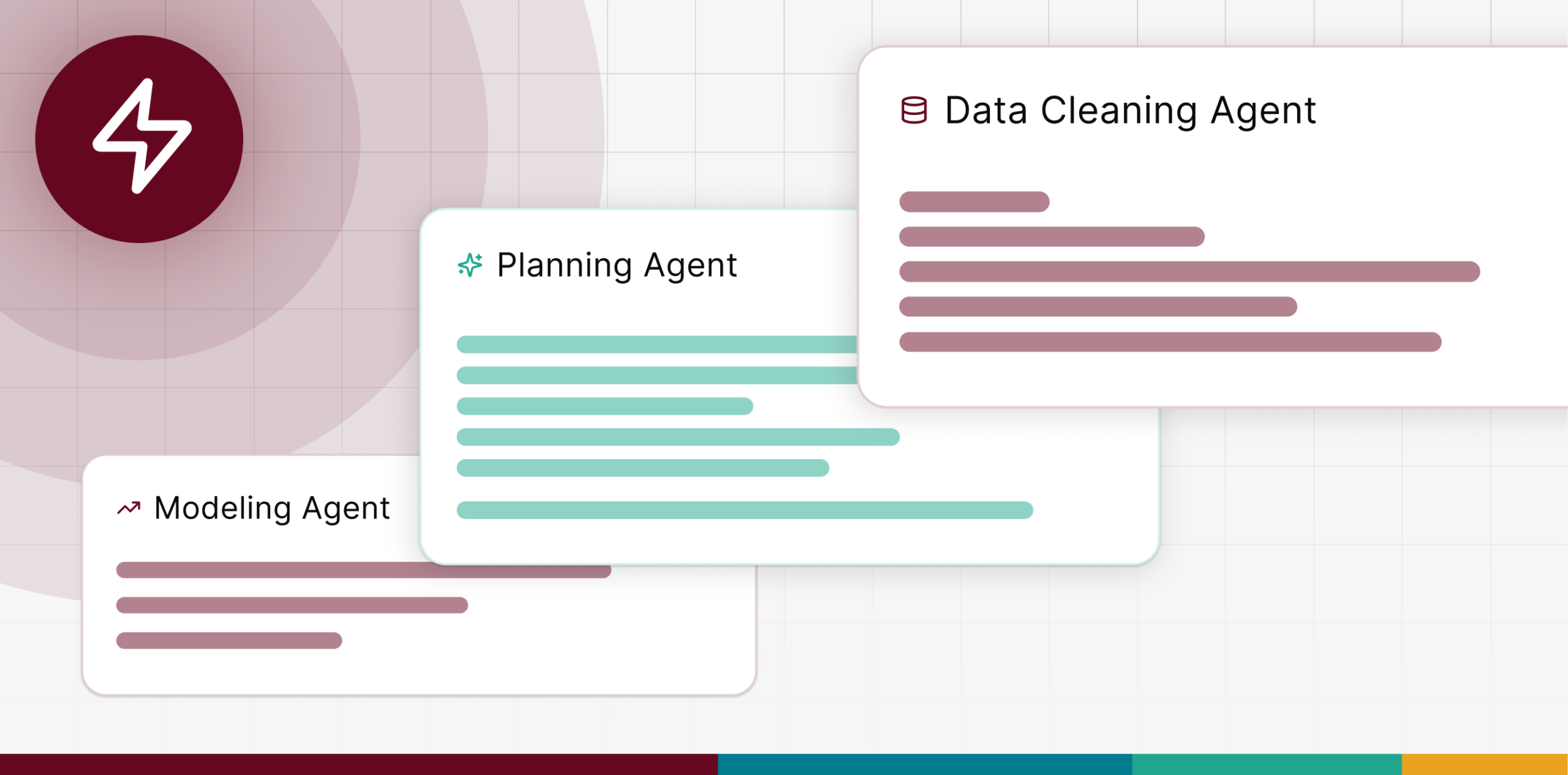
Lifesight’s Agentic UMM platform integrates causal MMM, geo-based incrementality testing, and causal attribution into a single measurement layer — and puts six Marketing Intelligence Agents on top of it, each reasoning over the same causal engine rather than over reported metrics.
In customer deployments where we have run side-by-side tests, the attributed value of the highest-spend channel was overstated by more than 40% in a majority of cases. In every case, the unified system identified reallocation opportunities that improved genuine incremental return.
Four Principles
1. Measurement must be independent
The entity measuring performance cannot be the same entity selling the media.
2. Every model-based estimate must be calibrated against experimental evidence
An MMM output that has never been validated by an incrementality test is an unverified hypothesis.
3. Marketing measurement must produce one answer, not three
When a CMO presents a number to the board, that number should reflect the reconciled output of planning models and causal experiments — not a cherry-picked result from whichever dashboard tells the most convenient story.
4. Measurement must be agent-ready
Machine-readable. Real-time-enough. Causally grounded. Queryable with confidence intervals agents can reason over.
The New Buying Committee
The buyers of marketing measurement are changing, and anyone selling in this category who has not noticed is about to find themselves in the wrong conversations.
The CFO is now in the room. CFOs are entering the measurement conversation because they have lost confidence in the numbers marketing provides. When a CFO asks “prove it,” an attribution dashboard is not an answer. A modeled estimate with undisclosed confidence intervals is not an answer. A controlled experiment showing what happened when spend was removed — that is an answer a CFO can take to a board.
The CTO is now in the room too. Because agents are infrastructure, not features, the CTO or Head of MarTech is now a required signature on a measurement decision. They want to know: Is this system something my agents can reason over? Does it expose a clean interface? Does it scale with our stack? Can it be audited the way our other critical systems can?
The CMOs who survive the next decade will not be the ones with the biggest budgets. They will be the ones who chose honest, agent-ready measurement before their board and their CTO chose it for them.
An Invitation
This is not a product announcement. It is a position. We are publishing it because we believe the argument deserves to be made in public, debated in public, and tested in public.
Our platform is early on some of these capabilities. Parts of our approach will evolve. Some of what we say this year will be wrong, and when it is, we will say so publicly.
But the direction is not in doubt.
The era of three disconnected dashboards telling three different stories is ending. Not because of a technology shift. Because CFOs are done funding decisions that cannot survive the question “prove it” – and because the AI agents about to run marketing operations cannot safely reason over the measurement stack most companies run today.
The standard that replaces it has four properties: causal, unified, independent, agent-ready.
That is what Agentic Unified Marketing Measurement means. That is what we are building. And that is what we believe the industry will demand within the next three years — whether we build it or someone else does.
This is for you if:
- You are a CMO who has suspected your measurement numbers were wrong but had no methodology to prove it.
- You are a CFO who has sat through quarterly reviews wondering whether anyone in the room actually knows what is working.
- You are a CTO or Head of MarTech who has been asked to stand up agents on top of a measurement stack you do not trust.
You are a measurement practitioner who has built models you know are unvalidated and wished someone would fund the experiments to calibrate them.
Read it. Disagree with it. Tell us what we got wrong.
We will be here.
You may also like

Essential resources for your success